
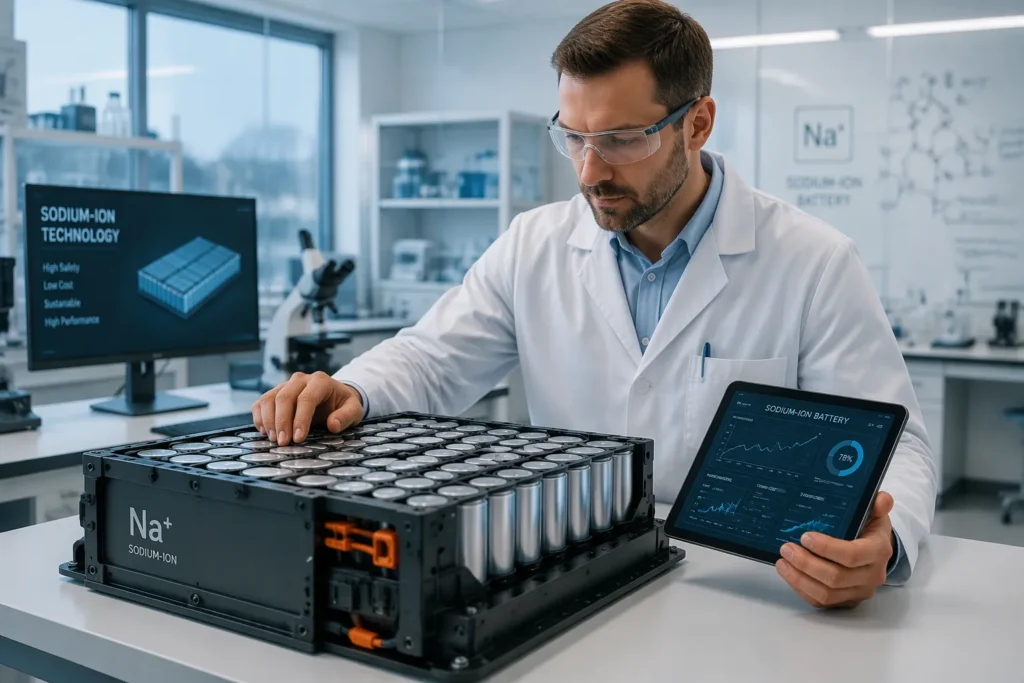
Grid storage and battery energy storage systems top the list. Commercial and industrial sites and data centres follow close behind. Two- and three-wheeled electric vehicles, warehouse forklifts and entry-level compact cars round out the early adopters. So which industries are likely to adopt sodium-ion first? Those five, and the reasons overlap.
Four tests decide the order: technical performance, application fit, regulatory compliance and cost. Sodium-ion batteries clear the cost and safety bars fastest in stationary roles. They suit short, predictable duty cycles too. Range-hungry buyers can relax — lithium keeps that ground for now.
Key Takeaways
Grid storage and battery energy storage systems will adopt sodium-ion first because they need cheap, safe, long-lasting batteries more than lightweight ones.
Commercial sites, data centres, and telecom towers will follow closely because sodium-ion batteries provide reliable backup power and handle temperature changes well.
Two- and three-wheeled electric vehicles, warehouse forklifts, and entry-level compact cars will adopt sodium-ion next because they make short trips and value low cost over long range.
Sodium-ion batteries will complement lithium-ion batteries, not replace them; lithium will still be used where lightweight and high energy density are important.
Analysts expect sodium-ion to reach cost parity with lithium around 2027, which will speed up adoption in these industries.
Which industries are likely to adopt sodium-ion first?
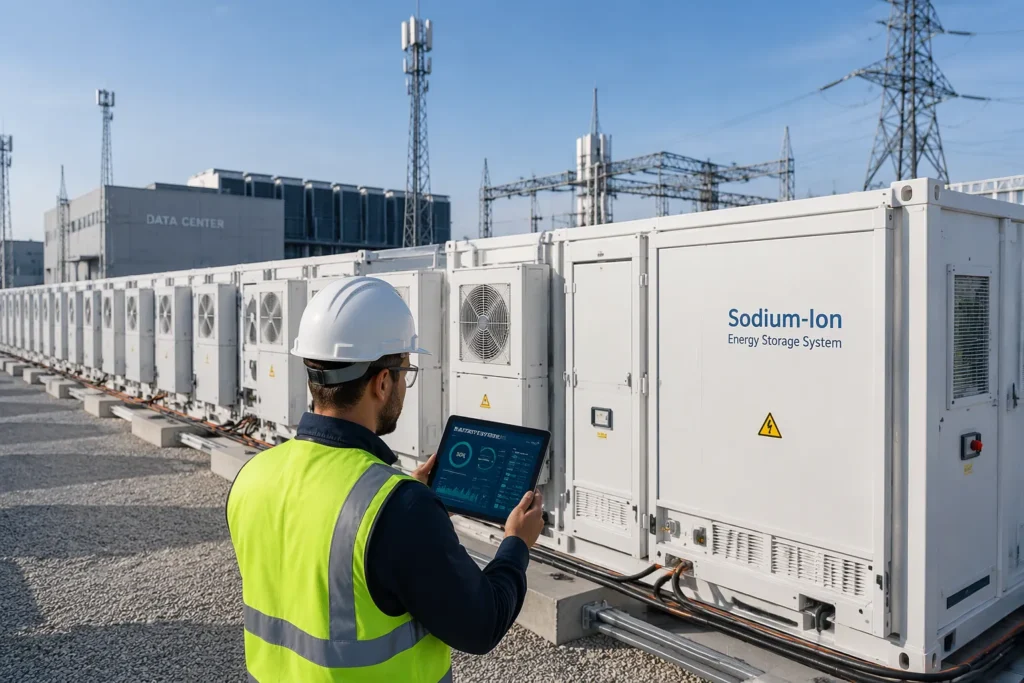
Ask which industries are likely to adopt sodium-ion first, and the answer starts with the stationary crowd. Grid-scale storage sits at the front of the queue. Commercial and industrial sites, data centres and telecom towers come next. Two- and three-wheeled EVs, forklifts and small city cars follow. Four things tie these buyers together: cost, safety, temperature range and supply diversification in battery chemistries. That ranking holds for one simple reason: each of these buyers values a cheap, safe, long-lived pack more than a light one.
Grid storage and BESS lead adoption
Grid storage wins because the duty cycle is gentle and the price pressure is brutal. A battery here charges and discharges on a schedule. It rarely needs to sprint. Stationary energy storage rewards patience. Battery energy storage systems here run on a fixed timetable. That plays to the strengths of sodium-ion batteries, which trade energy density for cheaper materials and steadier behaviour. Cycle life matters too, and this chemistry is closing the gap with lithium iron phosphate (LFP) on that front.
Utilities & independent power producers care about one number above all: cost per kilowatt-hour delivered over the asset’s life. Sodium-ion batteries use abundant raw materials, so the cell bill should fall as production scales. Analysts expect cost parity with lithium around 2027. That date matters for anyone planning a 2028 build. A lower cell price changes the maths on a project that lives for a decade or more.
Safety helps too. The cells handle abuse well and keep working across a wide temperature band. Operators in hot or cold climates notice this. So do storage integrators, who must warranty a system for years in the field. A pack that shrugs off a heatwave saves money on cooling.
Here’s the key point: sodium-ion complements lithium-ion. It doesn’t replace it. Lithium still wins where energy density rules. Sodium takes the seats where cheap, safe and steady beats light and compact.
Sodium-ion batteries in C&I and data centres
Commercial and industrial sites want energy storage systems that shave peak demand and ride out outages. They don’t need a featherweight pack. They need a box that sits in a plant room and behaves. Sodium-ion fits that brief nicely. Resilience sells itself when the alternative is a dark warehouse.
Telecom & data center operators face a similar puzzle. Backup power must work on the worst day of the year. Temperature swings, long idle periods and rare deep discharges all test a battery. A backup pack that sits idle for months must still fire on demand. Sodium-ion batteries cope with that pattern without much fuss.
Then there’s supply. A sodium-ion battery leans on materials that are easy to source at scale. Buyers who watched lithium prices swing now want diversification in battery chemistries. Cheap energy storage changes that calculation. That’s a risk argument, not a performance one, and it lands well with procurement teams.
Will it take over tomorrow? No. The grid still runs mostly on lithium for new builds. Sodium-ion is the newcomer knocking on the door, and the door is opening. Watch the price curves, not the headlines.
Grid storage and stationary applications
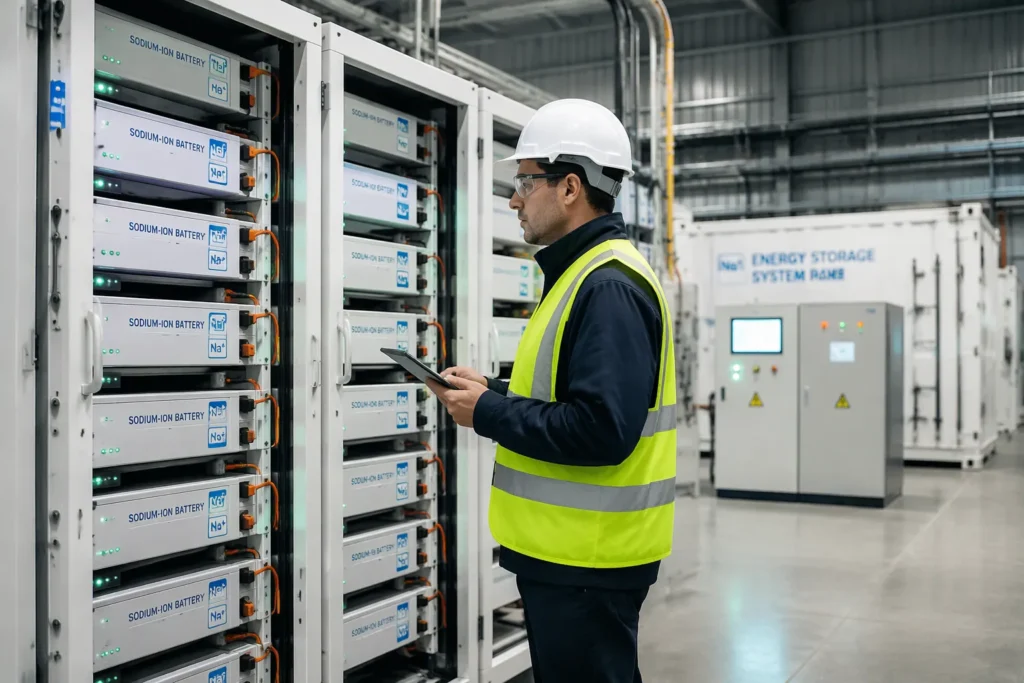
Why grid storage suits sodium-ion
Stationary storage asks for cheap, safe, long-lived packs. Sodium-ion delivers on all three. Grid-scale storage rarely needs a light cell, so the chemistry’s lower energy density costs little. That’s why large-scale orders for grid energy storage look like the first real market.
Grid resilience drives the rest. Telecom & data center operators need backup that fires after months idle. Utilities & independent power producers plan electricity storage plants that run for decades. Both groups watch total cost, not grams. Sodium-ion batteries handle wide temperature swings and deep discharges without much fuss.
Commercial and industrial sites fit the same mould. They shave peaks and ride out outages. A sodium-ion battery sits in a plant room and behaves. Supply diversification seals it — buyers want energy storage technology that doesn’t lean on one raw material. The adoption of sodium-ion by energy storage integrators is already visible in pilot projects.
Safety and cost versus LFP
LFP sets the benchmark, and it’s a strong one. It offers proven cycle life and a mature supply chain. Sodium-ion batteries trail LFP on energy density, yet they close the gap on cycle life with each generation. Safety is roughly comparable — both chemistries handle abuse better than high-nickel cells.
Cost decides the race. Sodium-ion uses abundant materials, so cell prices should fall as production scales. Analysts expect parity with lithium around 2027. That date shapes large-scale energy storage deployments. Cheap energy storage changes the maths on a project that lives for a decade.
Total cost of ownership tells the fuller story. Energy storage systems live or die on cost per kilowatt-hour delivered. Sodium-ion wins there in mild climates and loses nothing in hot ones. Storage integrators notice. So do the energy storage integrators who warranty a system for years in the field.
Here’s the honest bit: sodium-ion complements LFP. It doesn’t replace it. LFP keeps the density-critical jobs. Sodium-ion takes the seats where cheap, safe and steady beat light and compact. The grid needs both, and energy storage systems get cheaper for everyone.
Two- and three-wheeled electric vehicles
Range and duty cycle fit
Two- and three-wheelers make a natural second home for sodium-ion. Think delivery scooters, e-rickshaws and commuter bikes. These machines cover short hops, not long hauls. A rider might do 30 to 50 km a day, then plug in overnight. Modest range needs mean a heavier pack costs little in practice.
Weight matters less here too. A scooter carries its battery low and central, so a slightly bulkier cell changes little. Cost sensitivity, though, is fierce. Buyers compare sticker prices closely, and every pound saved on the pack helps. Sodium-ion batteries use cheap, abundant materials, so they suit that squeeze. Urban fleets operating in cold climates also gain, because the chemistry keeps working when temperatures drop.
Temperature range and ownership cost
Cold mornings test any battery. Sodium-ion holds its charge well across a wide temperature band, so a winter commute doesn’t gut the range. That’s a real selling point for adoption in cold-climate and commercial vehicle applications, where a van or scooter must start on the coldest day of the year.
Total cost of ownership tells the rest. Sodium-ion batteries should reach cost parity with lithium around 2027. Until then, lithium-ion keeps the edge on energy density and proven supply. Commercial vehicles that run fixed routes and recharge on schedule fit sodium-ion neatly. Long-distance riders should stick with lithium for now. Sodium-ion complements lithium-ion rather than replacing it, and that balance keeps both chemistries in play.
Warehouse forklifts and material handling
Duty cycles and cost sensitivity
Forklifts run on a rhythm. A truck lifts a pallet, moves it, drops it, then repeats. That loop looks the same at nine in the morning and nine at night. Predictable duty cycles suit sodium-ion batteries well. The pack never needs to sprint, so a heavier cell costs little in practice. Warehouse managers care about uptime, not grams.
Cost sensitivity seals the deal. Fleets buy batteries by the dozen, and every pound saved per pack adds up fast. Sodium-ion batteries use cheap, abundant materials, so they fit that squeeze. Analysts expect cost parity with lithium around 2027. Until then, lithium-ion keeps the edge on energy density and proven supply. 🏭
Indoor safety and compliance
Indoor work raises the safety bar. A forklift shares a floor with people all day. Battery rooms need ventilation, fire planning and clear charging rules. Sodium-ion handles abuse well and keeps working across a wide temperature band. That steadiness helps in cold stores and hot loading bays alike.
Compliance drives the choice too. Operators must meet indoor safety rules for charging and storage, and they pick chemistries that make those rules easy to keep. Lithium-ion remains the incumbent here, with a mature supply chain and years of fleet data behind it. Sodium-ion complements lithium-ion rather than replacing it. Both chemistries keep a place on the warehouse floor, and that balance keeps fleets moving. The same logic applies to other commercial vehicles that run fixed routes and recharge on schedule.
Entry-level compact electric cars
Where lower energy density matters least
Small city cars don’t ask much of a pack. A typical owner drives a short commute, parks, and plugs in at home. Daily distances stay modest. That pattern makes a heavier battery far less of a problem. Range anxiety fades when the car never leaves town.
Packaging helps too. A compact car can spare a little extra volume under the floor. Designers trade a few kilos for a lower cell price and lose little in practice. Entry-level, commercial and cold-climate vehicles share this logic. Buyers want a cheap car that starts on a frosty morning, not a record-breaking range figure.
Cost and compliance advantages
Price decides this segment. Entry-level buyers watch the sticker closely, and every pound saved on the pack matters. Sodium-ion batteries use cheap, abundant materials, so they suit that squeeze. Analysts expect cost parity with lithium around 2027. That date lines up with the first sodium-ion cars reaching showrooms.
Automotive OEMs are watching closely. Sodium-ion is expected to enter EVs around 2027, and it won’t replace lithium across the board. Bigger models will keep lithium for years. Small cars get the cheaper chemistry first. Automotive adoption will likely start there and spread slowly.
Compliance plays a part as well. Sodium-ion batteries handle abuse well and keep working across a wide temperature band. That steadiness helps meet safety rules without costly extra cooling or heating hardware. Commercial vehicles on fixed urban routes fit the same mould. Sodium-ion complements lithium-ion rather than replacing it, and that balance keeps both chemistries in play.
How the sodium-ion timeline unfolds
Near-term versus longer-term adoption
The near term belongs to stationary storage. Grid operators, commercial sites and data centres can slot sodium-ion batteries into projects now, and storage integrators already run pilot schemes. These buyers care about cost per kilowatt-hour, not grams per cell. That makes them the easiest first customers.
The longer term looks different. Analysts expect cost parity with lithium around 2027. That date opens the door to mass production of sodium-ion batteries at real scale. Automotive OEMs plan their first sodium-ion cars for roughly the same window. Small city cars go first. Bigger models keep lithium for years.
So the order runs in two waves. Stationary energy storage leads today. Transport follows once the price gap closes. Nobody should expect a sudden flip — sodium-ion complements lithium-ion rather than replacing it.
What could accelerate uptake
Several forces could speed things up. Rising sodium-ion battery manufacturing capacity would push cell prices down faster than forecast. A jump in lithium prices would do the same, since buyers would hunt for cheaper alternatives. Government support for non-lithium chemistries helps too.
What could slow it? A mature lithium supply chain keeps its advantage. Storage integrators stick with proven packs when warranties stretch over a decade. Weak demand for energy storage systems would delay orders across the board.
Watch three signals: factory announcements, contract prices and the first showroom cars. They tell you more than any forecast. The sodium-ion battery sector will grow steadily, not overnight. That suits an industry built on decade-long assets.
So which industries are likely to adopt sodium-ion first? Grid storage and BESS lead, because cheap, safe, long-lived packs beat light ones. Two- and three-wheelers follow, thanks to short hops and cold-morning reliability. Forklifts fit the same rhythm — predictable duty cycles and tight budgets. Entry-level compact cars come next, where a little extra weight costs little.
Sodium-ion batteries complement lithium-ion rather than replace it. Expect parity around 2027, then a steady climb. Sodium-ion won’t win every race. It doesn’t need to. Watch the factory announcements and the first showroom cars — sodium-ion is coming, one sensible niche at a time.
FAQ
Which industries are likely to adopt sodium-ion first?
Grid storage and battery energy storage systems lead the pack. Two- and three-wheeled EVs, warehouse forklifts and entry-level compact cars follow. Each buyer values a cheap, safe, long-lived pack more than a light one.
When will sodium-ion reach cost parity with lithium?
Analysts expect parity around 2027. That date shapes storage planning and the first sodium-ion cars. Until then, lithium keeps the edge on energy density and proven supply.
Does sodium-ion replace lithium-ion?
No. Sodium-ion complements lithium-ion rather than replacing it. Lithium keeps the density-critical jobs, such as long-range cars. Sodium-ion takes the seats where cheap, safe and steady beat light and compact.
Why does grid storage suit sodium-ion so well?
Stationary packs charge on a schedule and rarely sprint. Sodium-ion trades energy density for cheaper materials and steady behaviour. Wide temperature tolerance and abundant raw materials seal the fit for utilities and data centres.
What could slow sodium-ion adoption?
A mature lithium supply chain keeps its advantage. Storage integrators stick with proven packs when warranties stretch over a decade. Weak demand for energy storage systems would delay orders too.