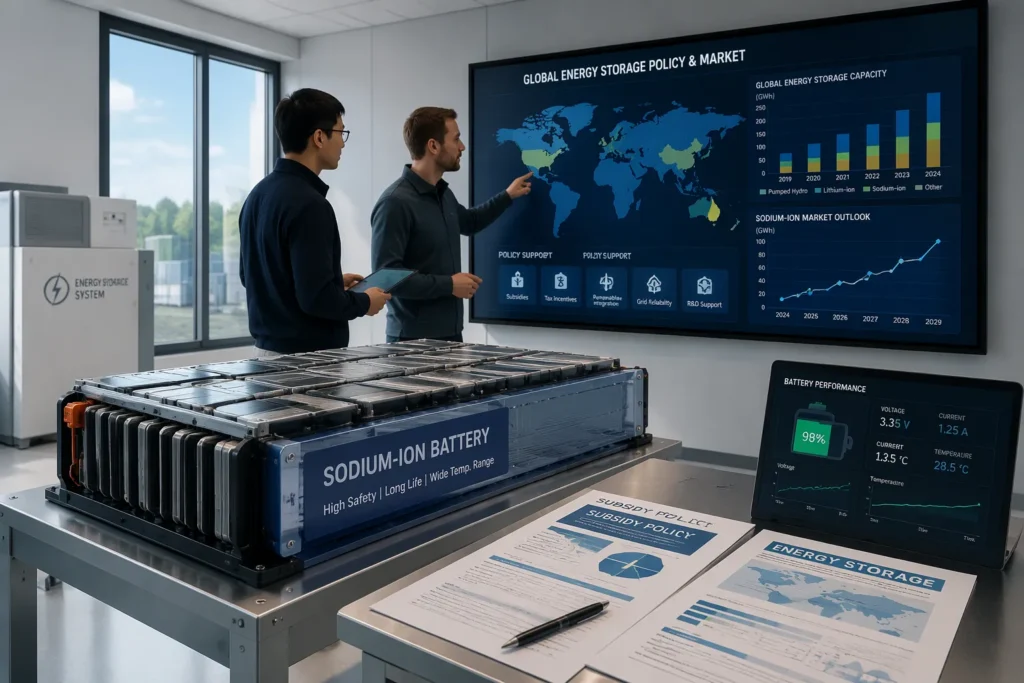
Production, investment and demand-side subsidies, along with storage mandates, capacity targets and grid rules, make up the main policy toolkit behind sodium-ion deployment. These measures lower unit costs, pull manufacturing to scale and turn announced projects into commissioned systems. China, Europe and North America each combine Government Subsidies with storage regulation in distinct ways, and the mix shapes where sodium-ion capacity and demand appear first.
Key Takeaways
Government subsidies bring down costs and help sodium-ion factories grow more quickly.
Storage mandates and clear grid rules turn policy into real projects.
China leads by giving money to factories; Europe and North America focus on what buyers need.
Sodium-ion works best for stationary storage, backup power and cold climates.
Keep an eye out for clearer grid codes and rules based on performance, which will help speed up deployment.
How Government Subsidies Shape Sodium-Ion
Subsidy Types
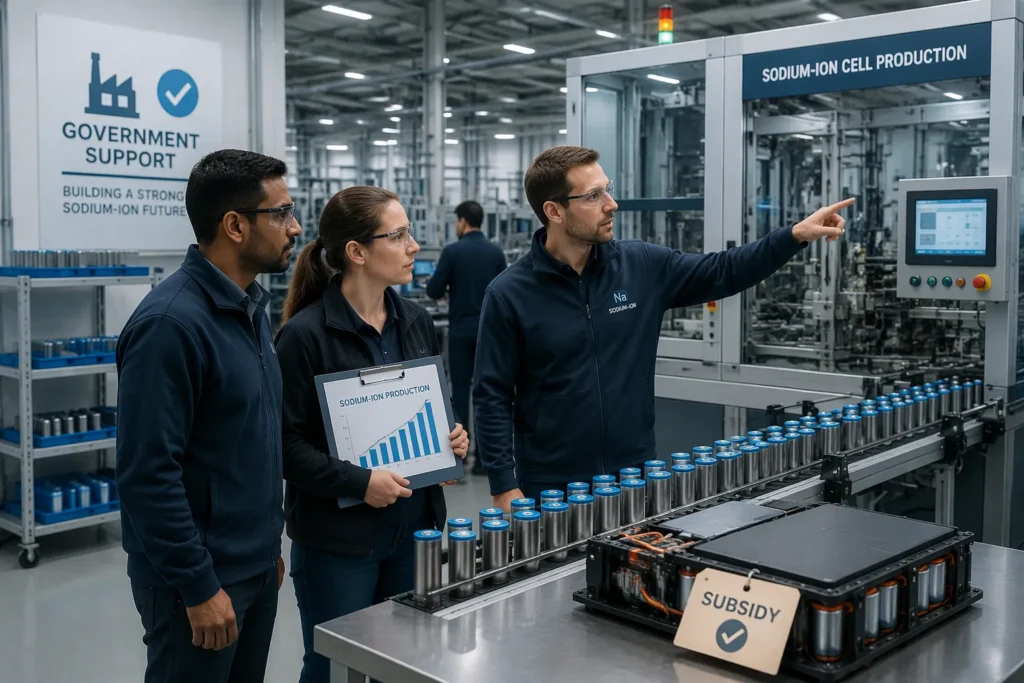
Production subsidies pay manufacturers for each sodium-ion cell or pack they make. These payments lower the real cost per kilowatt-hour and help factories run at higher use. A production credit tied to output volume gives factories a steady revenue stream. Investment subsidies work in a different way. They cover capital spending on plant, equipment and research lines, which cuts the financial risk of building new capacity. Both types suit markets that want to grow domestic manufacturing quickly.
Demand-side subsidies work on the buyer side. Grants, rebates and tax credits lower the purchase price of a storage system for utilities, businesses or households. This support fits markets where manufacturing already exists but project developers hold back on cost. Sodium-ion’s move from research to commercial deployment rests on two drivers: cost advantages over established chemistries in certain applications, and supply security from abundant raw materials. Government Subsidies speed up that transition, yet no single type is always best. Production support fits scale-up phases, investment support fits early capacity building, and demand-side support fits market activation.
Demand-Side Support
Demand-side support turns policy intent into orders. A rebate on a stationary storage installation shortens payback periods and encourages developers to try newer chemistries. Public procurement programmes add more pull. A utility that receives support for a grid-scale battery can specify sodium-ion where cold-climate performance or safety matters most. Several national schemes now pair installation grants with technical standards, which keeps supported projects comparable.
These measures also produce deployment data. Real projects show cycle life, round-trip efficiency and maintenance needs in the field. That evidence helps insurers, lenders and grid operators judge sodium-ion with more confidence. Government Subsidies therefore do more than cut prices. They build the track record that later commercial sales depend on, and they lower the technology risk that private investors see.
Storage Policy Levers
Mandates and Capacity Targets
Storage mandates make utilities, developers or large energy users install a set amount of battery capacity. National capacity targets set a longer-term goal for the whole market. Both levers create demand you can predict, and predictable demand helps with factory planning. A manufacturer that can see years of committed storage build-out will put money into cell lines with more confidence.
Storage also balances wind- and solar-based systems. Renewable output goes up and down with weather and daylight. Batteries soak up surplus power at peak generation and give it back during gaps. This smoothing role makes storage a core part of the grid, not an add-on. Many governments now focus on deploying lithium-ion for near-term targets while also funding other technologies such as sodium-ion. The two work as complements. Lithium-ion serves high-energy and portable duties, and sodium-ion fits stationary storage where cost, safety and cold-climate tolerance matter.
Grid Regulations
Grid connection rules decide how fast a storage project can reach operation. Clear rules cover metering, protection settings, dispatch signals and technical compliance. Fast, standardised connection processes shorten project timelines and cut developer risk. Several markets now publish dedicated grid codes for battery storage, which separate storage from generation and treat it as a distinct asset class.
These rules also shape technology choice. A grid code that rewards safety performance and wide operating temperature ranges makes room for sodium-ion systems. A code built around high-energy density favours other chemistries. Regulators that publish performance-based standards give developers a fair basis for comparison. That clarity helps sodium-ion enter stationary storage projects on technical merit, and it keeps the market open to more than one battery option.
China: Scale Through State Support
Production Incentives
China mixes direct production support with investment incentives at national and provincial level. Local governments offer land, low-cost power and capital grants for new cell plants. Output-based rewards then lower the real cost per cell once a line runs at volume. This two-step model cuts the risk of building capacity before demand appears. It also rewards factories that reach high use rates quickly.
The result shows up in manufacturing scale-up. Announcements for sodium-ion cell and pack plants have gathered in provinces with strong battery supply chains and active storage targets. VEKEN‘s Sodium Battery (钠电) manufacturing bases in Ningbo, Nanchang and Dongguan show this pattern. The three sites give the company scalable supply for cylindrical and prismatic cells. They also sit inside established industrial clusters with skilled labour and mature logistics.
Storage Targets and Projects
Provincial storage targets turn policy into orders. Several provinces require new wind and solar projects to include a set share of storage capacity. Other regions run demonstration programmes for grid-side and industrial batteries. These schemes give developers a reason to commission systems now, not later. They also produce field data on cycle life and safety.
Government Subsidies therefore work alongside these targets rather than alone. A supported factory can quote competitive prices, and a supported developer can commit to a project. The combination shortens the path from cell production to commissioned storage. Sodium-ion benefits most in stationary projects, where cost, safety and wide temperature tolerance matter more than energy density.
Europe: Regulation-Led Demand
Capacity Targets and Grid Rules
Europe builds its sodium-ion market on rules rather than direct factory payments. EU battery storage capacity targets set the long-term volume that member states plan to install. National plans turn those goals into firm build-out schedules. Developers can therefore size projects against a clear pipeline of storage demand.
Grid rules complete the picture. European grid codes now treat storage as a separate asset class with its own connection process. Clear rules on metering, protection and dispatch shorten approval times. Performance-based standards also let developers compare chemistries on technical merit. A sodium-ion system that meets safety and temperature requirements can enter stationary projects without special treatment.
Funding Programmes and Costs
EU funding programmes support storage demonstration and first-of-a-kind projects. Grants and innovation funds cover part of the capital cost, which lowers the risk for developers who try newer chemistries. Government Subsidies of this kind aim at market activation rather than factory output. They reward projects that prove bankability and field performance.
The EU view is that sodium-ion can support the green transition through cost and supply-security advantages. Abundant raw materials reduce exposure to concentrated supply chains. Stable performance in cold conditions suits northern European sites. Sodium-ion fits stationary storage, backup power and industrial applications best. Lithium-ion keeps the advantage in high-energy and portable duties. The two remain complementary, and European policy keeps room for both.
North America: Incentives and Localisation
Investment Tax Credits
North American policy relies on tax credits and grants to push storage projects ahead. An investment tax credit brings down the capital cost of a qualifying battery system. Developers can then justify a project that would otherwise miss its return target. Grants do a similar job at an earlier stage. They fund demonstration sites and first-of-a-kind installations, which carry more technical risk.
These tools also reward local content. A credit that grows with domestic assembly encourages firms to build cells and packs inside the region. That link between incentive and location drives the localisation of manufacturing. Sodium-ion stands to gain here. A new chemistry needs new lines, and a new line can be sited close to demand from the start. Government Subsidies of this kind therefore shape where capacity lands, not only how much capacity exists.
Storage Mandates and Manufacturing
State-level storage mandates create firm demand. Several states require utilities to procure a set volume of storage by a target date. A mandate gives developers a reason to sign contracts now. It also gives manufacturers a visible pipeline for factory planning. Procurement rules that accept performance-based specifications let sodium-ion compete on safety and temperature range rather than energy density alone.
Sodium-ion fits best in stationary storage, backup power and cold-climate sites. Northern states with long winters value stable output at low temperature. Lithium-ion keeps the advantage in high-energy and portable duties, and the two remain complementary. Localisation follows the same logic. A region that pairs mandates with manufacturing incentives attracts pack assembly and cell production together, which shortens supply chains and speeds project delivery.
Other Markets and Policy Signals
Asia-Pacific Beyond China
Thailand shows a clear example of demand-side support in the region. Under the national scheme, beneficiaries can draw up to EUR 360,000/MWh of electricity storage. The Thai government has set aside THB 24 billion for storage. These figures give developers a firm basis for project economics. A grant at that level shortens payback periods and makes first-of-a-kind installations easier to finance.
The scheme also signals long-term intent. A committed budget tells manufacturers that demand will last beyond a single pilot. Battery storage incentives in Thailand therefore attract pack assembly and system integration work. Sodium-ion fits stationary projects here, where safety and wide temperature tolerance carry weight. The policy does not favour one chemistry over another. It rewards projects that meet performance and safety standards at a competitive cost.
Middle East, Africa, and Latin America
Emerging markets are using storage policies to attract deployment. Several governments pair capacity targets with land or tax incentives for local assembly. This approach draws investment into regions that previously imported finished systems. It also builds local technical skills over time.
Battery supply chains remain concentrated in a small number of producing countries. That concentration creates risk for buyers in newer markets. Sodium-ion offers a partial answer, because its raw materials are abundant and widely distributed. Government Subsidies in these regions tend to target deployment rather than cell production. The mix suits markets that want installed capacity first and manufacturing later. Sodium-ion fits stationary storage and backup power best in this context. Lithium-ion keeps the advantage in high-energy duties, and the two remain complementary.
From Policy to Deployment Outcomes
Costs and Manufacturing Capacity
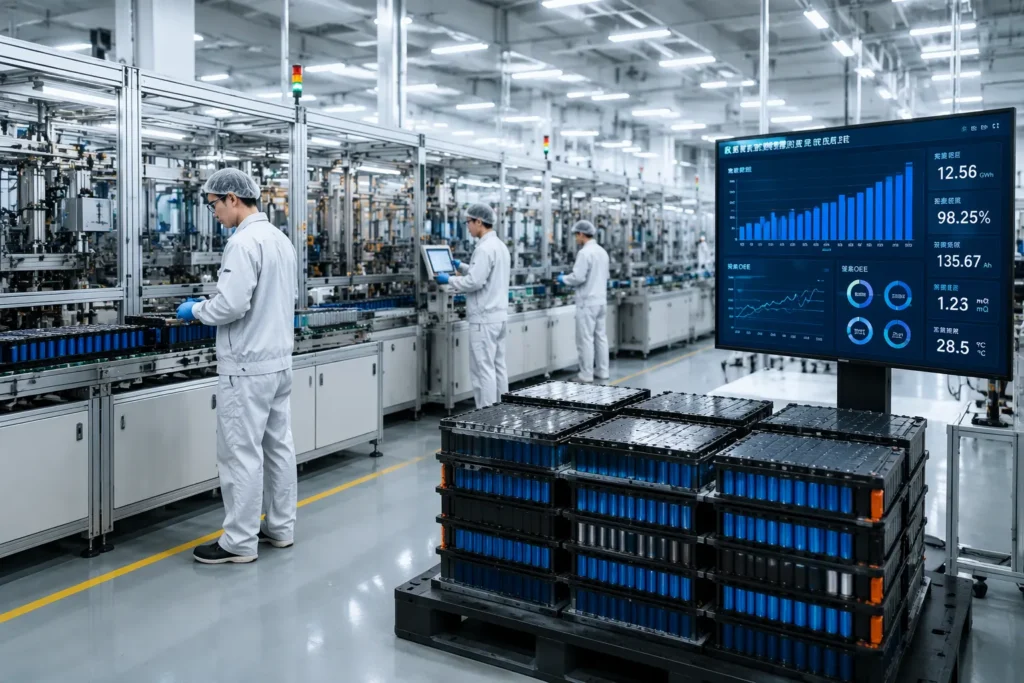
Subsidies and storage policies have a direct effect on unit economics. Production support brings down the cost per kilowatt-hour at the factory gate. Demand-side grants bring down the installed cost for the project developer. Together, these levers shrink the price gap between sodium-ion and established chemistries in stationary applications. The effect grows as output rises. Higher volume spreads fixed costs across more cells, and each expansion step trims the learning curve further. A developer comparing bids sees the difference in the levelised cost of storage, which folds capital cost, cycle life and efficiency into one figure. Policy support that improves any of those inputs shifts the comparison.
Manufacturing capacity follows the same signal. A national capacity target tells cell makers how much storage the market will absorb. Investment incentives then reduce the capital risk of building lines ahead of that demand. China shows the clearest result, where provincial targets and local grants have pulled cell and pack plants into industrial clusters. Europe and North America move more slowly on factory build-out, yet their tax credits and grants still shape where assembly lands. Announcements tend to cluster where grid rules are clear and permits move quickly. A slow connection process delays a plant’s business case, even when the capital grant is generous.
VEKEN’s Sodium Battery shows how policy-supported capacity turns into supply. The company reports 100GWh of annual capacity across its Ningbo, Nanchang and Dongguan bases, backed by more than 300 cooperative patents. Its cells keep a steady output in cold conditions and carry safety certifications for long-distance transport and storage. These capabilities matter because policy-driven demand rewards suppliers who can document performance and safety, not only price. Buyers in regulated markets increasingly ask for test reports alongside price sheets.
Project Adoption
Storage mandates turn targets into signed contracts. A utility that must procure a set volume of storage issues a tender, and that tender becomes a commissioned system within a defined window. Demand-side support shortens the payback period for the developer who bids. The two levers together move projects from announcement to operation faster than either would alone. Tender design matters here. A specification written around energy density alone narrows the field. A specification written around safety, cycle life and operating temperature range opens it.
Field data then strengthens the cycle. Each commissioned sodium-ion system produces evidence on cycle life, round-trip efficiency and maintenance needs. Lenders and insurers read that evidence when they assess the next project. Government Subsidies therefore do more than lower prices. They build the performance record that private finance requires before it commits at scale.
Sodium-ion complements other battery options rather than replacing them. It fits best in stationary storage, cold climates and backup power, where safety, wide temperature tolerance and cost carry the most weight. Backup power suits sodium-ion because the chemistry tolerates deep discharge without damage. Stationary storage suits it because weight matters less than safety and cycle life. Lithium-ion keeps the advantage in high-energy and portable duties. A procurement rule that accepts performance-based specifications lets each chemistry serve the role it suits. Government Subsidies work best when they keep that choice open and reward documented performance across the field.
Production and investment subsidies have the clearest effect on sodium-ion deployment. They bring down unit costs and help manufacturing grow to scale. Demand-side support and storage mandates then turn that capacity into finished projects. China leads with provincial targets and factory incentives, Europe with capacity targets and grid rules, and North America with tax credits tied to localisation. Sodium-ion works best in stationary storage, cold climates and backup power, alongside lithium-ion for high-energy duties. Watch for clearer grid codes and performance-based procurement rules. These signals will decide how quickly Government Subsidies become installed sodium-ion capacity.
FAQ
Which subsidies matter most for sodium-ion battery deployment?
Production and investment subsidies have the clearest effect. They lower unit costs and cut the capital risk of new cell lines. Demand-side grants then turn policy into project orders. China combines all three levers, while Europe and North America rely more on demand-side support and tax credits.
How do storage mandates and grid rules speed up sodium-ion projects?
Storage mandates create demand you can predict, which helps with factory planning. Clear grid codes shorten connection times and cut developer risk. Performance-based standards let sodium-ion compete on safety and temperature range rather than energy density alone. Together, these levers move projects from announcement to operation faster.
Where does sodium-ion fit best compared with lithium-ion?
Sodium-ion suits stationary storage, backup power and cold-climate sites. It handles deep discharge well and holds steady output at low temperature. Lithium-ion keeps the advantage in high-energy and portable duties. The two chemistries complement each other, and procurement rules that accept performance-based specifications let each serve its best role.
What performance data should buyers request from a sodium-ion supplier?
Buyers should ask for cycle-life test reports, safety certification and operating temperature range. VEKEN’s sodium cells, for example, work from -40℃ to 80℃ and pass nail penetration testing without fire. Documented field data helps lenders and insurers judge later projects with more confidence.
Which policy signals should the industry watch next?
Watch for clearer grid codes and performance-based procurement rules. Both decide how quickly subsidy support becomes installed capacity. Provincial targets in China, EU capacity targets and North American localisation credits remain the levers with the most visible effect on sodium-ion deployment.