
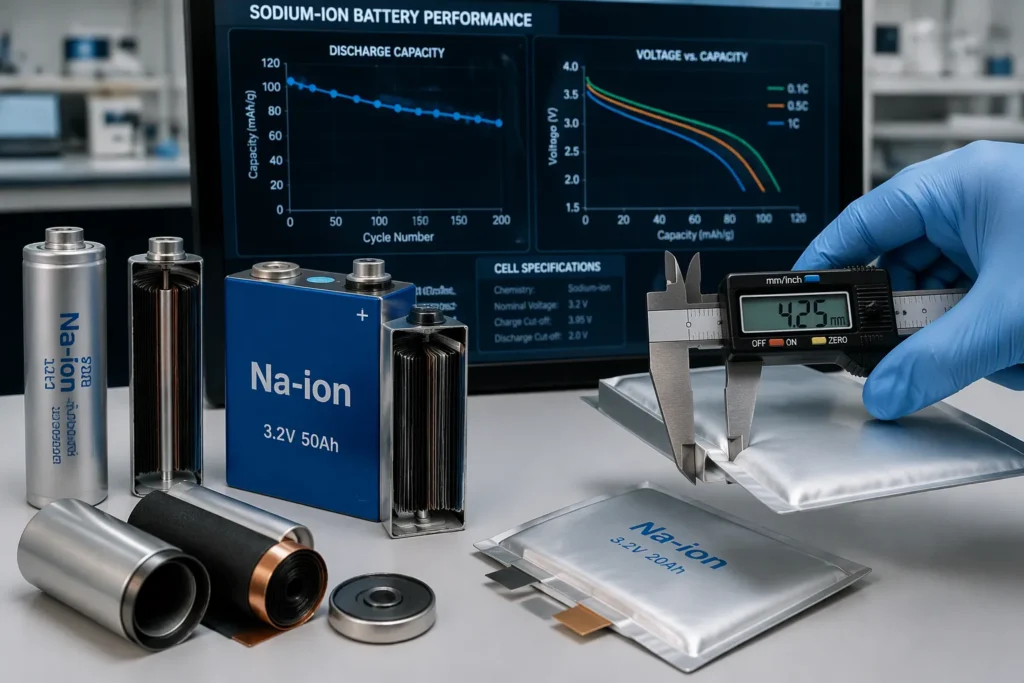
Cell geometry and packaging exert a strong influence on sodium-ion battery performance. They shape energy density, safety, cost and application fit in equal measure. Prismatic, cylindrical and soft-pack formats each bring distinct advantages. The right choice therefore depends on the target market rather than on a single universal answer.
Sodium-ion chemistry adapts familiar lithium-ion battery design principles, yet it imposes its own demands on density, porosity and mechanical integrity. These demands make the enclosure decision consequential. A well-matched format supports a robust battery pack and steady performance across a long service life. A poorly matched one adds cost and complexity. Design teams benefit from weighing format against duty cycle before committing to a sodium battery platform.
Key Takeaways
Cell geometry shapes current flow and resistance. Packaging protects the cell from damage.
Cell voltage stays fixed by chemistry. Compare formats using capacity, energy density, power and cycle life.
Prismatic cells suit electric vehicles. They fit existing production lines and support efficient cooling.
Large prismatic and cylindrical cells work well for grid storage. They offer high capacity and long cycle life.
Small cylindrical and soft-pack cells fit residential, portable and prototyping needs. They are compact and lightweight.
How Shape and Packaging Affect Sodium-Ion Battery Performance
Geometry, Current Flow and Battery Design
Geometry and enclosure choice play separate roles in sodium-ion battery performance. Geometry defines the internal structure. It sets the path for current flow and the distribution of active material across the electrodes. Battery packaging is the enclosure. It protects the cell from mechanical stress, moisture and thermal shock. Sodium-ion cells adapt lithium-ion battery design principles to suit sodium-specific electrochemistry. This battery design approach keeps proven manufacturing methods while adjusting for sodium ions. Design teams therefore treat geometry and enclosure as linked decisions within the wider battery architecture. A clear separation of the two concepts helps engineers avoid confusion during early planning.
Geometry governs current flow: short paths lower internal resistance.
The enclosure governs protection: the can or pouch shields the cell.
Both shape the final battery pack layout.
The size and shape of a cell change how current spreads across the electrodes. A compact format shortens the current path. A large format spreads current over a wider area. Both effects influence battery performance, yet neither alters the underlying electrochemistry. The sodium-ion battery electrode demands tighter control of density, porosity and mechanical integrity than a comparable lithium-ion electrode. This requirement makes cell and pack design more sensitive to the chosen format. Teams should test current distribution early in development.
Why Cell Voltage Is Design-Independent
Cell voltage stays fixed by cell chemistry. It does not change with battery shape, operating temperature or cell age. Performance differences therefore appear in capacity, energy density, power density and cycle life. A technical team that compares formats should track these metrics, not voltage. Voltage remains a property of the chemistry, so format comparisons should focus on measurable outcomes. The sodium battery format also affects how easily a pack meets safety and cost targets. The enclosure shapes thermal behaviour and mechanical protection. A well-chosen size supports a stable pack over a long service life. These factors guide format selection for each application.
Power Markets: Prismatic Cells for EVs
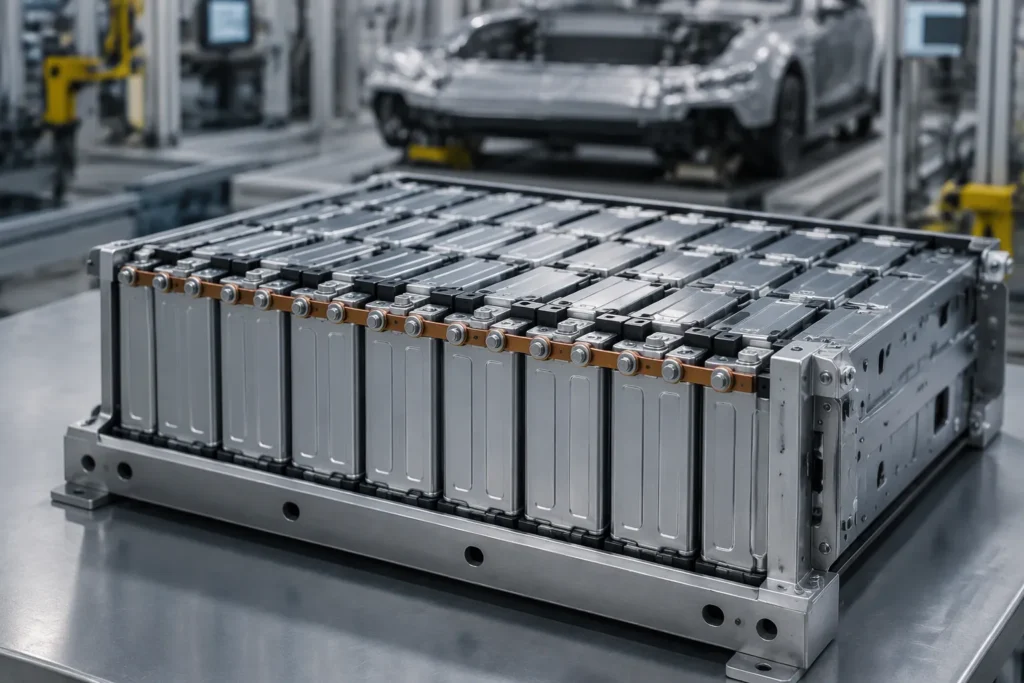
Prismatic cells dominate the power market for electric vehicles. Their rectangular housing stacks efficiently inside a vehicle floor. This shape also aligns with established production lines. Manufacturers can adapt existing lithium-ion equipment rather than build new tooling. That compatibility lowers capital expenditure and shortens the path to volume production. Sodium-ion chemistry then benefits from proven process knowledge. A recent review from Fraunhofer ISI tracks these manufacturing trends for sodium-ion cells (Fraunhofer ISI).
Production Compatibility and Cost
Production compatibility drives the cost advantage of prismatic formats. Existing electrode coating, stacking and welding stations accept prismatic cells with modest changes. The sodium battery uses similar current collectors and separators. Factories therefore reuse most of their equipment. This reuse reduces unit cost and accelerates scale-up. A prismatic format also simplifies battery pack design. Cells sit side by side in a rigid frame. Busbars connect them with short, direct paths. Short paths lower internal resistance and support steady performance. The pack needs fewer structural parts. That saving compounds the cost benefit at the vehicle level.
Cost also depends on material utilisation. Prismatic cells fill a rectangular module with little wasted space. The format supports a compact battery pack that fits under the passenger cabin. Design teams value this predictability during vehicle integration. The size of each cell sets the module footprint. A standardised footprint simplifies pack assembly and service access.
Energy density and thermal behaviour
Geometry and packaging shape energy density in vehicle packs. Prismatic cells pack active material into a rectangular volume with limited void space. This layout supports a competitive volumetric energy density. The flat, broad face of each cell also aids thermal management. Heat spreads across a wide surface. Cooling plates sit against the flat sides and draw heat away. This arrangement supports stable cell temperature during fast charging and heavy load. Stable temperature protects cycle life and safety margins.
The enclosure adds mechanical strength. A rigid aluminium can resists swelling and impact. That protection matters for a sodium battery in a crash-sensitive vehicle pack. Design choices therefore link directly to safety and durability. A well-matched prismatic format can deliver higher energy density than a loosely packed alternative. It also supports predictable thermal behaviour across the pack.
Prismatic cells fit the power market best where production scale and pack integration matter. Other formats retain their own strengths. Cylindrical cells offer standardisation and automated assembly. Soft-pack designs offer lightweight construction. Each format serves a distinct role. The prismatic route suits high-volume electric vehicle programmes that demand cost control and proven battery design.
Energy Storage: Matching Sodium Battery Format to Scale
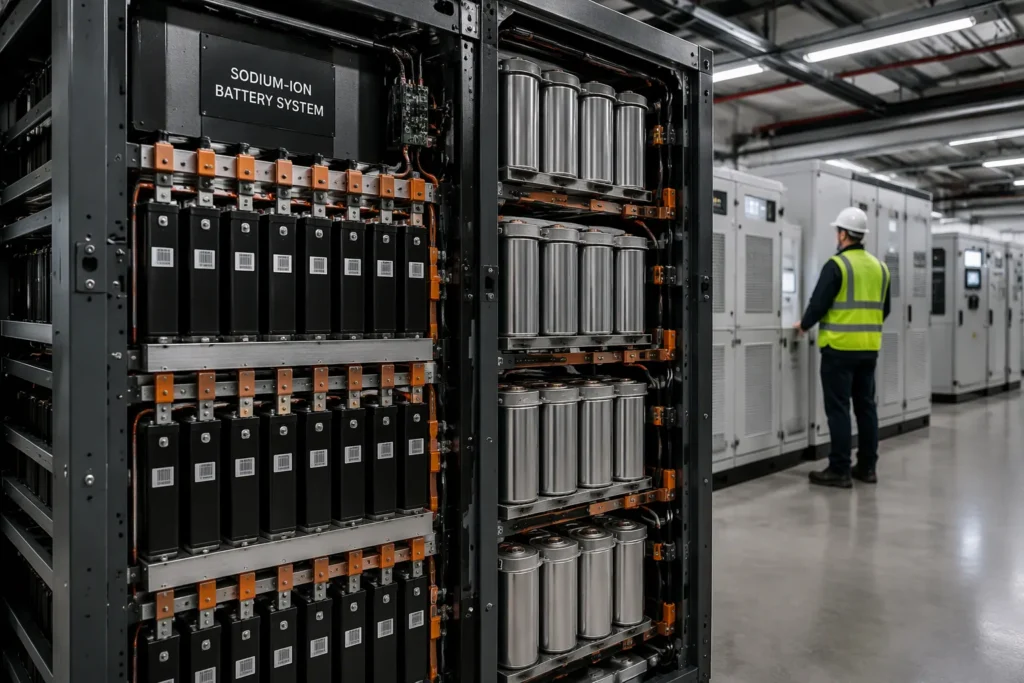
Energy storage systems span a wide range of scales. A grid substation may host racks of large cells, while a home may rely on a compact wall-mounted unit. Sodium-ion battery performance depends on matching the format to the duty cycle at each scale. Prismatic and large cylindrical cells serve grid storage well. Small cylindrical cells suit residential and portable use. Metal cans remain a traditional and reliable packaging option. They offer excellent protection against mechanical damage, and they support long service life in demanding sites. 🔋
Prismatic and Large Cylindrical Cells for Grid Storage
Grid storage demands long cycle life, stable safety margins and low cost per stored kilowatt-hour. Prismatic and large cylindrical cells meet these demands through their physical scale. A larger cell holds more active material per unit. This trait raises capacity and reduces the number of connections inside a battery pack. Fewer connections lower internal resistance and simplify the battery design. Large cells also reduce the part count in a rack. That reduction lowers assembly cost and improves reliability at the system level.
Prismatic cells stack neatly into modules. Their flat faces support uniform cooling across a rack. Large cylindrical cells offer a different strength. Their round shape resists internal pressure and supports automated winding. Both formats deliver strong cycle life under daily charge and discharge. Both also support the packing density that grid operators need to fit capacity into a limited footprint. A recent US Department of Energy resource on grid energy storage explains how system scale shapes technology choice (US DOE). Design teams should weigh floor space, cooling and service access before they fix a format.
Metal cans strengthen both options. A rigid can shields the cell from impact and swelling. This protection matters in a containerised site where vibration and handling are routine. The can also supports predictable thermal behaviour. These traits link directly to safety and cost. A well-protected cell needs less auxiliary hardware. That saving compounds across a large installation.
Small Cylindrical Cells for Residential and Portable Use
Residential and portable storage favour a smaller format. Small cylindrical cells fit into compact wall units and portable power stations. Their standardised size supports automated production and consistent quality. Cylindrical sodium batteries in this class offer a practical balance of energy density and cost. A homeowner gains a unit that is easy to install and service. A portable user gains a pack that is light and robust.
Small cylindrical cells also benefit from mature can packaging. The metal enclosure resists mechanical damage during transport and daily handling. This durability supports safety in a home or outdoor setting. Cycle life remains strong for the moderate duty cycles that residential systems see. The format also keeps the battery pack simple. Standard cell holders and spot-welded connections reduce assembly complexity.
Soft-pack sodium batteries offer a complementary route for prototyping and space-constrained designs. Their pouch enclosure is lightweight and flexible. Designers often use them to test new cell chemistries before committing to a hard-case format. Each format therefore serves a distinct role. The size of the installation guides the choice. A grid operator needs scale and cycle life. A household needs compact form and simple installation. Matching format to scale protects sodium-ion battery performance across both markets.
Comparing Prismatic, Cylindrical and Soft-Pack Designs
Prismatic Design: Compatibility and Cost-Effectiveness
Prismatic cells offer high production compatibility. Their rectangular housing fits existing coating, stacking and welding lines with modest changes. This fit lowers tooling cost and speeds scale-up for any sodium-ion platform. The flat faces support uniform cooling and a compact battery pack layout. Design teams gain predictable energy density and strong cycle life in vehicle and grid modules. The rigid can adds mechanical strength, which supports safety margins. Prismatic design fits best where volume production and pack integration matter most.
Cylindrical Shape and Soft-Pack Safety
Cylindrical cells bring standardisation and automated assembly. Their round shape resists internal pressure and dissipates heat well across the curved surface. Consistent quality follows from mature winding equipment. Cylindrical sodium batteries suit grid racks and residential units alike. Soft-pack sodium batteries use a lightweight pouch enclosure. That low mass supports competitive energy density, and the pouch vents predictably under abuse, which aids safety. Teams often choose pouch cells for prototyping before committing to a hard case. Soft-pack sodium batteries also fit space-constrained designs.
Format | Energy density | Cycle life | Safety | Cost | Best fit |
|---|---|---|---|---|---|
Prismatic | Competitive volumetric density | Strong | Rigid can resists impact | Cost-effective at volume | EVs, grid modules |
Cylindrical | Good, standardised | Strong | Good heat dissipation | Low through automation | Grid racks, home storage |
Soft-pack | Lightweight, competitive | Good | Pouch vents predictably | Moderate | Prototyping, tight spaces |
Each format shapes performance through its geometry and enclosure. The table above summarises the trade-offs. A neutral comparison from Fraunhofer ISI tracks these format trends for sodium-ion cells (Fraunhofer ISI). 🔋 Cell and pack design should follow the duty cycle, not fashion. The right size and cell chemistry match decide the outcome.
Cell geometry and packaging remain central to sodium-ion battery performance. The right format supports energy density, safety, cost and application fit. Prismatic cells suit electric vehicle programmes and grid modules, where production compatibility and pack integration matter. Cylindrical cells serve grid racks and residential units through standardisation and consistent quality. Soft-pack designs fit prototyping and space-constrained work. Each format therefore earns its place in a sodium-ion battery portfolio. Design teams should match the enclosure to the duty cycle. This battery design discipline protects performance across markets. A careful sodium battery design also keeps the battery pack simple and cost-effective. Format selection is a strategic decision, not a cosmetic one.
FAQ
Which cell format suits a sodium battery in an electric vehicle?
Prismatic cells suit electric vehicle programmes best. Their rectangular housing fits existing production lines and stacks neatly into a floor-mounted pack. Flat faces support uniform cooling. A design team gains cost control and predictable thermal behaviour. Cylindrical and soft-pack options remain viable for other vehicle segments.
Does cell shape change the voltage of a sodium-ion cell?
No. Cell voltage follows the chemistry alone. Shape, operating temperature and cell age do not alter it. Performance differences appear in capacity, energy density, power density and cycle life. A sodium battery design should therefore compare these metrics when selecting a format.
Why do grid storage projects favour large cells?
Large cells hold more active material per unit. They raise capacity and cut the number of internal connections. Fewer connections lower internal resistance and simplify the pack. Prismatic and large cylindrical formats both deliver strong cycle life under daily cycling. Metal cans add mechanical protection on site.
When should a team choose soft-pack cells?
Soft-pack cells suit prototyping and space-constrained work. The pouch enclosure is lightweight and vents predictably under abuse. Teams often test new chemistries in a pouch before committing to a hard case. A sodium battery in a tight enclosure benefits from this low mass.
How does packaging affect safety and cost?
The enclosure shields the cell from impact, moisture and swelling. A rigid can adds mechanical strength. A pouch saves mass. Both choices shape thermal behaviour and auxiliary hardware needs. Sound design balances protection against cost for the target duty cycle.