
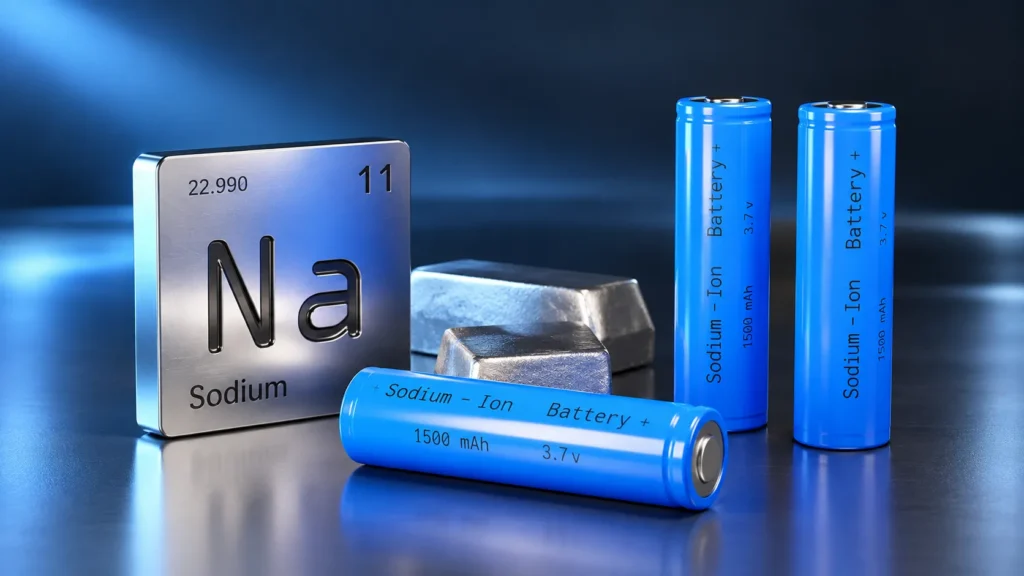
Three certification families govern sodium-ion batteries, and each plays a distinct role. UN38.3 covers transport, CE covers EU market access, and IEC covers product safety. Sodium-ion is a newer chemistry, so laboratories generally assess it under frameworks written for lithium cells. Buyers should therefore confirm the scope of every certificate instead of assuming equivalence. A practical sodium-ion battery factory certification review starts with the ce, un38.3, and msds certifications, then moves to the ce marking, un38.3 transport test certification, and msds documents a freight forwarder will request. This ce, un38.3 & msds guide explains what each certification entails, how the schemes differ, and how to verify un38.3 certification and CE claims before import, shipment or sale.
Key Takeaways
UN38.3 lets batteries travel safely by air, sea, road, or rail.
CE marking opens the European market for sodium-ion products.
IEC standards prove product safety for portable and industrial uses.
Always check certificates with the issuing laboratory before you buy.
Match the certification to your product’s destination and application.
Sodium-ion battery factory certification: the essentials
Why three certifications, not one
Each scheme answers a different question. Transport rules ask whether a cell can legally travel. Market-access rules ask whether a product may be sold in a given region. Product-safety standards ask whether the design is safe in use. No single document answers all three questions. A complete sodium-ion battery factory certification file therefore holds separate reports for each layer.
The table below sets out the division of labour.
Layer | Question it answers | Typical document |
|---|---|---|
Transport | Can the cell legally ship? | UN transport test summary |
Market access | Can the product be sold in the region? | EU declaration of conformity |
Product safety | Is the design safe in use? | Portable or industrial safety report |
How the frameworks fit together
The layers stack. Transport testing sits at the bottom. Product safety sits above it. Market access sits on top. The European conformity mark does not replace transport testing or the product-safety standards. It sits on top of them. Buyers who treat one document as a substitute for another leave gaps in their compliance file.
Sodium-ion cells usually go through frameworks written for lithium cells. Laboratories apply the same test sequences, and the resulting sodium-ion battery certifications carry familiar document names. The transport report, commonly called un38.3, proves the cell survives altitude, thermal, vibration, shock, short-circuit, crush, overcharge and forced-discharge tests. The European route, known as ce marking, rests on a technical file and a signed declaration. Industrial buyers often request iec 62619 for stationary systems.
Market-specific additions may also apply. UKCA covers the British market. RoHS restricts certain substances across the EU. A material safety data sheet, or msds, supports shipping and handling alongside the transport report.
Scope, application fit, regulatory compliance and cost differ across the three schemes. Transport testing is mandatory worldwide. Market access is mandatory only in the target region. Product safety is voluntary in law but often required by buyers and tenders. The full battery certification process therefore depends on destination and application, not on one global rule. A sound sodium-ion battery factory certification plan matches each document to its market.
UN38.3 certification for transport

What UN38.3 transportation testing covers
UN38.3 is mandatory for cross-border shipment of sodium-ion batteries by air, sea, road or rail. Without it, the battery cannot be shipped. Freight forwarders, airlines and carriers check the paperwork before they accept a consignment. A missing or expired report stops the shipment at the booking stage.
The standard sets out an eight-test sequence under Annex III, Part 38.3 of the UN Dangerous Goods regulations. The tests run in this order:
Altitude simulation
Thermal test
Vibration
Shock
External short circuit
Impact or crush
Overcharge
Forced discharge
Each test recreates a condition a battery meets in transit. Altitude simulation covers the low pressure of an aircraft hold. Thermal testing cycles the cell through hot and cold extremes. Vibration and shock mimic rough roads and loading docks. The short-circuit, crush, overcharge and forced-discharge tests push the cell beyond normal operating limits. A cell that passes all eight has shown it can fail safely rather than burn.
Samples must go to an approved laboratory. The lab runs the sequence on production-representative cells and issues a un38.3 test summary. That document proves the battery can withstand height changes, bumps and handling during transport. It is not a product-safety certificate and it says nothing about cycle life or performance.
Why sodium-ion shipments need it
Transporting sodium-ion batteries internationally follows the same rulebook as lithium. Regulators treat both chemistries as dangerous goods for transport purposes. Sodium-ion carries a lower fire risk in many designs, yet carriers still demand the report. The chemistry does not exempt a shipment.
A complete un38.3 test summary lists the cell model, the test laboratory, the report date and the pass result for each of the eight tests. Carriers often ask for this summary alongside an msds. The two documents travel together. The summary covers the test outcome; the msds covers handling, storage and emergency response.
Buyers should treat sodium ion battery certification un38.3 as a shipment gate, not a quality badge. The report confirms transport safety only. It does not replace the ce route for European sales or the IEC standards for product safety. A factory may hold a valid un38.3 certification and still lack the market-access file a European importer needs.
The un38.3 transport testing report also has a shelf life in practice. Carriers and forwarders expect a current edition and a recent report date. A report tied to an older cell design may not cover a newer model. Buyers should match the report to the exact cell or pack being ordered. This certification check takes minutes and prevents a stalled container at the port.
CE marking for EU market access
Directives, technical file and self-declaration
CE is a manufacturer’s declaration of conformity. It is not a third-party certificate. The factory assembles a technical file and signs the declaration itself. That file holds the risk assessment, test reports, drawings and the list of rules the product meets. A notified body steps in only for certain product categories. Most sodium-ion battery packs follow the self-declaration route.
The applicable rules depend on the product. A sodium-ion pack may fall under the EU battery regulation, EMC rules for the electronics, and low-voltage rules where the voltage range applies. The battery regulation 2023/1542 sets duties on labelling, documentation and conformity assessment. Buyers in Britain may also request UKCA, and RoHS restrictions often appear in the same tender.
What CE does and does not prove
The ce mark confirms conformity with applicable EU law. It opens the European market. It does not prove transport safety. A pack can carry the ce mark and still fail a un38.3 shipment check. It also says nothing about cell-level performance, cycle life or capacity retention.
Buyers should read the declaration of conformity as a legal statement, not a performance report. The document names the rules applied and the person responsible. It does not replace an msds for handling, and it does not replace a safety test report for the cell design.
A sound ce certification file lists the exact models covered. The factory signs the declaration for those models only. A new cell format needs its own assessment. Buyers should ask for the ce certification paperwork tied to the model they order. They should also confirm the standard editions cited in the file. This step keeps the ce certification claim honest and useful.
IEC standards for product safety
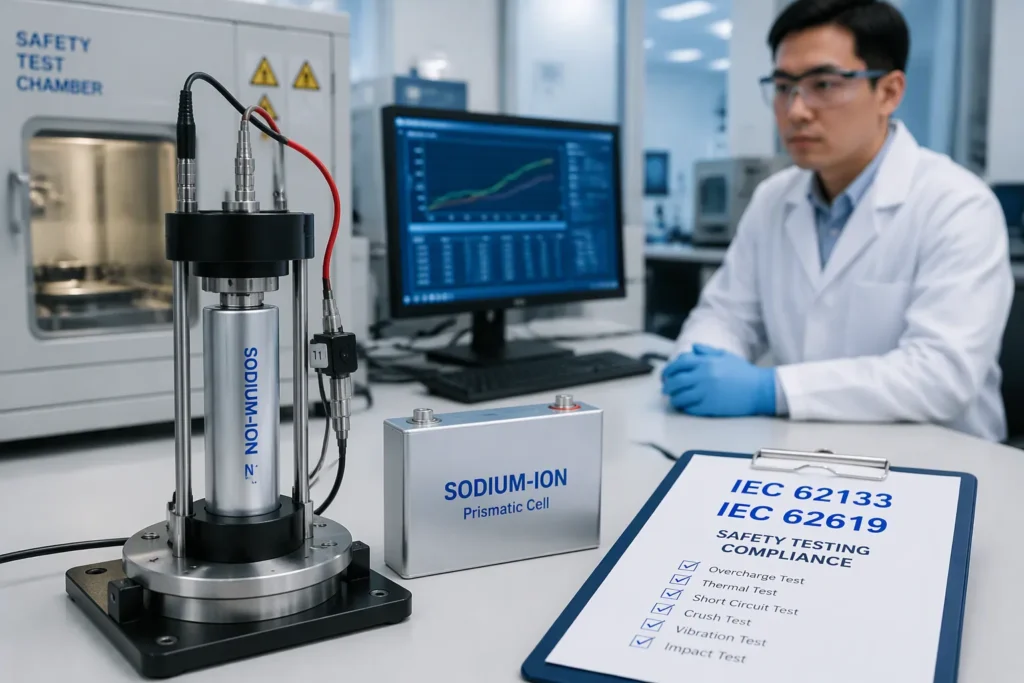
The third layer of the compliance file addresses product safety. Two iec standards carry most of the weight here, and the application decides which one applies. IEC 62133 covers portable sealed cells and packs. IEC 62619 covers industrial and stationary systems. A factory that builds both portable and stationary products needs both reports, and each report stands on its own.
IEC 62133 for portable cells
IEC 62133 sets the safety baseline for sealed cells and batteries used in portable applications. The standard tests a cell against abuse conditions such as short circuit, overcharge, forced discharge, crush and thermal cycling. A portable sodium-ion pack sold for consumer devices or light mobility work falls under this scope. The report proves the cell design fails safely under misuse.
Buyers should check that the iec 62133 report names the exact cell model. A report for one format does not cover another. The standard edition also matters, because older editions carry different test sequences. A current report cites the edition in force at the test date.
IEC 62619 for industrial systems
IEC 62619 addresses industrial and stationary applications, including large battery systems for energy storage. The standard adds tests for system-level hazards such as propagation and functional safety. A stationary sodium-ion system for telecom backup or grid support belongs here. The iec 62619 report gives project buyers and insurers the evidence they expect.
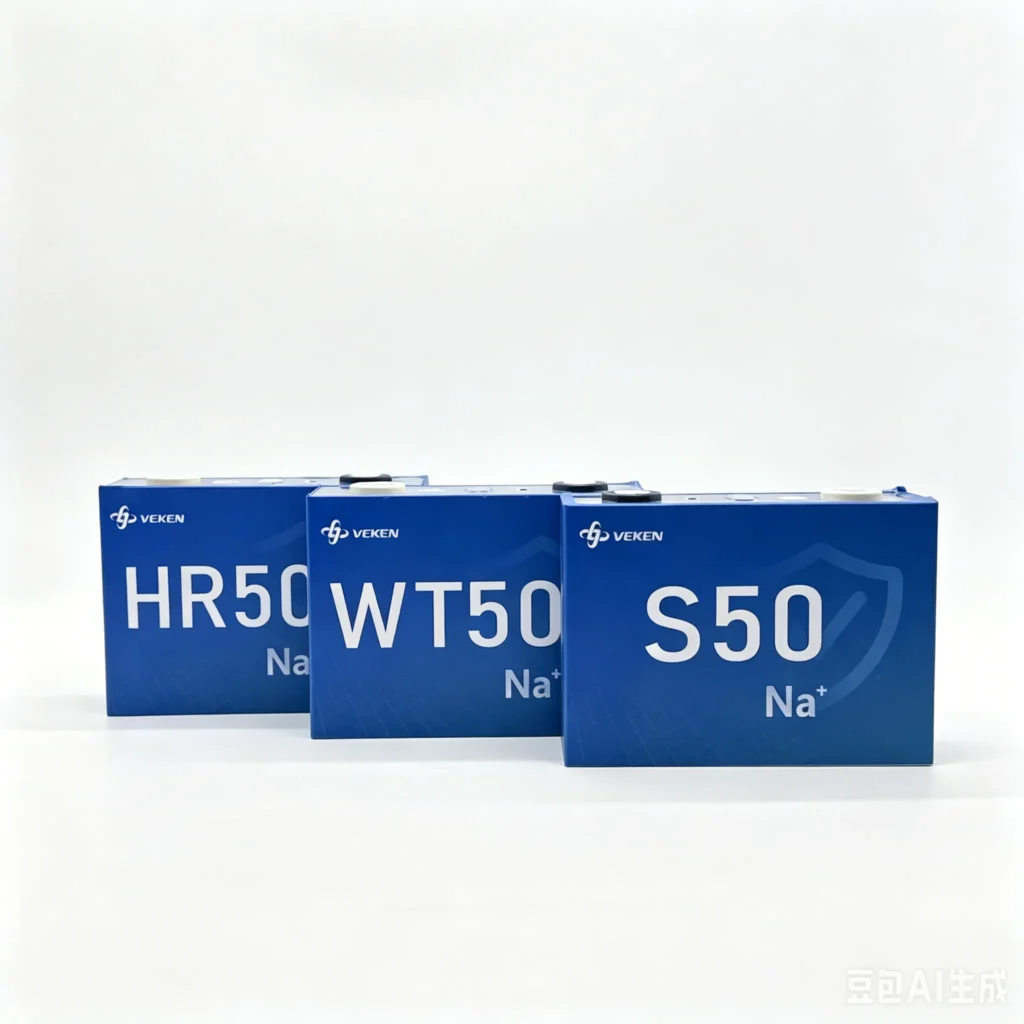
VEKEN‘s sodium battery range illustrates how these iec standards map onto real products. The cylindrical cells, such as the 32700 and 33140, and the prismatic cells, such as the 50160 and 72173, serve different applications. Factory evidence includes nail-penetration testing without fire or explosion, plus drop testing that confirms the cells survive handling. These results support the sodium battery safety certifications a buyer reviews. The sodium battery division draws on over 20 years in the energy industry and states more than 300 cooperative patents. Buyers should still confirm which iec 62619 scope each model holds, rather than assume the whole range shares one report.
The two iec standards do not overlap. A portable pack tested to IEC 62133 does not satisfy IEC 62619, and the reverse is also true. Project tenders often name the required iec standard directly, so the buyer can match the report to the tender clause. A clear certification file lists each model, its standard and its report date. An msds travels alongside these reports for handling and shipping.
The iec 62619 route also supports system-level claims. Stationary projects often ask for evidence of propagation resistance and functional safety. The iec 62619 report covers these points. A portable iec 62133 report does not. Buyers who mix the two documents leave a gap in the safety file.
A practical review of iec standards starts with the application. Portable products need IEC 62133. Industrial and stationary systems need IEC 62619. Both reports should name the exact model and the current edition. The iec 62619 report should also match the pack configuration on order. This check keeps the safety file complete and useful.
Additional certifications and documents
UL 1973, UL 9540A and SDS
North American stationary storage projects often ask for UL 1973 and UL 9540A. UL 1973 covers battery systems for stationary applications. UL 9540A examines thermal runaway fire propagation at cell, module, unit and installation level. Project owners, insurers and authorities having jurisdiction request these reports before they approve a grid or backup installation. A sodium-ion system bound for a North American site may therefore need both documents, even when the factory already holds un38.3 and ce paperwork.
These documents are buyer- or market-driven rather than universally mandatory. No global rule forces every sodium-ion shipment to carry UL 1973. A European portable product may never need it. A North American containerised storage project usually will. Requirements vary by destination and application, so the buyer should confirm the project specification before ordering. The same logic applies to the iec reports: a tender names the standard it wants, and the factory matches the report to that clause.
An SDS, or safety data sheet, is expected for shipping and handling. Carriers, warehouses and customs officers use it to understand hazards, storage conditions and emergency response. The document travels with the msds paperwork a forwarder requests, and it supports the transport file. A material safety data sheet does not replace the un38.3 test summary, and it does not prove product safety. It describes the substance and its handling rules.
A complete certification file for a sodium-ion project therefore holds several layers. Transport testing, market access, product safety and, where requested, North American fire-propagation evidence sit side by side. Each document answers a different question. Buyers should treat the msds: safety data sheet requirements as a shipping baseline, then add UL reports only when the destination market or project demands them. This approach keeps the file lean and matched to the actual order.
Verifying a factory’s certification status
Checking certificates and test reports
A buyer should treat every certificate as a claim that needs checking. The first step is a simple certification checklist. Confirm the certificate holder matches the manufacturing site. A report issued to a trading company or a parent group does not prove the factory that builds the cells holds the approval. Next, check the standard edition and the report date. An older edition may carry a different test sequence, and a stale report may not cover the current design.
The final step is direct verification. Buyers can contact the issuing laboratory or certification body and ask whether the report number is genuine. This check takes little time and closes the gap between a scanned PDF and a real approval. The same logic applies to the msds and to every piece of compliance documentation in the file.
Questions to ask VEKEN and other suppliers
Buyers should ask any supplier, including VEKEN, three direct questions. Which standards were tested? Which cell models does the report cover? Does the report cover the exact pack configuration on order? A clear answer names the standard, the model and the pack build. A vague answer signals a gap.
Site-level verification matters most in a multi-site supply chain. VEKEN’s manufacturing bases in Ningbo, Nanchang and Dongguan show why. A report tied to one site may not cover cells built at another. Buyers should match the certificate to the site that will ship their order. These questions turn sodium-ion battery factory certification from a paper exercise into a real check. They also keep the un38.3, ce and iec documents aligned with the actual product, and they confirm that the certification requirements for the destination market are met before the order is placed.
Each document does one job. UN38.3 lets a cell travel, CE opens the European market, and IEC shows product safety. No document replaces another. A complete sodium-ion battery factory certification file holds all three.
Buyers should match the paperwork to the destination and the application. Portable products need IEC 62133, while stationary systems need IEC 62619. They should also verify each certificate with the issuing laboratory before ordering. The same check applies to the msds and the un38.3 summary.
Sodium-ion standards are still maturing. Buyers should therefore confirm the latest edition of each standard with the factory. A certification file stays useful only when it tracks the current rules.
FAQ
Does a sodium-ion battery need UN38.3 if it travels by sea only?
Yes. The transport rules apply to air, sea, road and rail alike. A sea freight booking still requires a valid test summary. Carriers check the document before they accept the consignment, so the shipment cannot move without it.
Can a factory self-issue a CE mark for sodium-ion packs?
Yes, in most cases. The manufacturer builds the technical file and signs the declaration of conformity. A notified body steps in only for certain product categories. Buyers should still confirm the file names their exact model and cites current rules.
Which IEC standard applies to a home energy storage unit?
IEC 62619 fits industrial and stationary systems, and a home storage unit falls in that group. IEC 62133 covers portable sealed cells and packs instead. The buyer should match the report to the application and check that it names the exact model.
How can a buyer confirm an MSDS is genuine?
The buyer should check the document date, the manufacturer name and the model it covers. An msds should match the cell or pack on order. The buyer can also ask the factory for the source data behind the sheet.
Do older test reports still count?
Often not. Standards change, and a report tied to an older edition may not cover the current design. Buyers should check the edition and the report date, then confirm the report covers the exact model and pack configuration being ordered.