
🔋 Why Construction-Site Small Power Needs a Different Battery
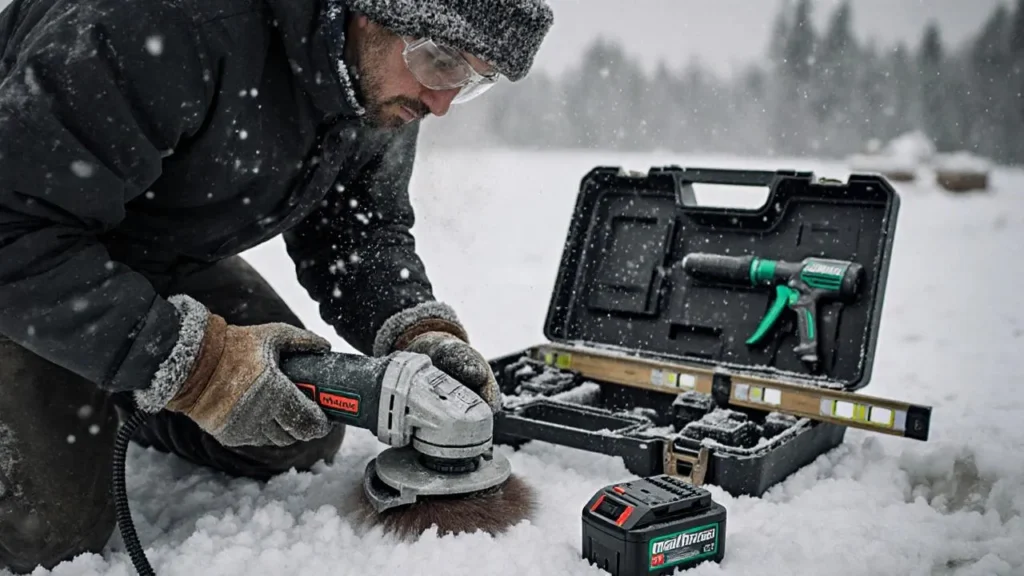
Construction sites use many types of small power equipment, including portable tools, temporary power devices, lighting equipment and other battery-powered equipment. For contractors working outdoors, battery weight, runtime and operating temperature can directly affect equipment usability.
The case material provided for this application identifies two specific problems with traditional lead-acid batteries:
- Low energy density and high weight
- Poor suitability for low-temperature operation
Cold weather makes battery selection more important. Construction workers can be exposed to cold stress, while freezing conditions can also affect tools, electrical equipment and temporary power systems. OSHA specifically identifies construction workers among those who can face cold-weather risks.
For this reason, a sodium-ion battery for construction equipment can be considered where low-temperature discharge and compact power supply are important design requirements.
Case type: This article describes a typical application scenario, not a named customer project. The available project material does not provide a customer name, order volume, cost-saving percentage or field-test report. No unsupported performance data is presented below.
🏗️ Construction-Site Battery Challenges
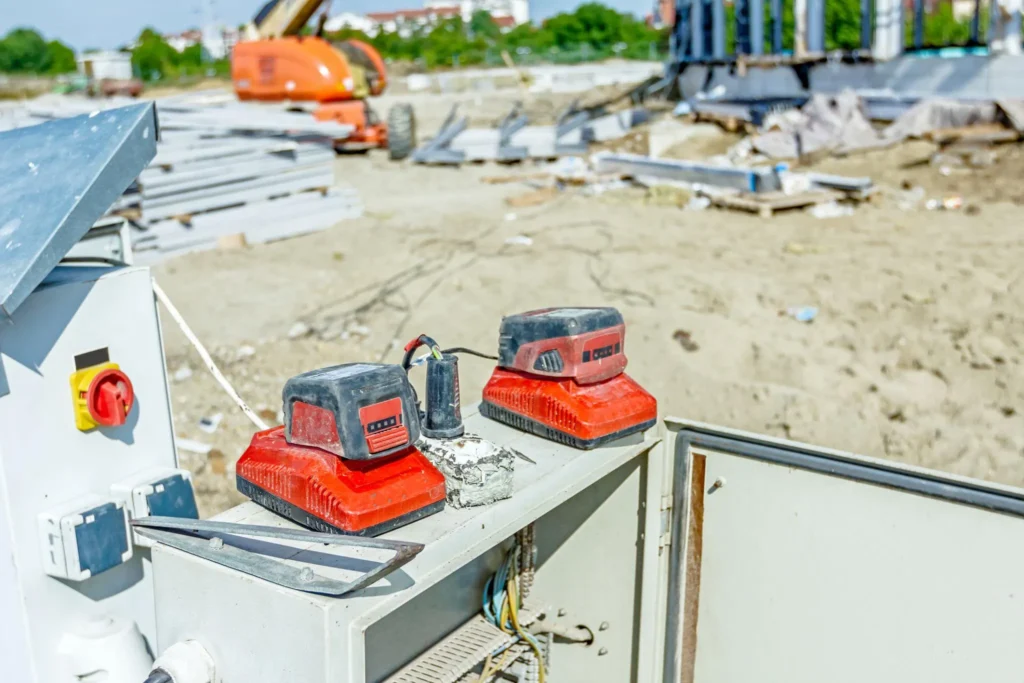
1. Lead-acid batteries can be heavy
Lead-acid batteries have long been used in industrial and backup applications, but their relatively low energy density can result in heavier battery systems for a given energy requirement.
On construction sites, this can create practical problems:
- More weight during equipment installation
- More difficult battery replacement
- Higher handling requirements
- Less flexibility for portable equipment
- Larger battery space requirements
For portable construction power, weight and available installation space are therefore important selection criteria.
2. Cold weather can affect battery operation
Low temperature is the most important issue identified in the supplied case material.
Outdoor construction projects may operate through winter, including projects in northern regions where temperatures can fall well below freezing. Battery performance should therefore be evaluated according to the specified charging and discharging temperature range, rather than simply assuming that every battery chemistry performs equally in cold conditions.
The IEA reports that sodium-ion batteries generally show stronger low-temperature performance than lithium-ion batteries, particularly compared with LFP chemistry, although sodium-ion still has lower energy density than leading lithium-ion technologies.
3. Battery selection must match the equipment
A construction-site battery is not selected only by nominal capacity.
A practical specification should include:
| Selection factor | Why it matters |
|---|---|
| Capacity | Determines available stored energy |
| Weight | Affects portability and installation |
| Discharge rate | Determines whether the battery can support the load |
| Operating temperature | Critical for outdoor winter applications |
| Cycle life | Important for repeated daily operation |
| Charging temperature | Must match the actual charging environment |
| Protection system | Helps manage electrical operating risks |
This approach is more useful than comparing battery technologies only by price per unit.
⚡ Veken S170 Sodium-Ion Battery Solution
Based on the supplied application material, the proposed solution uses the Veken S170 sodium-ion cell to address the energy-density and low-temperature requirements of construction-site small power.
Veken’s published S170 specifications include:
- Rated capacity: 170Ah
- Nominal voltage: 2.85V
- Cathode material system: NFPP
- Weight: 4.8kg
- Maximum continuous charge/discharge rate: 1P / 1.5P
- Cycle life: more than 8,000 cycles
- Published operating-temperature information: charging above 0°C and up to 55°C; discharging from -40°C to below 60°C.
The low-temperature specification is particularly relevant to the case because the original project material identifies cold-weather operation as a critical pain point.
🔄 Application Logic
A typical construction-site small-power system can be evaluated through the following process:
Job-site equipment → Power demand assessment → Battery capacity selection → Temperature requirement check → BMS/system design → Field verification
The key point is that the battery cell is only one part of the complete system. Final performance depends on the battery pack, battery management system, charger, electrical load and actual environmental conditions.
❄️ Why Sodium-Ion Battery Technology Fits Cold-Climate Applications
Sodium-ion batteries are not a universal replacement for lithium-ion batteries.
The IEA notes that sodium-ion batteries currently have lower energy density than LFP and other leading lithium-ion technologies. However, their low-temperature performance can make them attractive for selected applications, especially where extreme cold is a major operating condition.
This creates a clearer application strategy:
Sodium-ion can be considered when:
- Outdoor operation is frequent
- Low-temperature discharge is important
- Battery weight matters
- High cycle life is required
- The equipment does not require the highest possible energy density
- Stationary or semi-portable power is more important than maximum driving range
Lithium-ion may remain preferable when:
- Maximum energy density is the primary requirement
- Space is extremely limited
- The operating environment is controlled
- The application already has a mature lithium-ion battery platform
This is why sodium-ion vs lithium-ion battery selection should be based on operating conditions rather than chemistry alone.
📊 What This Case Demonstrates
The available project material does not provide verified customer savings, efficiency improvement or field cycle-life data. Therefore, those figures should not be invented for SEO content.
Instead, the measurable technical information currently available is the S170 specification published by Veken:
170Ah → 2.85V → 4.8kg → >8,000 cycles → low-temperature discharge specification down to -40°C.
This makes the scenario relevant to several potential B2B applications:
- Construction-site small power
- Portable industrial equipment
- Outdoor power systems
- Temporary job-site power
- Cold-climate equipment
- Industrial backup power
- Mobile energy storage
Veken’s battery portfolio also includes small power, starting power supply, energy storage and special vehicle power supply categories, indicating that sodium-ion technology can be evaluated across different power requirements.
🏭 Why Manufacturing Capability Matters in B2B Battery Projects
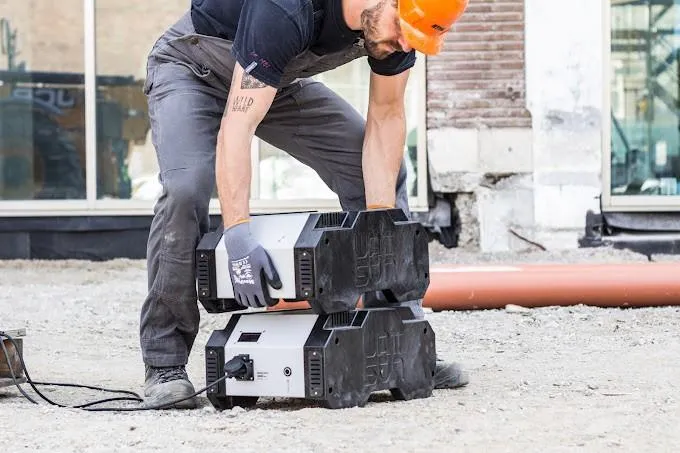
For B2B buyers, battery performance is only one part of supplier evaluation. Production capability, engineering resources, quality control and customization capacity also matter when an application moves from sample testing to volume procurement.
Veken states that it has battery production capabilities covering lithium and sodium batteries and operates manufacturing facilities for industrial applications including energy storage and vehicle-related power systems. Its published information also describes automated production and testing capabilities.
Veken also provides OEM/ODM services, allowing battery solutions to be adapted to specific application requirements.
For a construction-equipment buyer, the practical evaluation should therefore cover:
- Load requirement — continuous and peak power
- Runtime requirement — hours per working shift
- Temperature range — especially minimum discharge temperature
- Battery dimensions and weight
- Charging method and charging environment
- BMS and protection requirements
- Required certifications
- Sample validation before volume production
- OEM/ODM requirements
- Production capacity for repeat orders
✅ Conclusion: A Practical Sodium-Ion Battery Case
This construction-site small-power scenario shows where sodium-ion batteries can provide a practical alternative to traditional battery systems.
The key requirement is not simply “higher battery performance.” It is the combination of manageable weight, sufficient energy capacity, repeated cycling and reliable low-temperature discharge.
For this specific application, the supplied case material identifies lead-acid battery weight and cold-weather operation as the main problems, while Veken’s published S170 specifications provide a technical basis for evaluating a sodium-ion solution.
At the same time, sodium-ion should be selected according to actual operating requirements. Its lower energy density means it is not automatically the best choice for every battery-powered construction application. The strongest use cases are those where cold-weather operation, cycle life and practical system design are more important than achieving the highest possible energy density.
For B2B buyers, the next step is field validation: define the load, temperature range, runtime and charging conditions first, then compare the proposed sodium-ion battery system against the existing battery configuration.
🔗 Reference & Technical Resources