
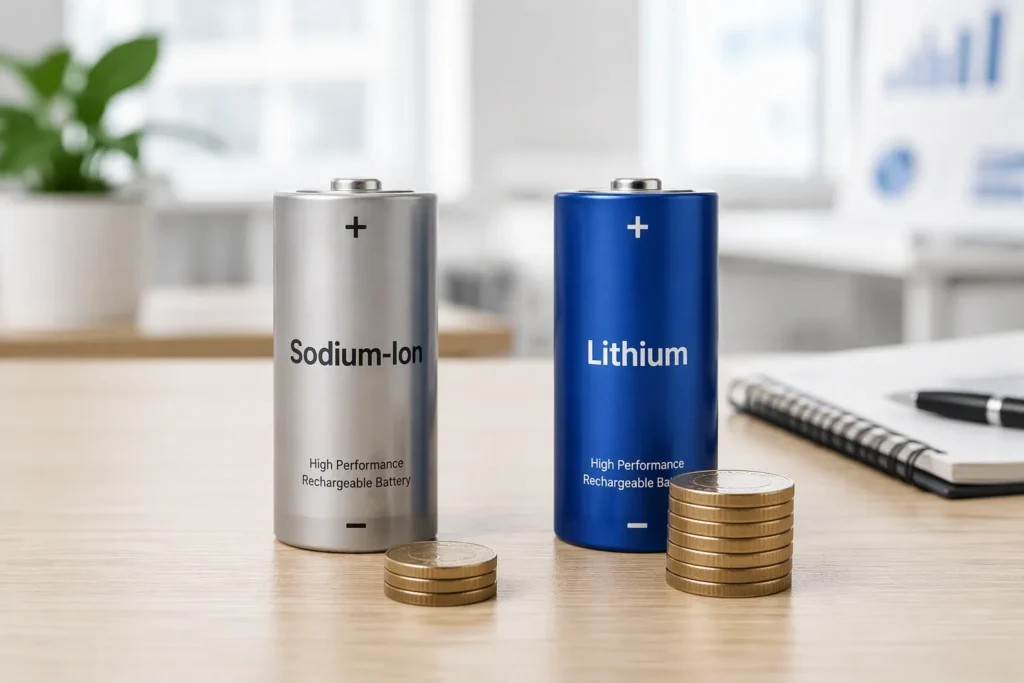
Sodium-ion batteries cost less than lithium-ion batteries for three main reasons. First, sodium-ion batteries use raw materials that are cheaper and easier to find. Second, their parts and production cost less. Third, they save money at the system level in the uses where sodium-ion works best.
Sodium-ion cells now cost almost the same as lithium-ion cells, and the cost of sodium-ion vs lithium batteries can drop even more. So the sodium-ion vs lithium battery cost comparison really depends on which use each one fits at a lower cost. Neither one wins in every case.
Key Takeaways
Sodium-ion batteries use cheap, plentiful materials like sodium and iron. This lowers the cost of materials and reduces the risk of price changes.
Sodium-ion batteries use aluminum foil instead of costly copper, and their electrolytes cost less. They can also be built on the same production lines that already make lithium-ion batteries.
Sodium-ion batteries work best for storage that stays in one place, backup power, and cold weather. They save money over time because they last through many charges and are safe by design.
Sodium-ion batteries are not always cheaper. Lithium-ion still wins for electric cars and devices that need to store a lot of energy in a small space.
Pick the right battery for the task. Sodium-ion batteries pay off with lower overall costs when used in the right situations.
Reason 1: Abundant Raw Materials Lower Sodium-Ion vs Lithium Battery Cost
Sodium Is Cheap and Everywhere
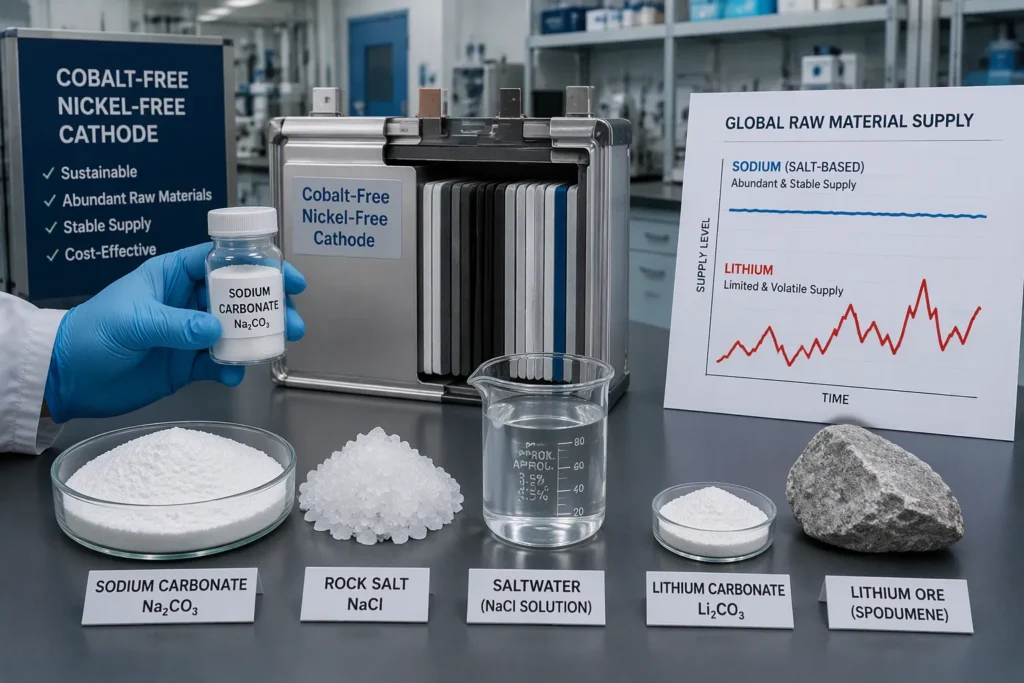
Sodium is one of the most common elements on Earth. A large share of the dissolved salt in seawater is sodium. It also shows up widely in the earth’s crust as rock salt and soda ash. This abundance shapes the cost story. Sodium-ion batteries use raw materials that are cheaper and easier to get than lithium cells do.
Sodium carbonate, the main industrial sodium source, is more abundant and cheaper than lithium carbonate. Producers make it at large scale for glass, detergents, and other industries. That existing supply chain keeps prices steady. Salt and soda ash reach factories through mature logistics networks. That scale keeps unit prices low and predictable. Lithium carbonate, by contrast, comes from a smaller set of mines and brine operations. Its price swings widely with demand. So buyers of sodium-ion batteries face lower material costs and less price risk.
Having plenty of sodium supports long-term planning. A factory can secure feedstock without competing for scarce deposits. This supply of abundant raw materials matters for any product team that models raw material costs over a multi-year horizon. Sodium ranks among the abundant global resources that industry already handles at scale. Public data from the USGS Mineral Commodity Summaries tracks both materials and shows the scale gap clearly.
Sodium is not scarce. The cost advantage starts at the mine and the salt pan, not on the factory floor.
Cathodes Without Cobalt or Nickel
Cathode chemistry drives much of a cell’s material bill. Cathode material often makes up the largest single cost line in a cell. Lithium-ion batteries often rely on cobalt and nickel in the cathode. These expensive metals like lithium and cobalt carry high and volatile prices. They also sit in concentrated supply chains.
Sodium-ion batteries take a different path. Engineers build sodium-ion cathodes from iron and manganese. Both elements are cheap to source and widely traded. Iron and manganese markets already serve steel and alloy industries. Prussian white, layered oxide, and similar families all avoid cobalt and nickel. This design choice removes the priciest battery materials from the bill of materials.
The result is a simpler cost structure. Cell makers can plan around commodity iron and manganese prices. Those markets are deep and stable. Sodium-ion batteries avoid expensive metals like lithium and cobalt in the cathode. The cell thus combines cheap sodium with cheap cathode metals. The two savings stack. Lower cathode input prices pass through to the final pack price.
Lithium-ion still fits best where high energy density is the priority. Electric vehicles and premium portable devices need light, compact cells. Sodium-ion trades some energy density for cost and stability. That trade suits many stationary and entry-level uses.
Product managers who compare sodium-ion batteries with lithium-ion batteries see the gap in the cathode line first. The availability of raw materials shapes every cell chemistry. Sodium-ion batteries therefore carry less exposure to metal price spikes.
Cost driver | Sodium-ion | Lithium-ion |
|---|---|---|
Primary metal source | Sodium carbonate | Lithium carbonate |
Cathode metals | Iron, manganese | Cobalt, nickel (often) |
Price stability | Higher | Lower |
Reason 2: Lower Component and Production Costs for Sodium-Ion Batteries
Aluminum Current Collectors on Both Sides
Every cell needs a current collector. This thin metal foil carries electrons to and from the electrode. The choice of foil metal shapes the component bill directly.
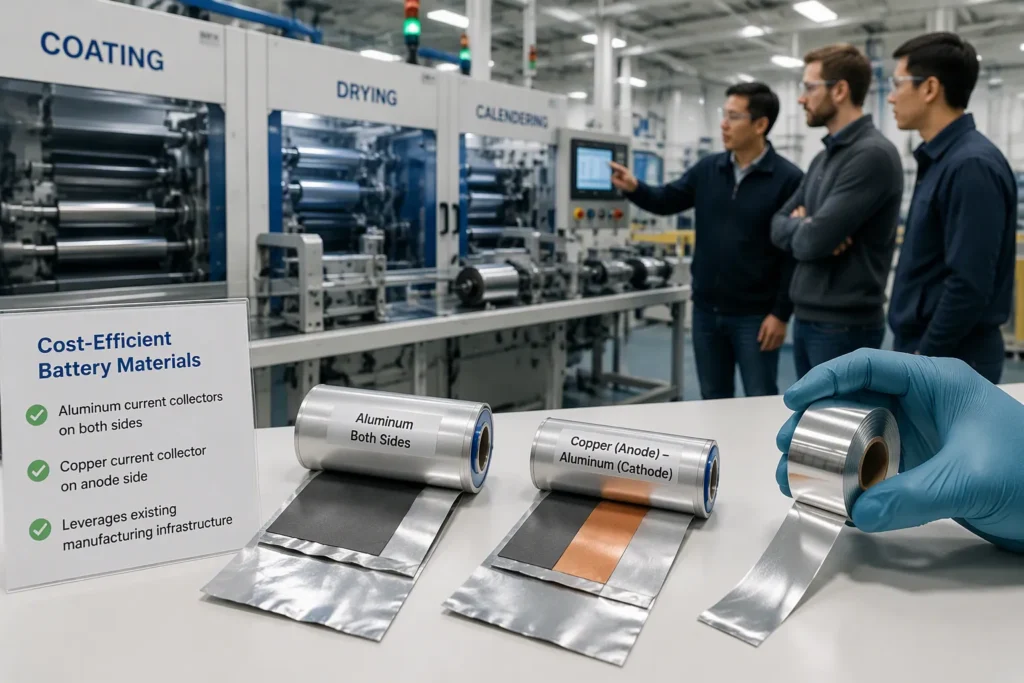
Sodium-ion batteries can use aluminum foil on both sides of the cell. The cathode sits on aluminum, and the anode sits on aluminum too. Lithium-ion batteries cannot do this. Their anode side needs copper foil instead. Copper costs much more per kilogram than aluminum, and copper foil adds weight too. A pack builder who swaps copper for aluminum on the anode side takes one of the pricier metals out of the design.
The saving adds up across a large pack. A grid-scale container holds many cells, and each cell has foil on both faces. Aluminum foil also fights corrosion at low voltage, so the anode side stays steady during deep discharge. Sodium-ion batteries therefore get two benefits: a cheaper metal and a more forgiving one.
Component | Sodium-ion cell | Lithium-ion cell |
|---|---|---|
Cathode foil | Aluminum | Aluminum |
Anode foil | Aluminum | Copper |
Relative foil cost | Lower | Higher |
Cheaper Electrolytes and Reusable Production Lines
Electrolyte gives another saving. Sodium salts cost less than the lithium salts used in lithium-ion batteries. Sodium-ion batteries also work with simpler solvent blends. Formulators get room to choose low-cost ingredients without hunting for rare additives. The electrolyte line of the bill of materials gets smaller as a result.
Manufacturing brings the bigger gain. A cell plant built for lithium-ion batteries already has the coating, drying, pressing, and assembly equipment. Sodium-ion production can run on that same hardware with small changes. Builders skip a second capital round. They reuse existing lithium-ion production lines and skip years of new tooling. This reuse of lithium-ion manufacturing infrastructure brings a huge cost reduction for anyone entering the market. It also explains why sodium-ion battery production costs drop faster than many analysts expected.
Shipping adds a final saving. Sodium-ion battery cells can travel at zero state of charge. A discharged cell holds little stored energy, so transport rules ease and fire risk drops. Freight and insurance costs fall in step. The combined effect on production costs is real and measurable at the pack level.
A procurement team should model three lines: foil metal, electrolyte, and capital equipment. Sodium-ion wins on all three. That is why sodium-ion batteries keep closing the gap on price. The cost reduction does not depend on scale alone. It comes from the design itself.
Reason 3: System-Level Savings Where Sodium-Ion Battery Fits Best
Stationary Storage and Backup Power
Energy density decides where each chemistry fits. Sodium-ion batteries hold less energy per kilogram than lithium-ion batteries. That gap matters little in a fixed installation. A storage container or a backup cabinet has room and weight to spare. Sodium-ion batteries give acceptable energy density for stationary storage and entry-level uses. Their lower material and production costs then pass right into a lower total cost of ownership.
The savings add up over a project’s life. A buyer pays less per kilowatt-hour upfront. The system then runs for thousands of cycles without a replacement. Stationary storage and backup power reward that profile. Grid support, peak shaving, and uninterruptible power all value cycle life over pack weight. Industry analysts track this shift in the IEA energy storage report. The price advantages of sodium-ion batteries show up most clearly in these fixed, long-life roles.
System factor | Sodium-ion battery | Lithium-ion battery |
|---|---|---|
Energy density need | Low to moderate | High |
Cycle-life value | High | High |
Upfront material costs | Lower | Higher |
Safety and Cold-Climate Savings with VEKEN Sodium Battery
Safety changes the system bill. A cell that resists thermal runaway needs less packaging, fewer sensors, and simpler thermal management. VEKEN Sodium Battery applies this principle across commercial and industrial energy storage, residential storage, backup power, and extreme-cold emergency lighting. The cells pass nail penetration testing without fire. That built-in safety trims enclosure and cooling costs at the cabinet level.
Cold weather adds another saving. VEKEN Sodium Battery holds stable output at low temperatures, so arctic sites skip auxiliary heaters. Heaters use energy and add failure points. Long cycle life then cuts replacement frequency. Together these factors deliver real cost and safety benefits for remote and unattended sites. The cost and sustainability case rests on fewer parts and fewer service trips.
Lithium-ion technology still leads where high energy density and a mature ecosystem matter most. Electric vehicles and premium electronics need light, compact packs. Next-generation sodium-ion batteries target the fixed, cold, and safety-critical roles instead. Buyers who match chemistry to duty cycle capture the lower cost without compromise.
Three things cause the sodium-ion vs lithium battery cost gap: plenty of raw materials, lower part and production costs, and system-level savings in the right uses. Sodium-ion batteries are not cheaper everywhere. The sodium-ion vs lithium battery cost advantage holds in stationary storage, backup power, and cold-climate sites. Lithium-ion batteries still fit best where high energy density or a mature ecosystem matters.
Sodium-ion batteries work well for fixed, long-life roles. Sodium-ion cells resist cold and fire risk. Sodium-ion packs serve those roles. Teams should compare sodium-ion with lithium-ion chemistry for each application’s energy, safety, and cost priorities. Sodium-ion batteries reward that careful approach. The sodium-ion vs lithium battery cost savings show up when teams match chemistry to duty cycle.
FAQ
Why do sodium-ion batteries cost less than lithium-ion batteries?
Three things cause the gap. Sodium and iron-based cathode metals are cheap and easy to find. Aluminum takes the place of copper on both foil sides. Current lithium-ion plants can also make sodium-ion batteries with small changes. Together these points lower material and production costs.
Do sodium-ion batteries use cobalt or nickel?
No. Most sodium-ion designs make the cathode from iron and manganese. These metals are cheap and widely traded. This choice takes the priciest cathode inputs out of the bill of materials. Lithium-ion is still the better fit where high energy density matters most.
Can sodium-ion batteries ship at zero charge?
Yes. Sodium-ion batteries can travel fully discharged. A discharged cell holds little stored energy, so transport rules ease and fire risk drops. Freight and insurance costs fall as a result. This shipping advantage adds to the overall savings.
Where does sodium-ion fit best on cost?
Fixed, long-life roles suit sodium-ion batteries best. Stationary storage, backup power, and cold-climate sites reward long cycle life over low pack weight. VEKEN Sodium Battery serves these roles, holding stable output at -40°C without heaters. Lithium-ion still leads in electric vehicles and premium electronics.
Are sodium-ion batteries safe enough for indoor use?
Yes. Sodium-ion cells pass nail penetration tests without fire or explosion. This built-in safety cuts packaging, sensor, and cooling needs at the cabinet level. Installers can place systems indoors with fewer fire-mitigation measures.