
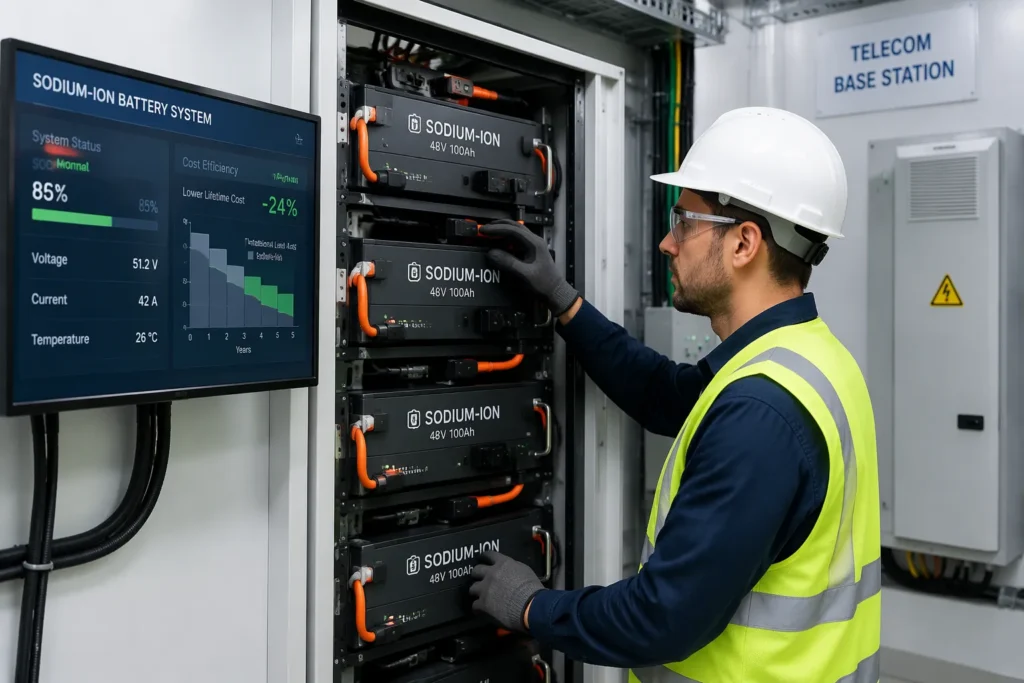
Can sodium-ion in telecom base station backup keep a site running when the grid drops? Yes — and it can cut lifetime costs too. Operators care about uptime first. Sodium-ion batteries keep their output during outages and handle heat well. That matters at unattended sites, where safety and low maintenance really count.
Then there’s money. A higher sticker price often hides behind a lower total cost of ownership, thanks to longer life and fewer site visits. Application fit decides the rest. Sodium-ion energy storage suits cabinets with room to spare, while other chemistries still win in tight spots. So the honest answer on backup power is a qualified yes — reliable, economical, and site-dependent.
Key Takeaways
Sodium-ion batteries give dependable backup power for telecom sites. They keep a steady output and work well in heat and cold.
Sodium-ion batteries cost less overall across ten years, as they need fewer replacements and site visits.
Sodium-ion batteries work well at large, unmanned sites in harsh weather. Other battery types are better for small sites or places that need fewer charge cycles.
Operators should check safety and transport standards, such as IEC 62619 and UN 38.3, before they order sodium-ion batteries.
Choosing the right battery chemistry for each site’s space, climate, and outage pattern gives reliable and economical backup power.
Reliability of Sodium-Ion in Telecom Base Station Backup
Performance and Fast Charging
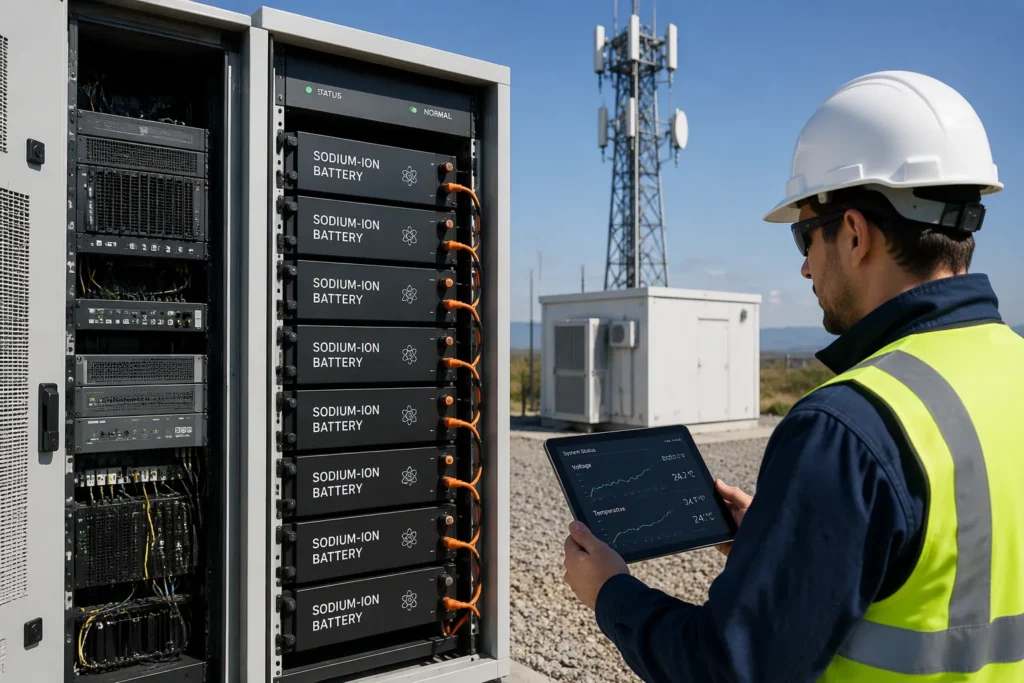
Operators want a battery that works well when things go wrong. Sodium-ion does. This chemistry takes a charge quickly, so a site can get its backup power back soon after an outage ends. That short recharge time matters when the grid is unreliable and power cuts happen in groups.
Switching over is the other test. A base station backup must carry the load the moment mains power fails. Sodium-ion backup systems keep their voltage steady during that switch. 5G radios pull heavy bursts of power without pulling the supply down. Steady output keeps calls and data sessions going instead of losing them.
Safety at Unattended Sites
Most rural sites are left empty for weeks. No one is there to smell smoke or hear an alarm. Sodium-ion chemistry runs cooler under stress and resists thermal runaway better than many other options. That gives engineers a calmer story to tell at a remote cabinet. It doesn’t make lithium-ion unsafe — that chemistry has a strong record in managed sites with good thermal control.
Being honest helps here. Sodium-ion batteries hold less energy per kilogram, so a pack ends up bulkier and heavier. The discharge curve also slopes as it empties. A simple cut-off setting can shut the system down early and waste usable capacity. Designers fix this with a wider cabinet, a smarter battery management system and a voltage threshold set to the real curve. A backup power system built this way uses most of the stored energy.
Lifespan and Durability
Long cycle life is the quiet win. Sodium-ion cells handle repeated partial cycles well, which is exactly how backup duty works — shallow discharge, then recharge. Calendar ageing stays modest too, so a pack that sits idle for months still answers when called.
Heat is the usual killer of energy storage systems in the field. Sodium-ion puts up with high ambient temperatures with less strain, and it keeps working in the cold. Fewer thermal surprises mean fewer truck rolls for maintenance. That’s a real cost saving for any telecom operator running distributed sites.
Lifespan and Durability of Backup Batteries
Cycle Life and Calendar Ageing
Backup work is easy on a battery. A site battery stays full most of the time, loses a little power during an outage, then charges up again. Sodium-ion cells handle that pattern well. They give a long cycle life even when the drains are small and happen often. That’s what happens every day at a site with an unstable grid.
Calendar ageing counts just as much. A pack can sit for months between events. Sodium-ion chemistry ages slowly while it waits, so the capacity is still there when it’s needed. Operators get more useful years from each pack. Fewer replacements mean a lower lifetime cost per site.
Tolerance of Harsh Environments
Cabinet temperatures change a lot. The sun heats the metal by day, and frost bites at night. Sodium-ion batteries deal with both extremes. Their high-temperature performance stands out — the cells stay calm under steady heat with less strain than many other options. Cold mornings don’t stop them either.
Why does this matter for a telecom battery? Heat is the usual killer of energy storage systems in the field. A chemistry that puts up with it needs less cooling hardware and fewer site visits. That cuts maintenance spend across a spread-out estate.
One warning deserves a mention. Sodium-ion packs are bulkier, so designers must plan airflow around the larger cabinet footprint. Get that right, and the pack runs cooler and lasts longer. The payoff is simple: tough energy storage that asks little of the operator.
Cost Benefits of Sodium-Ion Backup Power
Upfront Cost and Total Cost of Ownership
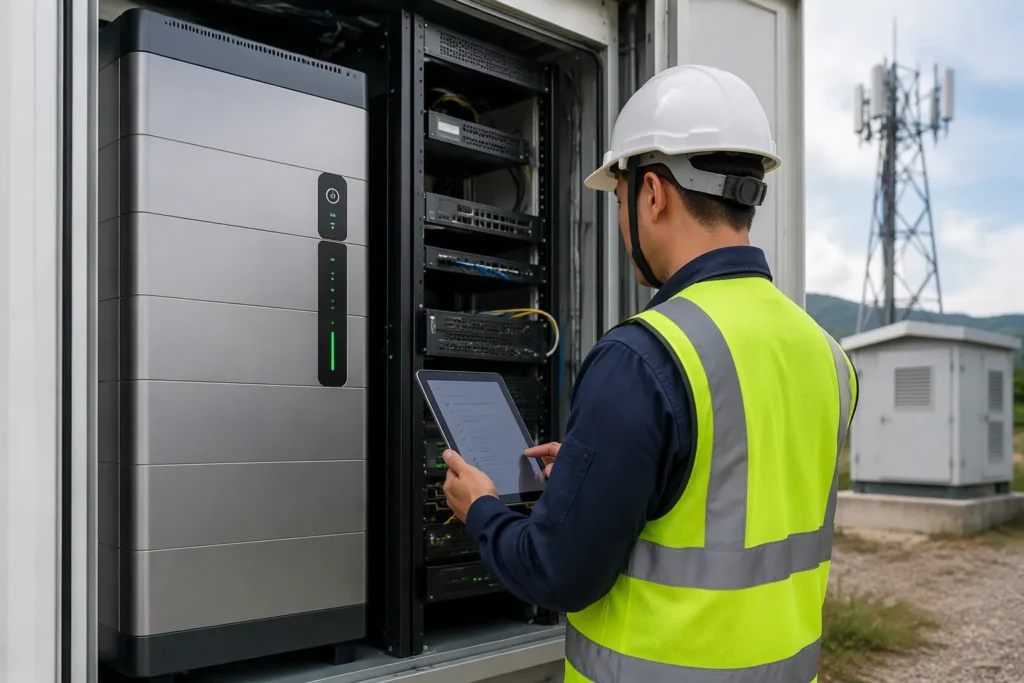
Here’s the first question every operator asks: what does it cost to buy? Sodium-ion cells still cost more than lead-acid today. That gap is closing fast. As factories make more of them, unit costs should drop below $50/kWh. At that point, sodium-ion becomes cheaper than lead-acid for telecom backup. 💡
The purchase price never tells the whole story, though. Look at the 10-year total cost of ownership for 5G base stations. Sodium-ion runs 60–67% lower than lead-acid, even with that higher starting price. How? Longer life means fewer replacements. Fewer replacements mean fewer site visits. The savings add up year after year.
Think of it this way. A lead-acid bank might need changing several times over a decade. Each swap brings labour, travel and downtime. A sodium-ion backup power system spreads that spend over a much longer stretch. The extra upfront cost pays itself back well before the pack reaches end of life.
Maintenance and Scalability Savings
Maintenance is where the quiet money sits. Sodium-ion batteries ask very little of the operator. They resist heat, tolerate cold and age slowly on the shelf. That means fewer truck rolls, fewer check-up visits and less downtime chasing faults. For a spread-out estate, those savings build up quickly.
Scalability matters just as much. Operators can roll out a sodium-ion backup power system across hundreds of distributed sites without creating a heavy service burden. The chemistry suits remote cabinets, rooftop enclosures and hard-to-reach locations. No cooling hardware to look after. No frequent water top-ups like flooded lead-acid. Just install and monitor.
Compare that with energy storage systems built on older chemistry. Those often need regular inspection, terminal cleaning and capacity testing. Each task costs money and pulls a technician away from other work. Sodium-ion cuts that list considerably.
What about power outages and their cost? Every outage that a backup handles well avoids a site visit and a revenue hit. Reliable backup power turns a possible emergency into a non-event. That reliability feeds straight into the cost equation.
Operators weighing telecom backup options should model the full picture. Upfront price is one line. Maintenance, replacement cycles and site visits fill the rest. Sodium-ion wins on the long view, and the unit cost curve keeps bending in its favour. 📉
Application Fit for Telecom Base Station Energy Storage
Sodium-Ion Versus Lead-Acid and Lithium-Ion
No one chemistry is best everywhere. Each one has a kind of site where it works best. Here is how they compare.
Chemistry | Best fit | Watch out for |
|---|---|---|
Lead-acid | Low-cost sites with few cycles | Short life when deeply cycled |
Lithium-ion | Cabinets with little space | Needs good heat control |
Sodium-ion | Sites with more room, tough climates | Bigger, heavier packs |
Lead-acid still has its place. It is cheap to buy and easy to run. A site with rare outages and a small budget does fine with it. Lithium-ion packs a lot of energy into a small box. That makes it the choice for cramped rooftop cabinets. Sodium-ion batteries give a long cycle life and stay calm in heat. They just need more room.
Suitable Base Station Use Cases
Where does sodium-ion for base station backup make the most sense? Think rural telecom towers, roadside cabinets and solar-linked sites. Space is rarely tight out there. Weight limits are loose too. A bigger, heavier pack costs nothing extra in those spots. 🌿
Remote telecom stations suit it well. Fewer site visits mean real savings on maintenance. The chemistry’s tolerance of heat and cold pays off where nobody visits for weeks. Operators rolling out backup power at telecommunications infrastructure across many scattered sites get a simple fleet that needs little attention.
Space-constrained urban cabinets tell a different story. There, lithium-ion remains the better call. Lead-acid keeps its niche on low-cycle, budget-first builds. So sodium-ion in telecom base station backup fits the middle ground — sites with room to spare and a need for durability. Match the chemistry to the site, and every option earns its keep.
Regulatory Compliance and Standards
Safety and Transport Standards
Compliance begins before any cabinet is sent out. Sodium-ion cells have to pass the same safety tests as other lithium-family chemistries. The key standard is IEC 62619, which covers safety for industrial energy storage systems. Cell makers also test to IEC 62620 for performance claims. UL 1973 gives North American buyers a familiar measure for stationary battery racks. 🔋
Transport is the next step. Sodium-ion batteries travel under UN 38.3 testing, the same rules that govern lithium cells by air, sea and road. A pack that passes this test ships as a tested article, not as undeclared dangerous goods. That keeps logistics simple for operators moving hardware to remote sites.
One handy tip: ask suppliers for the test reports, not just a certificate of conformity. A report shows the actual test conditions. That detail matters when an insurer or a site landlord asks questions later.
Treat compliance paperwork as part of the product, not an afterthought. Missing documents can stall a rollout for weeks.
Grid and Deployment Approvals
Grid connection rules differ by country and by network operator. A backup battery that never sends out power usually faces a lighter approval path than a grid-tied system. Operators should confirm the classification early. Some regulators treat a standby pack as site equipment. Others want it registered as connected storage.
Site-level approvals matter too. Local fire codes may set separation distances or cabinet requirements for battery rooms. Sodium-ion’s calmer thermal behaviour helps here, though it doesn’t remove the paperwork. Planning teams should map these rules per region before ordering hardware.
The payoff is straightforward. Clear approvals mean fewer delays, lower installation cost and less maintenance chasing compliance gaps. A telecom operator who lines up standards and grid sign-off early gets a smoother path to live sites.
So, can sodium-ion in telecom base station backup keep a site running through an outage? Yes. These batteries give steady output, handle heat and cold well, and age slowly between events. That reliability also shows up in the cost column — fewer replacements, fewer site visits and a lower lifetime spend.
The smart move is to match each site to the right chemistry. Lead-acid still suits low-cycle, budget-first builds. Lithium-ion wins in cramped cabinets. Sodium-ion energy storage earns its place at roomy, unattended sites. Operators who score each site on space, climate and outage pattern will pick well. Every chemistry has a home.
FAQ
How long do sodium-ion batteries last in base station service?
They age slowly in standby duty. Shallow discharge and recharge cycles suit the chemistry well, and calendar ageing stays modest during long idle spells. Operators get more useful years per pack, so replacements come around far less often. 🔋
Do sodium-ion batteries cope with extreme heat and cold?
Yes. The cells stay calm under steady heat and keep working on cold mornings. That tolerance cuts the cooling hardware and site visits a remote cabinet needs. Designers should still plan airflow around the larger pack footprint.
Which standards should operators check before ordering?
Ask for test reports to IEC 62619 for safety and IEC 62620 for performance. North American buyers look for UL 1973. Transport follows UN 38.3 testing, the same rules that cover lithium cells by air, sea and road.
How does the cost compare with lead-acid over ten years?
The sticker price runs higher today. Unit costs should fall below $50/kWh as factories scale up. Over a decade, the total cost of ownership for 5G base stations runs 60–67% lower than lead-acid, thanks to longer life and fewer site visits.
Where does sodium-ion fit best compared with other chemistries?
It suits roomy, unattended sites in tough climates — rural towers, roadside cabinets and solar-linked builds. Lithium-ion still wins in cramped urban cabinets. Lead-acid keeps its niche on low-cycle, budget-first sites. Match the chemistry to the site profile.