
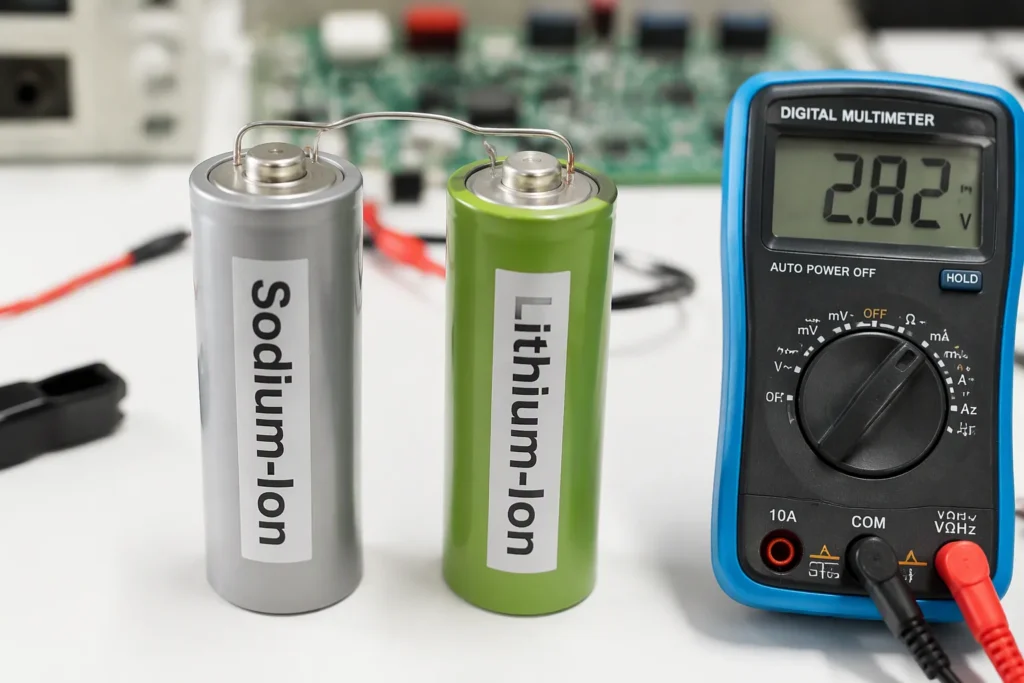
Yes, you can technically mix sodium-ion and lithium batteries in one system. But it is usually not a good idea. Three problems get in the way: voltage ranges that don’t match, different charging profiles, and extra safety and warranty risks.
The real question is practical. Will a shared battery bank damage the cells or create a hazard? Is the effort worth the result? This post looks at the technical gaps between the two chemistries, the few cases where a mixed setup works, the compliance and cost questions, and the practices that keep a system safe.
Key Takeaways
You can mix sodium-ion and lithium batteries, but it is risky. They have different voltages and charging needs.
Each kind of battery needs its own battery management system to run safely.
Check the warranty and insurance before you mix battery types. This helps you avoid problems with your coverage.
Sodium-ion batteries work great in cold weather and for deep-cycle use, while lithium batteries pack more energy into a smaller space.
For most uses, sticking to one battery type in its own system is safer and easier.
Can You Mix Sodium-Ion and Lithium Batteries Safely?
The Short Answer
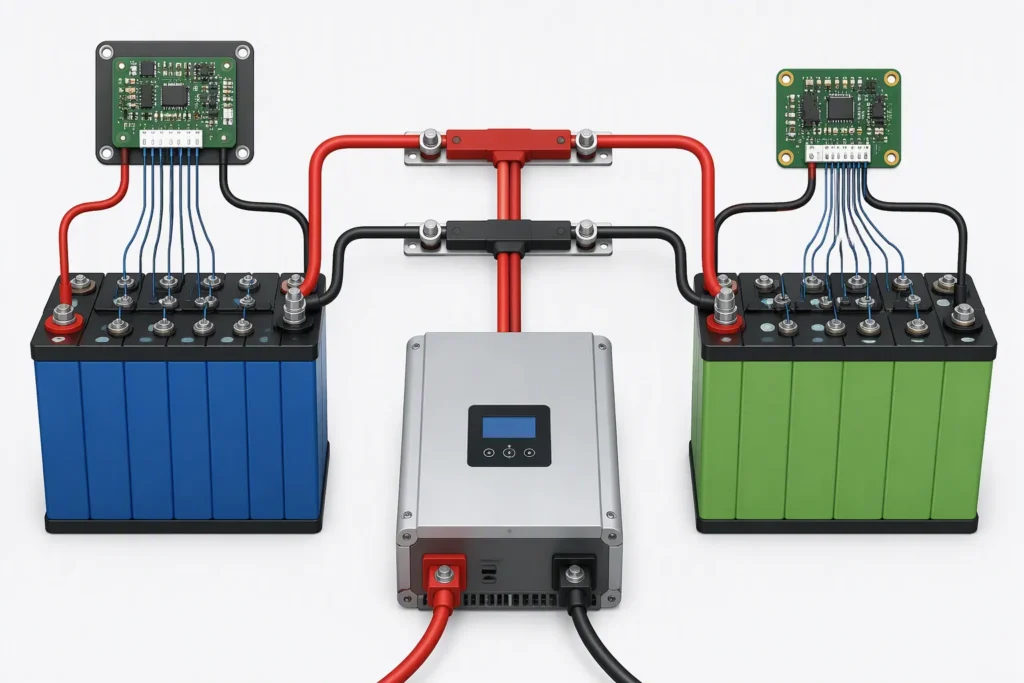
⚠️ You can technically connect sodium-ion and lithium packs in parallel. But it also takes very careful system design. The two chemistries do not use the same voltage window. A shared bus pushes both packs toward one voltage. The weaker pack then takes in current it was not built to handle.
❌ Sodium-ion cells are not simple drop-in replacements for lithium-ion cells. A drop-in swap assumes matching voltage curves, matching charge cutoffs, and matching management logic. Sodium-ion breaks all three assumptions. Its nominal voltage is lower than a typical lithium-ion cell. Its charge curve flattens in a different place. Its management system reads state of charge by different rules.
✅ The safe path is a designed system, not a swapped part. Each pack needs its own battery management system (BMS). The BMS must talk to an inverter that accepts separate charge profiles. Without that layer, the packs fight each other.

Why the Question Keeps Coming Up
Interest in mixing chemistries is rising for a clear reason. Sodium-ion and lithium-ion now hold real, distinct roles. One chemistry no longer simply replaces the other.
Lithium-ion still leads on energy density. It packs more watt-hours into less space and weight. That matters for electric vehicles, drones, and portable devices. Sodium-ion brings other strengths to the table. It holds stable output in cold climates. It tolerates deep discharge. It offers strong safety under abuse testing. These traits fit stationary storage, backup power, and cold-weather equipment.
Many buyers now run both needs in one facility. A warehouse may want lithium-ion for forklifts and sodium-ion for a backup bank. A homeowner may pair a lithium home battery with a sodium cold-climate unit. The question then follows: can these packs share one system?
The honest answer starts with the hardware. People who ask whether they can mix sodium-ion and lithium batteries often picture a simple cable join. Reality is more demanding. A shared DC bus ties the packs to one voltage. Current flows from the higher-voltage pack into the lower one. That flow continues until the voltages meet. The result is wasted energy at best and cell stress at worst.
⚠️ A second issue is charging. Sodium-ion generally accepts faster charge and reaches about 80% state of charge quickly. A shared charger cannot serve both packs well. One pack finishes early. The other keeps charging. The charger then overcharges one side or undercharges the other.
✅ The workable route is separate management. Give each chemistry its own BMS and its own charge profile. Let a compatible hybrid inverter coordinate the two. This is how engineers mix sodium-ion and lithium batteries without inviting damage. It is also the only route that keeps warranty coverage intact.
The next sections cover the voltage and charging gaps in detail. They also show the narrow cases where a mixed setup earns its keep.
Voltage and Charging Gaps That Matter
Why Voltages Do Not Line Up
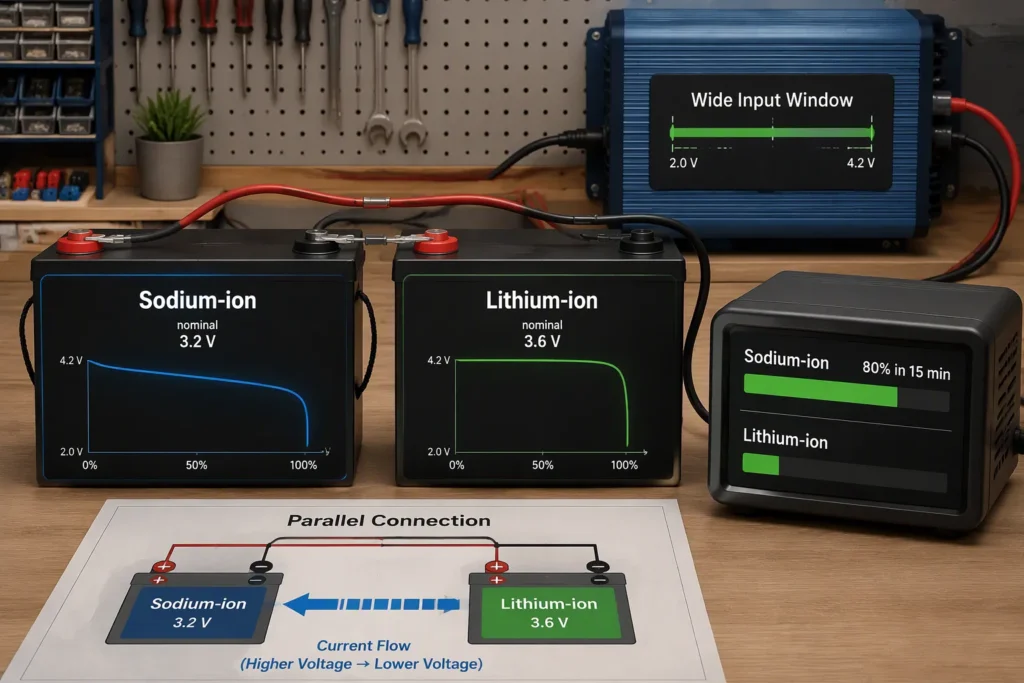
A battery pack is a chain of cells. Each cell adds its voltage to the string. Sodium-ion cells and lithium-ion cells do not have the same nominal voltage. A sodium-ion cell sits lower on the voltage scale than a typical lithium-ion cell. If you build a string with the same number of cells, the two packs end up at different total voltages.
This gap changes how series and parallel strings work. Wire two packs in parallel, and current flows from the higher-voltage pack to the lower one. The packs trade energy until their voltages match. Neither pack asked for that exchange. The lower pack takes in current at a rate its cells were not built for.
“There is also a wider voltage curve across the charge range, which means you cannot simply pair sodium-ion cells with any old inverter.”
That wider curve adds a second problem. A sodium-ion pack moves through a broader voltage band as it charges and discharges. An inverter built for a narrow lithium window may read the sodium pack as full too early or empty too late. The state-of-charge estimate drifts. Protection cutoffs fire at the wrong moment.
Point of comparison | Sodium-ion | Lithium-ion |
|---|---|---|
🔋 Nominal cell voltage | Lower | Higher |
📈 Voltage curve across charge range | Wider | Narrower |
⚡ Fast-charge behavior | Reaches high SoC quickly | Slower at the same rate |
🔌 Inverter fit | Needs a wider input window | Fits standard lithium windows |
Charging Profiles and Faster Sodium Charging
Speed separates the two chemistries even more. Sodium-ion usually takes a fast charge without complaint. CATL’s published specs say its first-generation sodium-ion cells reach 80% state of charge at room temperature within 15 minutes at typical fast-charging rates. Some sodium-ion models are reported to reach 90% capacity in just 15 minutes. A lithium pack on the same charger will still be climbing toward full.
A shared charger cannot serve both packs well. The sodium pack finishes early. The charger keeps pushing current into the pair. One side risks overcharge stress. The other side stays undercharged. Repeat that cycle daily, and the two packs age at different rates.
Mixing works only when the equipment allows user-adjustable charge voltages. The inverter or charge controller must accept a separate profile for each pack. Absorb voltage, float voltage, and cutoff points all need independent settings. Many off-the-shelf units lock these values to a lithium preset. Those units cannot safely host both chemistries.
This is the practical limit on any plan to mix sodium-ion and lithium batteries. The hardware decides the outcome, not the wiring diagram. Check the charger’s setting range before buying a second chemistry. If the voltage window cannot be widened and split, keep the packs apart.
For a deeper look at how charge profiles shape battery life, Battery University’s charging guide explains the stages in plain terms.
When Mixing Sodium-Ion and Lithium Makes Sense
Hybrid Packs With Separate Management
A hybrid pack puts both chemistries together under one smart management layer. CATL’s Freevoy Dual-Power Battery shows how this works in real life. The system pairs a sodium-ion pack with a lithium pack. A controller then decides which pack gives power at any moment. Sodium-ion handles cold starts and high-power bursts. Lithium carries the main energy. The controller moves the load between them.
⚠️ Each chemistry still needs its own BMS. The two BMS units must talk to a hybrid inverter that accepts separate charge and discharge profiles. Without that connection, the packs drift apart.
The risks of skipping independent management are real. Cells age at uneven rates when one pack works harder than the other. Manufacturers void warranties when packs are mixed outside approved setups. Safety margins shrink when a lower-voltage pack takes in current it was not rated for. Anyone planning to mix sodium-ion and lithium batteries in one bank should treat separate management as a must, not a choice.
Where VEKEN Sodium Battery Fits Best
VEKEN‘s sodium battery works well for cold climates and deep-cycle use. It holds steady output at -40°C, a range where many lithium packs lose usable capacity. Prismatic cells deliver more than 4000 cycles, so daily deep discharge does not shorten service life quickly. The cells pass nail-penetration testing without fire or explosion, which supports safe transport and storage. Packs can be customized across voltage, capacity, cell model, and dimensions.
✅ Best fit: telecom backup, home storage in cold regions, agricultural machinery, and engine-start systems. In a hybrid design, a VEKEN sodium pack covers the cold-morning and high-power role while a lithium pack carries bulk capacity.
Compliance, Cost, and Best Practices
Certification and Insurance Checks
Before you move ahead with any mixed-chemistry plan, confirm three things in writing. First, check that each battery pack has the certification your local authority requires for stationary storage. Second, ask your insurer whether a hybrid bank stays covered under your current policy. Third, read the manufacturer warranty terms line by line. Many warranties cover a pack only when it runs with the maker’s own charger and BMS.
A mixed bank can void coverage on both packs. Insurers see unlisted setups as higher risk. That can raise your premiums or block a claim after a fault. Keep the approval paperwork on file. Resources such as UL Solutions’ battery energy storage guidance explain which safety standards apply to storage systems in your region.
Cost Trade-Offs by Application
Upfront price and lifetime cost tell different stories. Sodium-ion cells cost more today. But their longer cycle life and maintenance-free design bring the lifetime cost per cycle close to lithium’s. Lithium still wins on energy density, so it needs less space and weight for the same capacity.
Metric | Sodium-ion | Lithium-ion (LFP) |
|---|---|---|
Cell price per kWh (early 2026, storage) | High $80s | ~$50/kWh ex-works China |
Average cell cost per kWh (2024 estimate) | $87/kWh | $89/kWh |
Manufacturing cost per kWh | ~$50/kWh | ~$70/kWh |
Cost per kWh-cycle (at stated cycle life) | ~$0.0058 (15,000 cycles) | ~$0.0063 (8,000 cycles) |
As of 2024, the average cost for sodium-ion cells is estimated to be $87 per kilowatt-hour (kWh), slightly cheaper than lithium-ion cells at $89/kWh. The manufacturing cost for sodium-ion cells is even more competitive at approximately $50/kWh, compared to $70/kWh for lithium-ion.
The best practice is simple. Keep each chemistry in its own system with independent management. If that adds too much complexity, pick one chemistry that matches the use case. Cold-climate storage and deep-cycle duty favor sodium-ion. Space-limited, weight-sensitive work favors lithium. Anyone weighing whether to mix sodium-ion and lithium batteries should run this cost check before buying hardware.
You can mix sodium-ion and lithium batteries if you plan the design carefully. Still, for most uses, the answer is no.
Four things decide how it turns out. Matching the voltages sets the starting point. Separate battery management keeps each pack in its own safe range. Safety margins and local rules then decide whether the setup is legal and can be insured.
The safer way is clear. Run each chemistry in its own system with its own management. If that is too much, pick one chemistry that fits the job.
Neither chemistry wins outright. Sodium-ion works well for cold-climate storage and deep-cycle use. Lithium still handles the loads that need high energy density. Each one has a real job to do.
FAQ
Can you connect sodium-ion and lithium batteries in parallel?
Yes, you can physically connect them in parallel. But the two packs must share one voltage, and their voltage curves are different. Current flows from the higher pack into the lower one until the voltages match. Before you try it, plan for separate management and a charger with adjustable settings.
Are sodium-ion batteries a drop-in replacement for lithium batteries?
No. A drop-in swap assumes matching voltage windows, matching charge cutoffs, and matching management logic. Sodium-ion cells differ on all three. Treat a sodium pack as its own system with its own BMS and charge profile. Do not slide it into a lithium slot and expect the existing charger to handle it.
Do sodium-ion and lithium batteries need separate battery management systems?
Yes. Each chemistry needs its own BMS with its own charge and discharge limits. The two units should communicate with a hybrid inverter that accepts separate profiles. If you skip this step, the packs drift apart, the cells age unevenly, and both warranties can be voided.
How does cold weather affect a mixed sodium-ion and lithium bank?
Cold affects the two chemistries in different ways. A VEKEN sodium pack holds stable output at -40°C, while many lithium packs lose usable capacity in the same conditions. In a hybrid design, the sodium pack can carry the cold-morning and high-power load while the lithium pack handles bulk capacity.
Does mixing chemistries void the battery warranty?
It often does. Many manufacturers cover a pack only when it runs with their own charger and BMS. Check the warranty terms in writing before you buy. Also confirm insurer approval and local certification, since an unlisted setup can raise premiums or block a claim after a fault.