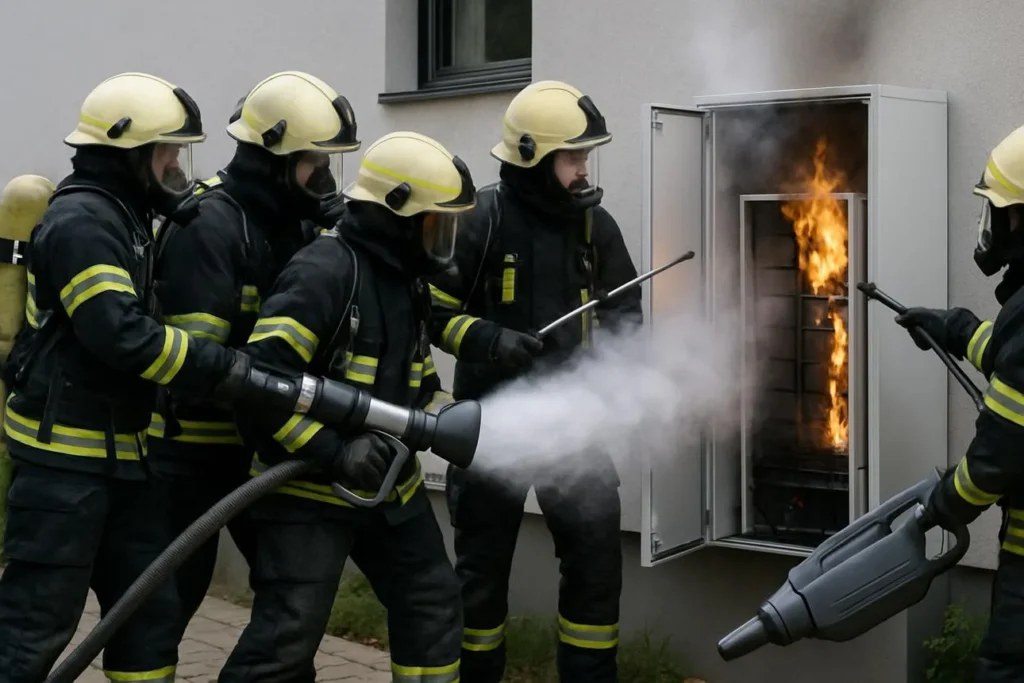
On July 5, 2026, a residential photovoltaic (PV) energy storage system exploded in Bentwisch, Rostock, Germany, injuring three volunteer firefighters responding to the fire. The accident once again raised global concerns about home battery storage safety, thermal runaway, and the challenges emergency responders face when dealing with lithium battery fires.
📌 Key Takeaway:
While residential battery storage remains statistically safe overall, the incident highlights why governments, installers, manufacturers, and B2B buyers are paying increasing attention to battery chemistries with inherently lower fire risk—especially sodium-ion batteries.
📰 Germany Home Battery Explosion: What Happened?
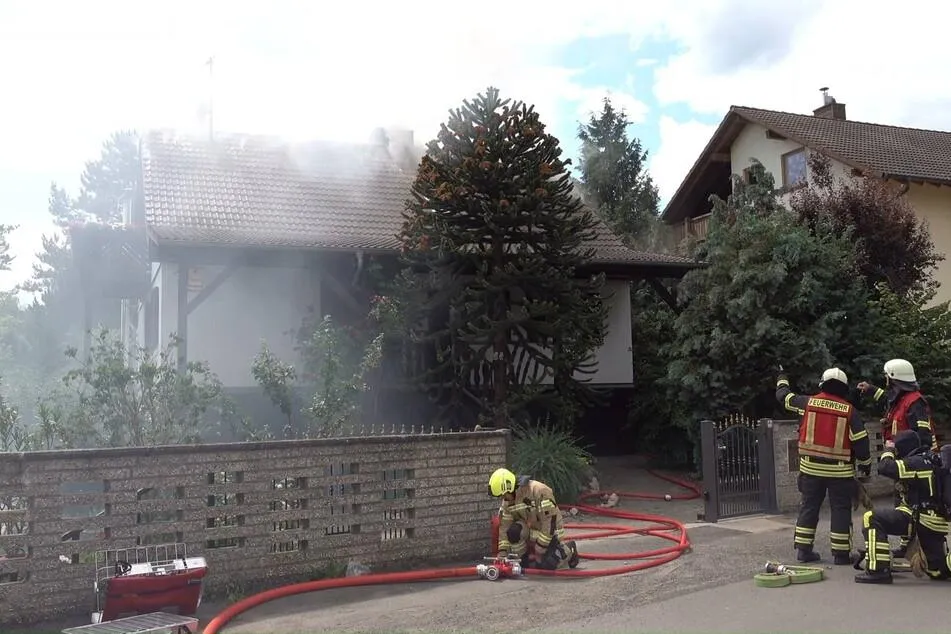
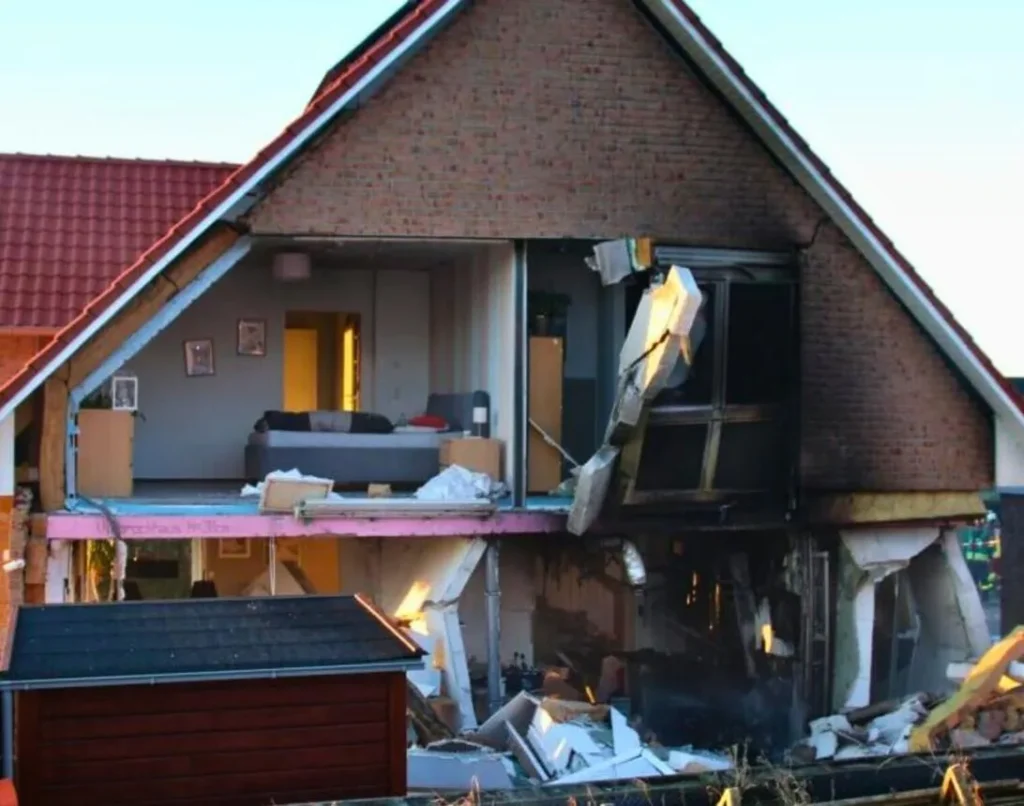
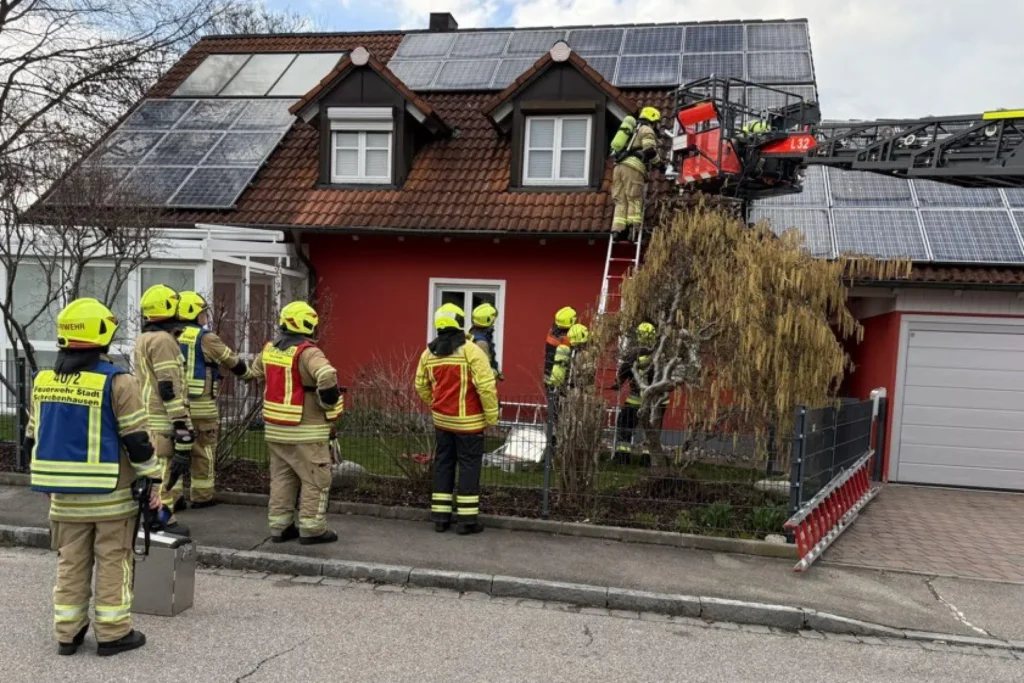
According to reports from multiple German media outlets, smoke was first observed coming from a lithium battery energy storage system installed inside a wooden storage shed attached to a private home.
Shortly afterward:
- 💥 A violent explosion destroyed the wooden structure.
- 🏠 The roof was blown away.
- 🪵 Debris damaged two neighboring houses.
- 🚒 Three firefighters (ages 18, 25 and 31) suffered minor injuries after being thrown several meters by the blast.
- 👨🚒 Around 75 firefighters from five volunteer fire departments participated in the emergency response.
- 💶 Property damage was estimated at approximately €40,000.
Authorities are investigating possible causes, including:
- Battery thermal runaway
- Poor ventilation
- Installation defects
- Battery Management System (BMS) malfunction
- High ambient temperatures
- Manufacturing defects
The damaged batteries were eventually submerged in water to reduce the risk of re-ignition.
⚠️ Why Are Lithium Battery Fires Difficult to Extinguish?
One of the biggest challenges for firefighters is that solar PV systems continue producing electricity whenever sunlight is available, even after the building’s main electrical supply has been disconnected.
Emergency responders must deal with several simultaneous hazards:
- ⚡ High-voltage DC electricity
- 🔥 Thermal runaway inside battery cells
- 💨 Toxic gases released during combustion
- 💥 Risk of delayed explosions
- 🔄 Re-ignition hours or even days later
According to German fire safety standards (DIN), firefighters must maintain a safe distance from energized equipment because the electrical hazard remains even after conventional power shutdown.
📊 How Common Are Residential Energy Storage Fires?
Although incidents receive significant media attention, research from the Fraunhofer Institute for Solar Energy Systems (ISE) shows that residential PV fires remain relatively rare.
The institute estimates:
- Approximately 1 fire per 17,000 solar installations
- Less than 0.01% of installed systems experience fire-related incidents
Common causes include:
| Cause | Estimated Share |
|---|---|
| Cable faults & loose connectors | ~50% |
| Installation errors | ~30% |
| Poor-quality components | ~15% |
| Other factors | Remaining percentage |
These findings suggest that installation quality and system design are just as important as battery chemistry.
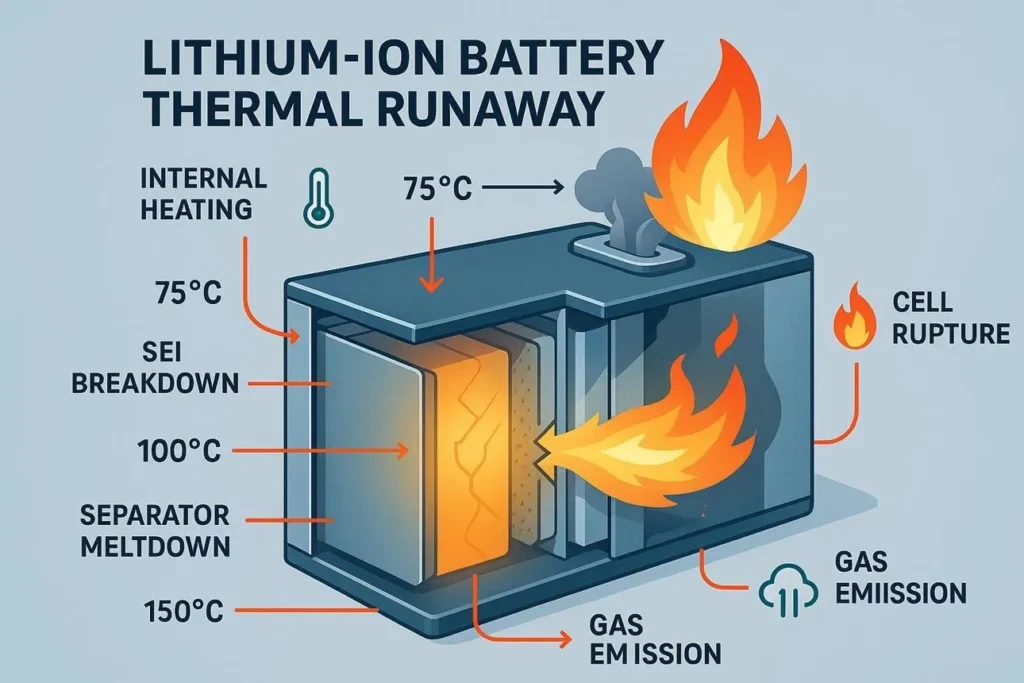
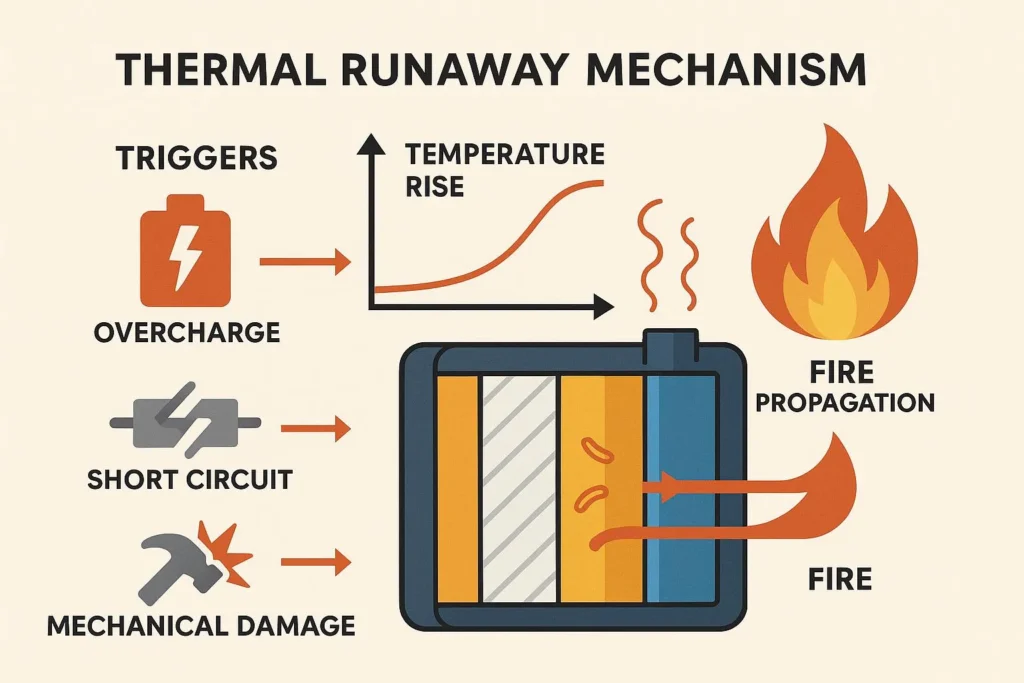
🔥 Understanding Thermal Runaway
Thermal runaway occurs when heat generated inside a battery exceeds the battery’s ability to dissipate that heat.
The process generally follows this sequence:
- Cell damage or overheating
- Internal temperature rises rapidly
- Electrolyte begins decomposing
- Flammable gases accumulate
- Fire or explosion may occur
- Heat spreads to neighboring cells
This chain reaction is one of the primary safety concerns for large lithium battery systems.
✅ Why Sodium-Ion Batteries Offer Better Safety
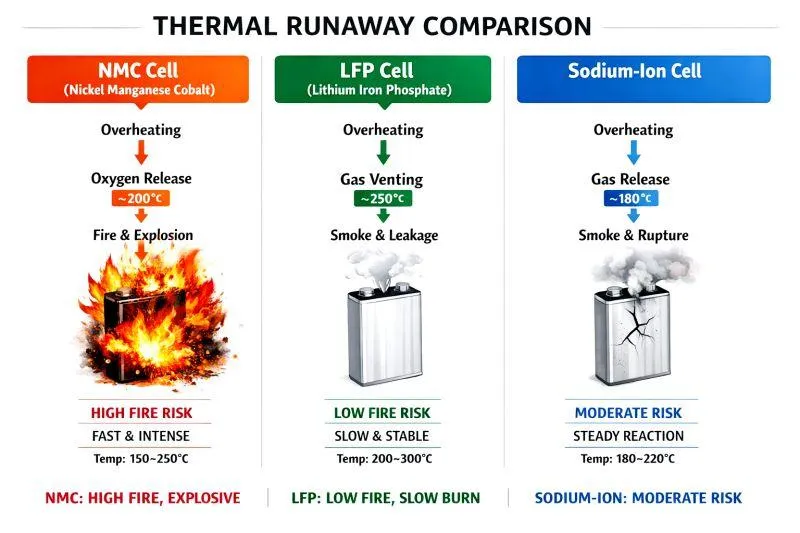
Unlike conventional lithium-ion batteries, sodium-ion batteries are attracting attention because of their inherently safer electrochemical characteristics.
Lower Thermal Runaway Risk
One of the biggest advantages is improved thermal stability.
Compared with many lithium battery chemistries, sodium-ion batteries generally:
- ✅ Generate less heat during abuse conditions
- ✅ Have lower thermal runaway propagation potential
- ✅ Are less likely to ignite under mechanical damage
- ✅ Exhibit better stability under high temperatures
While no battery technology is completely risk-free, reducing the likelihood of thermal runaway significantly improves overall system safety.
Better Performance at Low Temperatures
Many residential energy storage installations operate outdoors.
Sodium-ion batteries maintain stable performance in cold climates where lithium batteries may experience reduced efficiency.
Typical applications include:
- Residential solar storage
- Telecom backup systems
- Off-grid energy systems
- Emergency backup power
- Portable power stations
Improved Supply Chain Stability
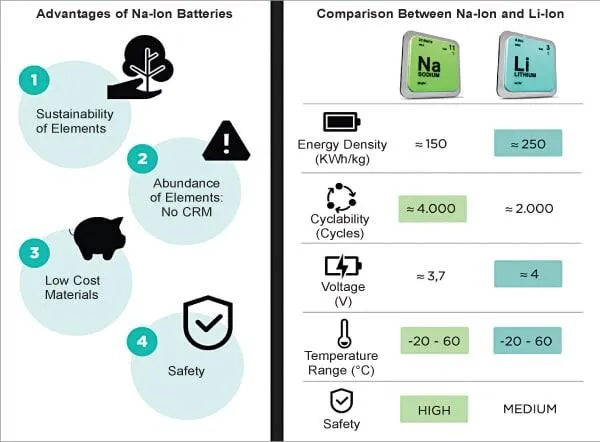
Another reason sodium-ion technology is gaining momentum is raw material availability.
Sodium is one of Earth’s most abundant elements.
Compared with lithium-based batteries, sodium-ion technology can reduce dependence on:
- Lithium
- Cobalt
- Nickel
This supports more diversified battery manufacturing and helps improve long-term supply resilience.
🔍 Lithium Battery vs Sodium-Ion Battery
| Feature | Lithium-ion | Sodium-ion |
|---|---|---|
| Thermal runaway risk | Higher | Lower |
| Fire resistance | Moderate | Better |
| Low-temperature performance | Good | Excellent |
| Resource availability | Limited | Abundant |
| Cost trend | Higher raw material sensitivity | Greater long-term cost potential |
| Residential ESS suitability | Widely used | Rapidly growing |
🏡 Where Sodium-Ion Batteries Fit Best
Growing interest in safer battery systems is expanding sodium-ion applications across multiple industries.
Typical B2B scenarios include:
- 🏠 Residential energy storage systems
- ☀️ Solar plus storage projects
- 🚐 Portable power stations
- 🚜 Agricultural backup power
- 📡 Telecom base stations
- 🏭 Commercial ESS
- 🚨 Emergency power supplies
These applications benefit from batteries that prioritize operational safety alongside reliable energy storage.
🛠️ Best Practices for Safer Residential Energy Storage
Regardless of battery chemistry, system safety depends on proper engineering and installation.
Experts recommend:
✅ Install systems according to local electrical codes
✅ Use certified batteries and inverters
✅ Ensure adequate ventilation
✅ Avoid direct sunlight and excessive heat
✅ Perform regular inspections
✅ Install fire detection systems
✅ Select experienced installers
✅ Monitor battery health using a Battery Management System (BMS)
🌍 The Future of Residential Energy Storage Is Safety-Driven
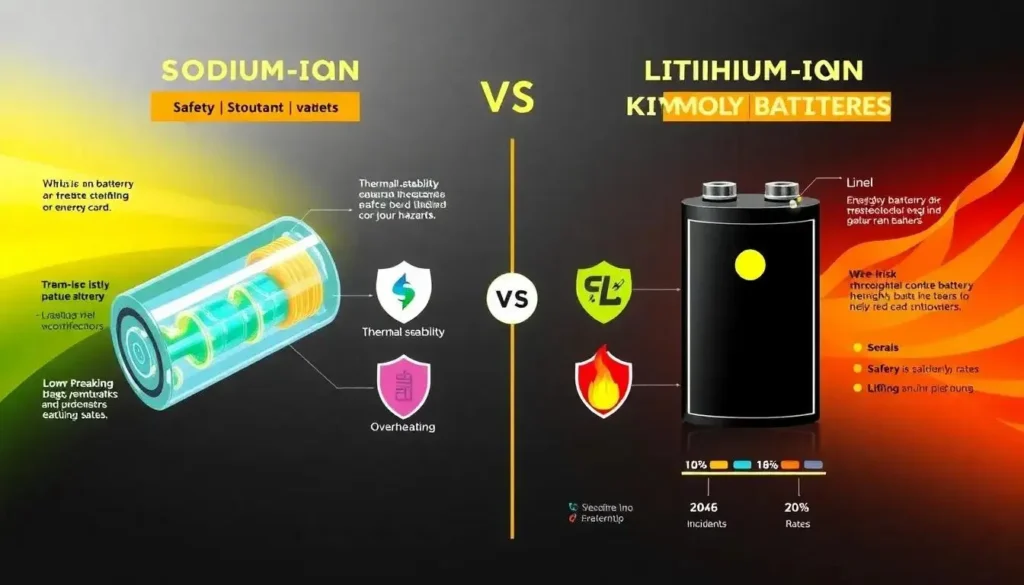
The Germany explosion serves as a reminder that battery safety is becoming as important as battery capacity.
As residential solar adoption continues to grow worldwide, governments, installers, insurers, and project developers are increasingly evaluating technologies that reduce operational risks.
Sodium-ion batteries are emerging as one of the most promising alternatives because they combine:
- Better thermal stability
- Improved low-temperature operation
- Abundant raw materials
- Reduced dependence on critical minerals
- Strong potential for residential and commercial energy storage
While lithium-ion batteries will continue to dominate many applications, sodium-ion technology is expected to play a growing role where safety, reliability, and long service life are key purchasing considerations.
About Veken
Veken is an experienced manufacturing group supporting global OEM and ODM projects across multiple industries. In the battery sector, Veken focuses on sodium-ion battery solutions for residential energy storage, backup power, portable power stations, and commercial applications. With extensive manufacturing experience and supply chain capabilities, Veken supports stable large-volume production for international B2B customers.
Learn more:
- 🌐 Website: https://vekenindustry.com/
- 🔋 Sodium Battery Solutions: https://vekenindustry.com/sodium-battery/
- 🔋 Battery Products: https://vekenindustry.com/battery/
- 🏭 About Veken: https://vekenindustry.com/about/
- 📩 Contact: https://vekenindustry.com/contact-us/