Selecting a blanket fabric factory involves more than comparing prices. Buyers assess quality, material selection, and manufacturer reputation before making a choice. Comfort, durability, and cost-effectiveness depend on choosing the right blanket for its intended use. Some buyers prefer eco-friendly options, while others seek premium features. Leading factories often hold certifications such as GOTS and OEKO-TEX® Standard 100. These certifications increase transparency and build consumer trust. Businesses and consumers also value customization and reliable support when sourcing blankets.
Key Takeaways
- Prioritize quality by checking for certifications like OEKO-TEX® before choosing a blanket factory.
- Consider bulk ordering to lower costs and maximize value when sourcing blankets.
- Research the manufacturer’s reputation to ensure consistent quality and reliable support.
- Select materials based on comfort and durability to meet specific needs and preferences.
- Explore customization options to create unique products that stand out in the market.
Key Factors in Choosing a Blanket Fabric Factory
Quality Standards and Certifications
Selecting a blanket fabric factory starts with understanding industry standards. Certifications like OEKO-TEX® STANDARD 100 set the benchmark for product quality and safety. This certification tests for over 1,000 harmful substances, ensuring textiles meet strict international regulations. Factories must renew this certification annually, which requires rigorous testing and ongoing compliance. These standards protect consumers and build trust in the supply chain.
🏷️ Tip: Always verify a factory’s certifications before placing an order.
Factories such as VEKEN follow strict protocols to maintain OEKO-TEX® certification. They test for substances like formaldehyde and heavy metals, updating their processes as scientific standards evolve. For more on OEKO-TEX® standards, visit the official OEKO-TEX® website.
| Certification Name | Description | Global Recognition |
|---|---|---|
| OEKO-TEX® STANDARD 100 | Textiles tested for harmful substances, ensuring safety from yarn to product | Highly recognized |
| Testing Criteria | Tests for over 1,000 harmful substances, compliance with regulations | Internationally accepted |
| Certification Validity | Valid for 1 year, requires annual renewal and testing | Standardized globally |
Price and Cost Considerations
Pricing plays a crucial role when choosing a blanket fabric factory. Every production run involves fixed costs, such as machine setup and pattern creation. Larger orders lower the price per yard because factories spread these costs over more units.
- Larger orders result in a lower price point.
- Economies of scale improve profit margins.
- Bulk production reduces per-unit costs.
Factories often set minimum order quantities to ensure efficient production. Buyers seeking premium quality at a competitive price should consider ordering in bulk to maximize value. Understanding these factors helps businesses negotiate better pricing and plan for long-term procurement.
Manufacturer Reputation: VEKEN and Industry Leaders
A reputable blanket fabric factory stands out through consistent product quality, advanced technology, and global recognition. VEKEN exemplifies these traits with nearly 30 years of experience and a strong presence in over 120 countries. The company’s OEKO-TEX® certification and advanced weaving techniques, such as Raschel and jacquard, align with industry innovation standards. These methods deliver durable, intricate designs that meet diverse market needs.
🌍 Note: Leading factories like VEKEN combine quality assurance with reliable delivery and after-sales support, making them trusted partners for global buyers.
When comparing blanket fabric factories, buyers should prioritize those with proven certifications, transparent pricing, and a history of premium quality. This approach ensures both safety and value in every order.
Understanding Blanket Materials
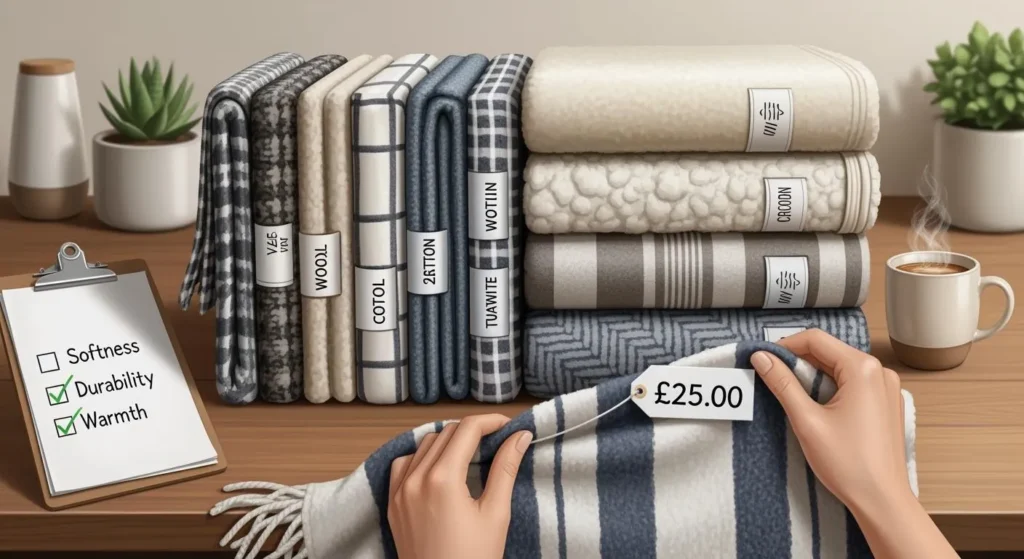
Choosing the right blanket materials is essential for comfort, durability, and cost-effectiveness. Manufacturers like VEKEN offer a wide selection of top-tier materials, each with unique benefits and best uses. The following breakdown helps buyers compare options and select the most suitable fabric for their needs.
Cotton and Plant-Based Fabrics
Cotton and plant-based fabrics remain popular for their comfort and sustainability. Woven cotton blankets deliver high breathability and a familiar soft touch. Plant-based options, such as linen, provide added durability and eco-friendly appeal.
🛏️ Note: Soft cotton blankets are ideal for sensitive skin and year-round use.
| Material | Durability | Comfort | Breathability | Price Range (Queen) |
|---|---|---|---|---|
| Cotton | Moderate | High | High | $40–$150 |
| Linen | High | Moderate-High | High | $80–$200 |
- Cotton blankets are in high demand for their natural fiber qualities.
- Plant-based fabrics like linen are valued for being a biodegradable and renewable material.
- Both options support eco-friendly blankets for environmentally conscious buyers.
Fleece, Sherpa, and Synthetic Options
Fleece blanket providers supply a range of synthetic options, including polyester blankets, microfleece, and sherpa. These materials excel in warmth and durability, making them a staple for high-quality woven products.
🧺 Tip: The best uses for microfleece blankets include travel, outdoor activities, and quick-drying needs.
- Fleece blanket providers highlight polar fleece for blankets as lightweight, warm, and easy to care for.
- Sherpa fleece offers a luxurious feel and excellent insulation.
- Synthetic materials resist pilling and fading but may irritate sensitive skin.
| Material | Durability | Warmth | Maintenance | Price Range (Queen) |
|---|---|---|---|---|
| Polyester | High | High | Easy | $20–$80 |
| Microfleece | High | High | Easy | $25–$90 |
| Sherpa | Moderate | Very High | Special Care | $40–$120 |
- Fleece blanket providers recommend these options for their low maintenance and affordability.
Wool and Animal Fiber Blankets
Wool and animal fiber blankets, such as alpaca, offer superior warmth and durability. Alpaca fiber provides up to 30% more insulation than traditional wool, with less weight.
🐑 Note: Wool blankets require gentle care but deliver long-lasting performance.
| Attribute | Alpaca Fiber Performance | Comparison to Wool |
|---|---|---|
| Warmth | Up to 30% more insulation | Good insulation |
| Durability | High tensile strength, abrasion-resistant | Can break down faster in high-wear areas |
| Maintenance | Cold water wash, spot clean recommended | More frequent washing, sensitive care |
- Alpaca wool is sustainable and supports ethical farming.
- Animal fibers are biodegradable and renewable material choices for eco-friendly blankets.
Specialty and Eco-Friendly Materials
Specialty and eco-friendly blankets use innovative fibers like bamboo, TENCEL™, and organic cotton. These materials offer unique benefits, such as superior cooling, moisture-wicking, and reduced environmental impact.
| Material | Cooling | Moisture-Wicking | Durability | Softness | Price Range (Queen) | Certification |
|---|---|---|---|---|---|---|
| Bamboo | High | Very High | Moderate | Silky | $60–$200 | OEKO-TEX®, GOTS |
| TENCEL™ | High | High | Moderate | Smooth | $70–$220 | OEKO-TEX®, GOTS |
| Organic Cotton | Good | Good | High | Soft | $60–$180 | GOTS |
- Eco-friendly blankets often carry OEKO-TEX® or GOTS certification.
- These materials appeal to buyers seeking sustainable, high-quality woven products.
VEKEN’s blanket collection includes woven cotton blankets, fleece, sherpa, and specialty eco-friendly options. The company customizes blanket materials to meet specific market needs, ensuring quality and versatility for every application.
Comparing Blanket Fabric Factories: VEKEN vs. Others
Quality and Durability Comparison
Quality and durability remain top priorities for any blanket manufacturer or supplier. VEKEN stands out in the fleece blanket industry by implementing a multi-tiered quality control system. This system checks every product from the initial material selection to the final packaging stage. VEKEN sources materials from trusted suppliers and conducts comprehensive in-house testing for durability and safety. The company holds certifications such as ISO 9001, ISO 14001, OEKO-TEX, and SGS, which often exceed standard industry requirements.
✅ Note: VEKEN has maintained a zero returns policy for ten years, reflecting high customer satisfaction and consistent product quality.
Many leading factories follow basic quality protocols, but their standards can vary depending on the supplier network and internal processes. VEKEN’s approach leads to fewer returns and higher customer loyalty.
| Aspect | VEKEN’s Process | Industry Standards |
|---|---|---|
| Material Selection | Strict selection from trusted suppliers | Varies by supplier |
| In-House Testing | Comprehensive durability and safety checks | Varies by supplier |
| Certifications | ISO 9001, ISO 14001, OEKO-TEX, SGS | Varies by supplier |
- VEKEN’s multi-tiered quality control ensures each blanket meets high durability standards.
- Other factories may not offer the same level of consistency or certification.
Price and Cost Analysis
Price remains a key factor for buyers comparing suppliers. VEKEN offers competitive pricing by leveraging advanced weaving technology and efficient production lines. The company’s scale allows for cost savings, especially on bulk orders. While small workshops may offer lower minimum order quantities, their per-unit costs often rise due to limited production capacity.
| Factory Type | Typical MOQ | Price Per Unit (Estimate) | Best For |
|---|---|---|---|
| Small Workshops | 50-100 | Higher | Start-ups, new brands |
| VEKEN | 300 | Competitive | Retailers, wholesalers |
| Large Manufacturers | 500+ | Lower (at high volumes) | Chains, bulk wholesale |
- VEKEN’s minimum order quantity is 300 pieces per style, with options for mixed sizes and colors.
- The company provides a balance between affordability and quality, making it a preferred supplier for many global buyers.
- Lead times for in-stock styles average 7–10 days, while custom orders require 20–30 days depending on design and quantity.
💡 Tip: Buyers seeking the best value should consider both unit price and total order volume when selecting a supplier.
Customization and Bulk Ordering
Customization options set leading suppliers apart in the blanket market. VEKEN offers extensive OEM and ODM services, allowing clients to tailor materials, patterns, and packaging to their brand requirements. The company’s advanced weaving techniques, such as Raschel and jacquard, support intricate designs and unique textures.
- Minimum order quantity for VEKEN is 300 pieces per style, with flexibility for mixed sizes and colors.
- Lead times for custom orders range from 20 to 30 days, depending on complexity and volume.
- VEKEN supports both small and large-scale orders, making it suitable for retailers, wholesalers, and private label brands.
Other factories may offer lower MOQs, but often lack the advanced customization capabilities or consistent lead times that VEKEN provides. Large manufacturers can handle bulk orders but may have less flexibility for unique designs or smaller runs.
| Supplier Type | Customization Options | Lead Time (Custom) | MOQ | Best For |
|---|---|---|---|---|
| Small Workshops | Basic | 15–25 days | 50–100 | Small brands, samples |
| VEKEN | Advanced (OEM/ODM, weaving) | 20–30 days | 300 | Retailers, wholesalers |
| Large Manufacturers | Standard | 30+ days | 500+ | Chains, bulk wholesale |
📦 Note: VEKEN’s customization services help brands stand out in a competitive market, while reliable lead times support efficient inventory planning.
For more details on VEKEN’s blanket collection and customization services, visit the official VEKEN website.
Matching Blanket Materials and Factory to Your Needs
Budget and Value Choices
Selecting the right blanket material and factory starts with understanding budget constraints and value priorities. Buyers often choose fleece for affordability and daily use. Wool appeals to those seeking luxury and higher margins. Cotton remains versatile and safe for all consumers. Polyester and acrylic blends work well for bulk orders due to their cost-effectiveness.
- Fleece offers low cost and easy maintenance.
- Wool provides premium appeal and decorative value.
- Cotton suits a wide range of applications.
- Polyester blends help reduce expenses for large orders.
Buyers can adjust material choices to lower costs without sacrificing quality. Larger orders often secure better pricing, and negotiating payment terms may yield additional savings.
Durability and Long-Term Use
Durable blanket materials ensure long-term satisfaction and lower replacement rates. Organic cotton, recycled polyester, bamboo, linen, and hemp stand out as sustainable and robust options. Factories like VEKEN focus on strict quality control and advanced weaving techniques to produce long-lasting blankets.
- Organic cotton resists wear and maintains softness.
- Recycled polyester offers strength and eco-friendly benefits.
- Bamboo and linen provide durability and comfort.
Brands should evaluate manufacturers based on production capabilities, quality control, and customization options to guarantee product longevity.
Eco-Friendly and Certified Options
Eco-friendly blankets attract buyers who prioritize sustainability and certifications. Leading factories use organic cotton, recycled fibers, and ethically sourced wool. Certifications such as OEKO-TEX® and GOTS signal safe and environmentally responsible products.
- Slowdown Studio, TBCo., Piglet in Bed, The Citizenry, Avocado, and Coyuchi offer certified sustainable materials.
- VEKEN produces blankets with OEKO-TEX® certification and eco-friendly practices.
Buyers should consider geographical factors, including cost structures and social responsibility, when choosing a factory.
Business Solutions: OEM, ODM, and Bulk Orders
Business buyers benefit from factories that offer comprehensive OEM and ODM services. VEKEN provides professional design support, rapid sample development, and technical documentation. Dedicated account managers assist international clients, ensuring smooth communication and compliance.
| Service Feature | Benefit to Business Buyers |
|---|---|
| Professional design support and prototyping | Tailored designs for specific markets |
| Rapid sample development | Faster time-to-market |
| Technical documentation alignment | Compliance and reduced errors |
| Dedicated account managers | Personalized support and communication |
The textile industry continues to evolve with technology and innovation. Digital printing and automated manufacturing deliver consistent quality and scalability. VEKEN’s after-sales support, including real-time tracking and VIP shipping partnerships, enhances the customer experience for bulk and custom orders.
Selecting the right blanket fabric factory requires careful attention to quality, price, and material selection. Buyers should follow these steps:
- Check material quality and durability.
- Explore customization and variety.
- Confirm manufacturing capacity and shipping reliability.
- Compare pricing for value.
- Research reputation and customer feedback.
Factories with strong supply chains and ethical practices deliver consistent results. High-quality materials and trusted suppliers lead to long-term satisfaction. Requesting samples, verifying certifications, or contacting VEKEN for tailored solutions helps buyers make informed decisions.
FAQ
What factors influence the cost of fleece fabric blankets?
Several factors impact the cost of fleece fabric blankets. Material quality, production scale, and weaving technology play major roles. Microfleece options may cost less than premium blends. Bulk orders often reduce cost per unit. Customization and certifications can also affect the final price.
How does microfleece compare to other fleece fabric types for comfort?
Microfleece provides exceptional comfort due to its fine fibers and lightweight feel. Many buyers prefer microfleece for its softness and breathability. Compared to standard fleece fabric, microfleece blankets offer a smoother texture and better moisture management, making them ideal for year-round use.
Why do businesses choose fleece fabric blankets for bulk orders?
Fleece fabric blankets offer durability, easy maintenance, and consistent quality. Microfleece options provide additional softness and warmth. Businesses select these blankets for their cost efficiency and versatility. The ability to customize fleece fabric blankets makes them suitable for various markets and branding needs.
What are the main benefits of microfleece blankets in commercial settings?
Microfleece blankets excel in commercial environments because they resist pilling, dry quickly, and maintain their shape after repeated washing. Their lightweight design reduces shipping cost. Many hotels, hospitals, and airlines choose microfleece blankets for guest comfort and operational efficiency.
How can buyers ensure the quality of fleece fabric blankets from manufacturers?
Buyers should request samples, review certifications, and check supplier reputation. Reliable manufacturers use advanced weaving for fleece fabric and microfleece blankets. Consistent quality control and transparent cost structures help buyers secure durable, comfortable blankets that meet business requirements.