Sodium-Ion Battery Selected by MIT Technology Review as a 2026 Breakthrough: Why This Matters for Large-Scale Energy Storage
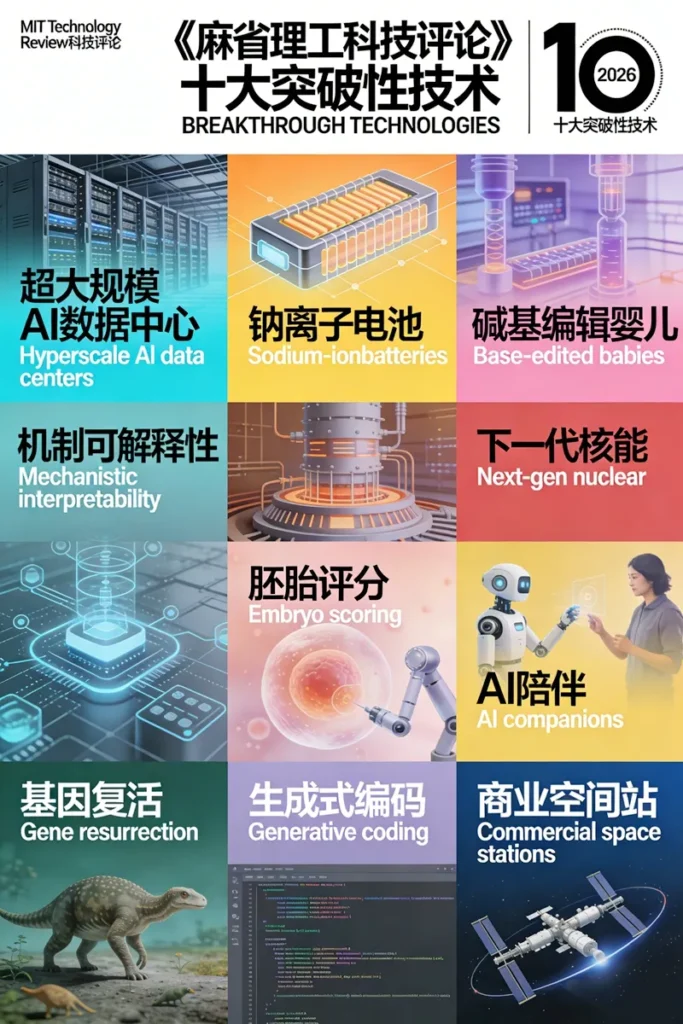
Table of Contents
Published: January 16, 2026
In its 2026 list of “10 Breakthrough Technologies,” MIT Technology Review named the sodium-ion battery as a key technology shaping the future of global energy infrastructure. This recognition directly reflects the urgent need for safe grid-scale energy storage systems, data center backup power solutions, and high-power battery systems for large-scale deployment.
As global electricity demand rises—especially from AI data centers and industrial electrification—the limitations of traditional battery chemistries have become more visible. Sodium-ion technology is increasingly viewed as a practical solution for renewable energy storage integration, utility-scale battery storage, and high-cycle stationary energy systems.
⚡ Why Sodium-Ion Batteries Are Gaining Global Attention
1️⃣ The Energy Infrastructure Challenge
Modern infrastructure, including AI-driven hyperscale data centers (AIDC), depends on:
High safety standards
Long-duration backup power
Stable large-scale deployment
Reduced raw material dependency
Traditional chemistries face constraints:
| Technology | Limitation in Large-Scale Use |
|---|---|
| Lithium-ion battery | Thermal safety pressure in high-load environments |
| Lead-acid battery | Low energy density and limited cycle life |
Sodium-ion batteries offer a different balance.
🔋 What Makes Sodium-Ion Batteries Technically Relevant?
Key Advantages for Grid and Industrial Applications
Abundant raw materials (sodium is widely available globally)
Improved intrinsic safety
Strong rate performance (good high-power discharge capability)
Lower dependence on lithium resources
Stable performance in stationary energy storage systems
For readers who want a deeper technical comparison, the U.S. Department of Energy provides background on battery storage technologies:
🔗 https://www.energy.gov/eere/energy-storage
📊 Technical Comparison: Sodium-Ion vs Lithium-Ion
| Parameter | Sodium-Ion Battery | Lithium-Ion Battery |
|---|---|---|
| Resource availability | High | Moderate (geographically concentrated) |
| Thermal stability | Strong | Requires complex management |
| Energy density | Moderate | High |
| Best application | Stationary storage, grid backup | EVs, portable electronics |
Sodium-ion is not designed to replace lithium in electric vehicles. Instead, it is positioned for:
Utility-scale energy storage systems
Renewable energy storage battery projects
Industrial backup power systems
Data center battery backup infrastructure
🏭 Industrialization in China: From Lab to GWh Production
While global interest is increasing, China has already moved sodium-ion batteries into large-scale manufacturing.
Veken, a leading industrial group under Ningbo Veken Group, achieved a key milestone in May 2023 by launching China’s first GWh-level sodium-ion battery production line. This marked the transition from research validation to commercial-scale production.
According to industry rankings:
2025 China Sodium-Ion Battery Shipment – No.1
2025 China Energy Storage Sodium Battery Shipment – No.1
Ranked No.2 in China Sodium-Ion Battery Industry Annual Competitiveness, following CATL
These results reflect measurable shipment performance rather than promotional claims.
🔗 Battery manufacturing overview:
https://vekenindustry.com/battery/
🧠 Application Scenarios: Where Sodium-Ion Is Being Deployed
1️⃣ Large-Scale Energy Storage Systems (ESS)
Use case:
Solar farm storage
Wind power integration
Grid peak shaving
Sodium-ion batteries are suitable for:
High-cycle stationary battery systems
Long-duration energy storage projects
Utility battery container systems
2️⃣ AI Data Center Backup Power (AIDC)
AI computing clusters require:
Instant high-power response
Stable multi-hour backup
Thermal safety under high load
Sodium-ion batteries reduce safety pressure in high-density installations and offer reliable discharge stability for backup systems.
3️⃣ Industrial & Commercial Energy Storage
Factories, logistics parks, and industrial zones increasingly deploy:
Commercial energy storage systems
Distributed battery storage
Peak-demand management systems
Sodium-ion’s material stability and supply-chain resilience improve long-term deployment predictability.
🌍 Why MIT’s Recognition Matters
MIT Technology Review does not evaluate technologies based on hype. Its selection reflects:
Practical scalability
Infrastructure-level relevance
Real-world deployment progress
Sodium-ion batteries align with three global energy priorities:
Supply chain diversification
Safer grid infrastructure
Renewable energy expansion
For broader industry data, the International Energy Agency provides public reports on battery storage trends:
🔗 https://www.iea.org/reports/grid-scale-storage
🏢 Veken’s Industrial Capabilities
Veken operates with integrated industrial manufacturing capabilities. While widely known for its established textile manufacturing base within Ningbo Veken Group, it has expanded into advanced battery production with structured industrial capacity.
Key strengths include:
GWh-scale sodium battery production line
Stable large-scale order fulfillment capability
Structured quality control systems
Industrial-grade manufacturing processes
Company website:
🔗 https://vekenindustry.com/
Services overview:
🔗 https://vekenindustry.com/services/
Contact page:
🔗 https://vekenindustry.com/contact-us/
🔬 How Sodium-Ion Batteries Work (Simplified Explanation)
The operating principle is similar to lithium-ion systems:
During charging, sodium ions move from cathode to anode.
During discharge, ions return to the cathode.
Electrons flow through an external circuit to deliver power.
The difference lies in:
Sodium replacing lithium as the carrier ion
Material structures optimized for stationary storage
Lower raw material cost variability
This structural similarity allows manufacturers to adapt existing battery production knowledge while improving material supply flexibility.
📈 Market Direction: Commercialization and Scaling
Global demand drivers include:
Rapid AI infrastructure growth
Expansion of renewable energy installations
Policy support for diversified battery supply chains
Grid resilience investment
Sodium-ion battery commercialization is no longer experimental. It is entering structured industrial scaling.
China’s early mass production signals that this chemistry is transitioning from “emerging technology” to “deployable infrastructure solution.”
Conclusion
The inclusion of sodium-ion batteries in the 2026 breakthrough list by MIT Technology Review reflects measurable industrial progress and infrastructure-level relevance.
With:
Demonstrated GWh-scale production
Verified shipment leadership
Application in energy storage systems
Compatibility with renewable integration
Sodium-ion batteries are positioned as a practical solution for utility-scale battery storage, data center backup power systems, and industrial energy storage deployment.
As global energy systems evolve, the focus is shifting from theoretical innovation to scalable manufacturing and stable deployment. Industrial players like Veken represent that transition from laboratory research to large-scale commercial application.
For technical details or project consultation:
🔗 https://vekenindustry.com/contact-us/
Quick Link
Contact
Address
Floor 18, Yuehu Jinhui Tower, 225 Liuting Street Haishu District,Ningbo,China 315010
Copyright © 2025 , All rights reserved. Powered by ningbo v.k. industry & trading Co., Ltd.