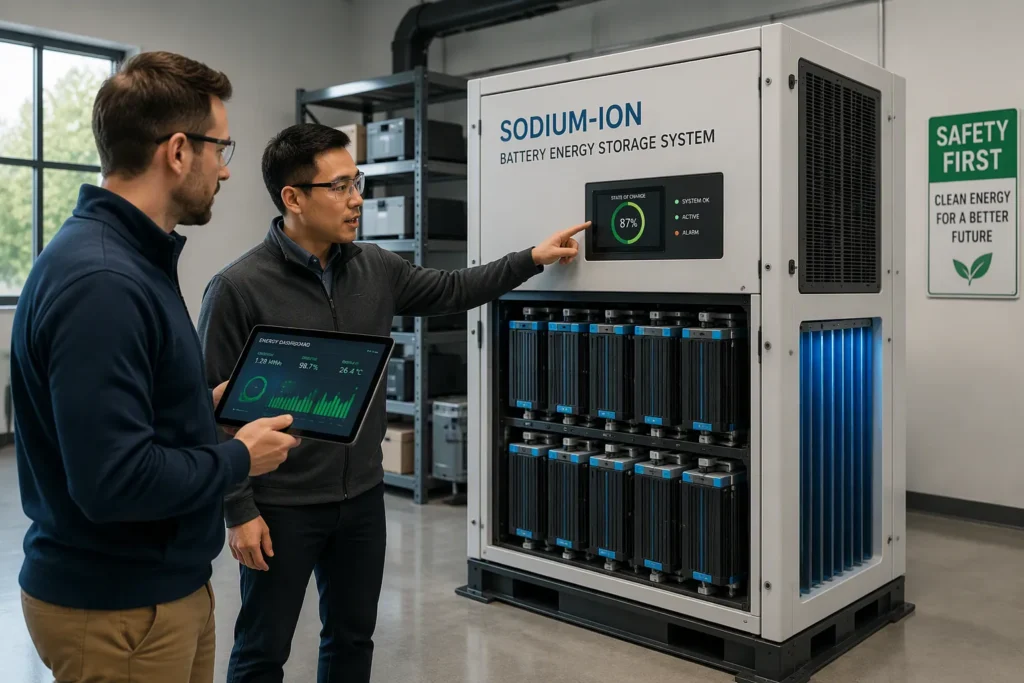
Sodium-ion energy storage fixes two big problems for commercial buildings: fire risk and high starting cost. Facility managers no longer have to pick between safety and budget. This technology gives them both at once.
There is still one question. Can sodium-ion energy storage really beat lithium-ion on safety and overall cost in tough commercial conditions? The evidence says yes.
Safety comes from a stable chemistry. Cost savings come from plentiful materials and a long lifespan. A battery energy storage system built with sodium-ion also handles extreme temperatures well.
This article looks at the safe chemistry, the cost structure, a direct comparison with lithium-ion, and practical steps to adopt it. It also covers how battery storage and battery energy storage systems fit into real buildings. Readers will see why energy storage costs go down over time with sodium-ion. Energy storage now offers a safer, cheaper option for commercial sites. Battery storage finally works without having to give up anything.
Key Takeaways
Sodium-ion batteries resist fire and dangerous overheating, making them safer for commercial buildings.
They use plentiful materials and easier ways to make them, cutting upfront costs by about 25%.
They have over 8,000 charge cycles, so they last longer and cost less to replace.
They work in very hot and very cold places, from -40°C to 60°C. This makes them great for warehouses and cold stores.
VEKEN provides systems you can change to fit your needs, making them easy to set up, with little upkeep, and able to work with solar power.
Why Sodium-Ion Energy Storage is Safer
Safety is at the top of every facility manager’s checklist. Warehouses, offices, and retail spaces must follow strict fire codes. A battery system that fails these codes brings legal trouble and disrupts daily work. Sodium-ion energy storage removes that problem. Its chemistry is built to resist failure.
No Thermal Runaway, Stable Chemistry
Lithium-ion cells can go into thermal runaway. One cell gets too hot, catches fire, and spreads to the cells beside it. This chain reaction causes the worst safety dangers in commercial battery storage. Sodium-ion chemistry acts in a different way. Its lower energy density and steadier electrode materials make runaway much harder to start.
Cathode structure has a strong effect on this behaviour. Prussian blue analogue cells show no reaction to nail penetration. NASICON cells peak at around 100°C. Layered oxide cells go past 400°C. This range shows that the material you choose matters a great deal for safety.
VEKEN’s Sodium Battery shows this steadiness in real use. The battery passed nail penetration tests with no fire or explosion. A metal nail pushed through the cell made no flame and no blast. This result proves the chemistry can handle serious internal damage. For a warehouse or retail floor, that difference keeps people and property safe.
Better safety also cuts compliance costs. Facilities with less fire risk often face simpler permitting. Insurers look more kindly on steady chemistry. Many commercial operators see lower premiums after they switch. So safety gains bring direct financial returns.
Non-Flammable Electrolytes, Lower Fire Risk
The electrolyte carries the flame in most battery fires. Normal lithium cells use organic solvents that catch fire easily. Sodium-ion batteries can use electrolyte mixes with higher flash points and greater thermal stability. This cuts fire risk at the cell level.
Battery storage systems also go through strict safety testing before use. Standard tests include vibration, shock, temperature cycling, thermal abuse, external short circuit, overcharge, over-discharge, impact, crush, penetration, and fire exposure. Manufacturers agree on methods and pass or fail rules before testing starts. These protocols check protection systems and support compliance programmes.
Less fire risk changes the economics of energy storage. Facilities need fewer suppression systems and less separation distance. Installation becomes simpler. Maintenance teams face lower hazard exposure. Each factor adds to the safety advantage over the system’s life.
Energy storage safety depends on more than one layer. Cell chemistry, electrolyte choice, and system design all play a part. Sodium-ion batteries tackle each layer. The result is a system that meets fire codes without costly countermeasures.
Energy storage buyers should ask one question. Does the chemistry resist failure, or merely contain it? Sodium-ion answers the first. That difference defines better safety for commercial facilities.
How Sodium-Ion Batteries Reduce Energy Costs
Abundant Materials, Simpler Manufacturing
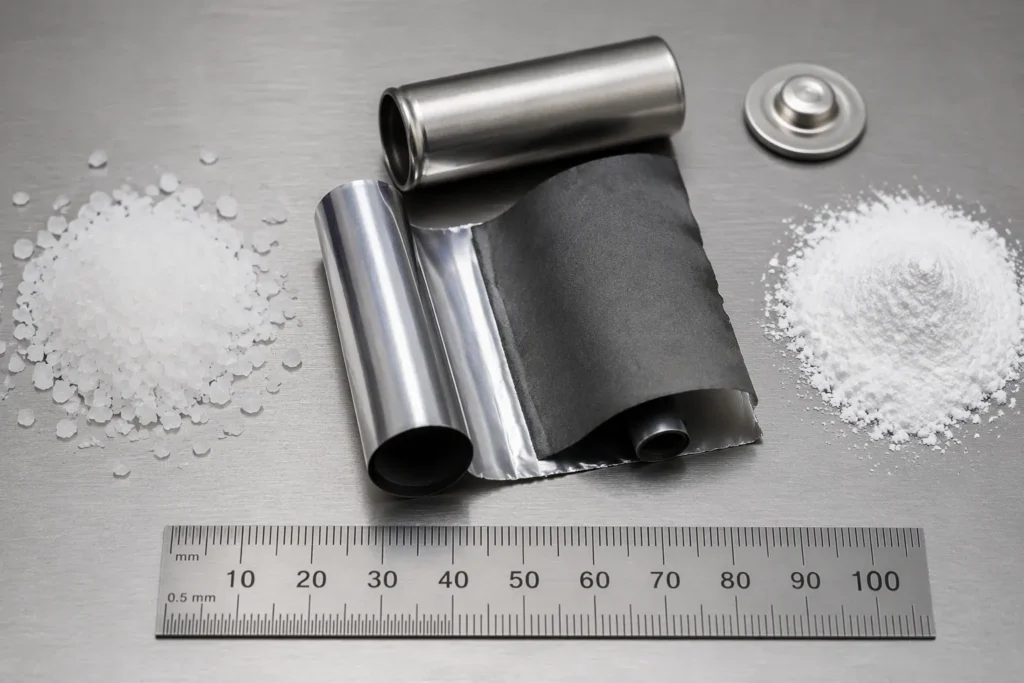
The cost benefits of sodium-ion batteries start with the raw materials. Sodium is one of the most common elements on Earth. Manufacturers get it from ordinary salt or soda ash. This plenty keeps the material cost down. The supply chain also avoids the limited locations of lithium reserves. Fewer political risks mean steadier prices over time.
Making them is simpler too, which adds more savings. Sodium-ion cells do not need copper foil current collectors on the anode. Aluminium works for both electrodes. This change cuts production steps and material costs. Factories can reuse existing lithium-ion production lines with small changes. The process needs less energy and fewer special parts.
These factors create real cost differences.
Northvolt says its sodium-ion batteries cost about 25% less than the lithium-ion batteries used for energy storage. This means a manufacturing cost cut of roughly one quarter per kWh.
This lower cost at the factory gate turns straight into lower upfront spending for a battery energy storage system.
Right now, sodium-ion batteries still cost more than LFP lithium-ion cells per kWh. Prices should drop only after production reaches a high enough volume. The road to equal pricing opens up as scale grows. HiNa Battery expects cell costs to match LFP fully by 2026. Novonix predicts a path to $30/kWh by 2045. These forecasts show that sodium-ion energy storage gets cheaper with volume.
For commercial buyers, the upfront saving counts. A battery energy storage system with a lower starting cost improves the project payback period. Energy storage costs fall without losing safety or performance. This mix makes stationary energy storage easier for more facilities to afford. The cost and resource benefits of sodium chemistry help more sites adopt it.
Longer Cycle Life, Lower Replacement Costs
Upfront cost is only one part of the whole picture. How often you replace the battery drives long-term spending. A battery energy storage system that wears out fast needs new cells every few years. Each replacement adds material cost, labour, and downtime. Sodium-ion batteries change this sum.
VEKEN’s Sodium Battery reaches over 8,000 charge/discharge cycles. This number is far higher than typical lithium iron phosphate systems. The longer cycle life means the system keeps high capacity for many more years. Replacement comes later, or not at all within the system’s design life. This durability greatly lowers the total cost of ownership.
The money works through peak-valley arbitrage. A battery storage system charges when prices are low and discharges when prices are high. A system that does this cycle thousands of times brings steady returns over its lifetime. A longer lifespan locks in those returns for longer. Commercial users can plan their energy storage costs with more confidence.
Lower replacement frequency also eases the workload. Staff spend less time managing the system. The facility avoids the trouble of swapping out worn modules. Energy storage costs become more predictable and easier to handle.
Battery energy storage systems built on sodium-ion technology offer a rare mix: lower upfront cost and longer usable life. Together they make a strong case for commercial facilities. The cost and resource benefits of sodium chemistry cover both the first investment and the long-term operating budget.
Stationary storage applications gain the most from battery storage systems that last. Industrial sites, commercial buildings, and data centres all need reliable systems. Sodium-ion batteries give that reliability at a fair cost per cycle. Battery storage systems become a wise financial investment rather than a constant expense. Companies invest in battery storage to steady their energy costs over the long term.
This mix of abundant materials, simpler manufacturing, and long cycle life makes sodium-ion energy storage a truly affordable and sustainable energy storage option. The low cost of raw materials and the long lifespan together cut energy costs. Battery storage technology finally offers both safety and economy in one package.
Sodium-Ion vs Lithium-Ion Energy Storage Compared
Safety, Cost, and Lifespan at a Glance
A direct comparison shows where each chemistry stands. The table below sets out the main differences for commercial buyers.
Metric | Sodium-ion | Lithium-ion (LFP) |
|---|---|---|
Safety | Stable chemistry, no thermal runaway | Thermal runaway risk under abuse |
Upfront cost | Lower material and manufacturing cost | Higher material cost |
Cycle life | Over 8,000 cycles | Shorter cycle life |
Temperature tolerance | Reliable from -40°C to 60°C | Performance degrades in extremes |
Maintenance | Minimal, no complex cooling | Regular checks and cooling needed |
Energy density is the one area where lithium-ion still leads. Sodium-ion cells reach 110–175 Wh/kg, while LFP cells deliver 160–200 Wh/kg. So a sodium-ion battery energy storage system needs more floor space for the same capacity. That gap is closing as production scales.
Where Sodium-Ion Wins for Commercial Use
Temperature tolerance decides many projects. Sodium-ion batteries work well from -40°C to 60°C. Lithium-ion performance drops in extreme temperatures. A cold store or an outdoor site in a harsh climate favours sodium-ion.
Safety and total cost of ownership settle the argument for most facilities. Sodium-ion energy storage removes thermal runaway risk. It also cuts upfront costs and replacement costs through a longer lifespan. These gains matter more than a compact footprint for stationary storage.
Lithium-ion keeps an edge where space is tight and energy density is critical. For commercial use in warehouses, offices and retail sites, sodium-ion wins on safety and cost. A battery storage system built on sodium chemistry delivers improved safety and a lower cost per cycle. Buyers comparing battery energy storage systems should weigh these factors against their own site conditions.
Adopting a VEKEN Battery Energy Storage System
Installation, Maintenance, and Solar Integration
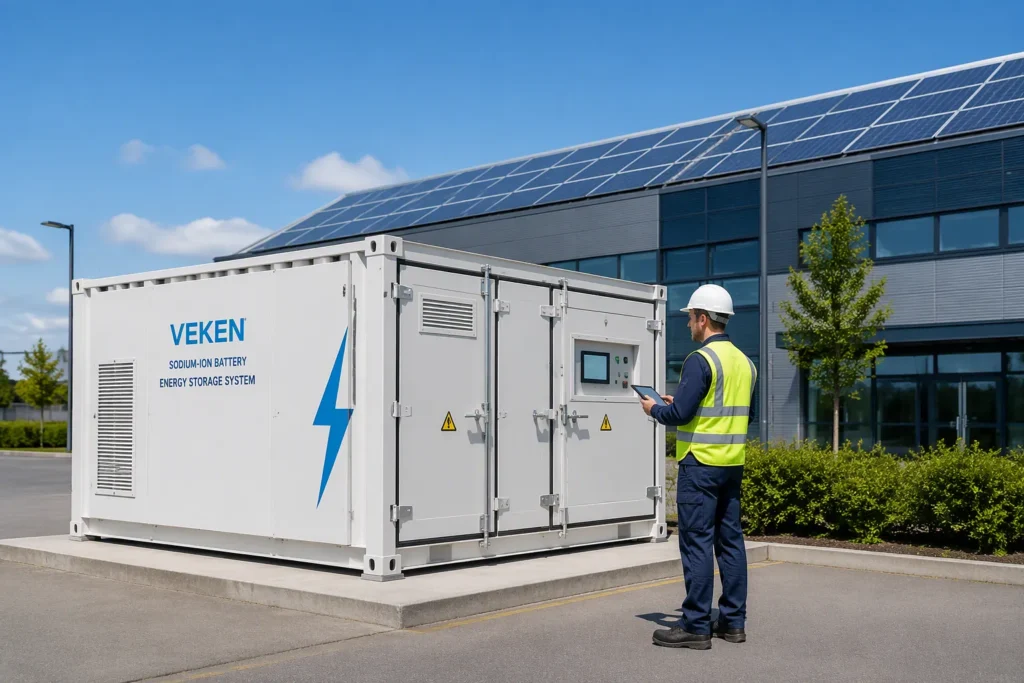
VEKEN offers full-stack customisation for each battery energy storage system. The company tailors cell chemistry, module design, BMS integration, and intelligent monitoring to the site. This approach ensures a perfect fit for any commercial deployment. Every battery energy storage system matches the facility’s exact power profile. The customisation process covers capacity, voltage, and form factor. Module design includes optimised thermal management. BMS integration adds monitoring, balancing, protection, and diagnostics. This end-to-end approach ensures precise alignment with the application.
Installation of the battery energy storage system requires minimal effort. No complex cooling systems are needed. Sodium-ion chemistry runs safely at normal temperatures. This simplicity lowers installation cost and reduces ongoing upkeep. Maintenance teams need no special training to manage the system. The long cycle life means fewer replacements over time. This design cuts total cost further. Energy storage owners benefit from reduced operational demands.
Solar integration works smoothly with the battery energy storage system. The battery storage system charges from photovoltaic arrays during the day. Users discharge stored energy during peak tariff periods. This setup maximises self-consumption of renewable energy. Commercial and industrial organisations gain stable returns from this pairing. The system handles daily charge and discharge cycles without degradation.
The containerized sodium-ion energy storage system offers a compact solution for commercial or industrial applications. The battery energy storage solution arrives ready for connection. Installers can place it outdoors without fire-rated enclosures. This feature saves valuable indoor space and reduces compliance cost. The system integrates with existing building management controls.
Backup Power for Warehouses, Offices, and Retail
Commercial facilities need dependable backup power. Power outages stop operations and cause financial loss. Warehouses lose picking time. Offices shut down servers. Retail stores send customers away. Battery storage provides critical backup for these loads. The battery energy storage system switches to backup mode instantly during a grid failure. This rapid response prevents data loss and maintains productivity.
Sodium-ion batteries deliver stable voltage throughout discharge. No performance drop occurs as the battery depletes. This reliability matters for sensitive equipment. The energy storage system handles daily management and emergency backup. This dual function improves return on investment. A battery storage system serves both roles. Facility managers gain cost savings from peak shaving and backup protection.
Battery energy storage systems work in extreme temperatures from -40°C to 60°C. Outdoor installation in warehouses or factory floors poses no problem. This temperature tolerance removes the need for climate-controlled rooms. Battery storage becomes simpler and lower in cost to deploy. These systems support continuous operations in demanding environments.
Battery storage systems for commercial and industrial facilities deliver versatile value. Manufacturing plants benefit from reliable stationary storage. Retail stores keep tills operating during outages. Office buildings maintain essential services. Each use case shows the value of battery storage. Battery energy storage systems provide a dependable solution for commercial and industrial operations.
Sodium-ion energy storage removes the two biggest barriers for commercial facilities: fire risk and high upfront cost. Safety comes from stable chemistry, non-flammable electrolytes, and no thermal runaway. On cost, abundant materials, simpler manufacturing, and over 8,000 cycles cut spending. The side-by-side comparison confirms this competitiveness. VEKEN’s Sodium Battery and Commercial & Industrial Sodium-ion Energy Storage Solutions offer a proven, customisable battery energy storage system. Facility managers and procurement teams should evaluate sodium-ion for any new or upgraded energy storage project. This choice delivers lasting safety and lower cost.
FAQ
Does sodium-ion energy storage catch fire?
No. Sodium-ion chemistry fights thermal runaway. VEKEN’s Sodium Battery passed nail penetration tests without fire or explosion. This steady behaviour lowers fire risk in warehouses, offices, and retail sites. Facility managers gain simpler compliance and often pay lower insurance premiums.
How long does a sodium-ion battery last?
VEKEN’s Sodium Battery gives over 8,000 charge/discharge cycles. This lifespan far beats typical lithium iron phosphate systems. Replacement costs drop, and the total cost of ownership falls. Commercial users gain predictable returns from peak-valley arbitrage over many years.
Can sodium-ion batteries work in extreme cold?
Yes. Sodium-ion batteries work reliably from -40°C to 60°C. Lithium-ion performance drops in extreme temperatures. Cold stores, outdoor sites, and harsh climates suit sodium-ion well. This tolerance removes the need for climate-controlled rooms.
Is sodium-ion cheaper than lithium-ion?
Sodium-ion offers lower material and manufacturing costs. Northvolt reports roughly 25% lower cost than lithium-ion for energy storage. Upfront prices should fall further as production scales. A battery energy storage system built on sodium chemistry also needs fewer replacements over its life.
What maintenance does a VEKEN system need?
VEKEN’s sodium-ion systems need very little maintenance. No complex cooling systems are required. The chemistry runs safely at normal temperatures. Intelligent monitoring handles balancing, protection, and diagnostics. Staff spend less time on upkeep, which cuts operational costs further.