
Real-World Data from Northern China’s Coldest Automotive Test Environment ❄️
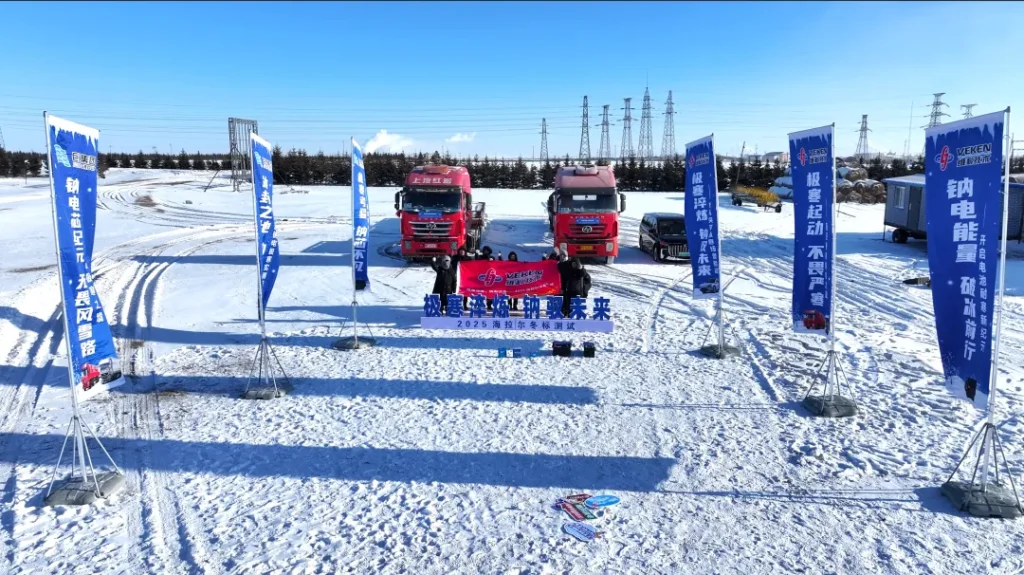
In January 2026, Veken completed a full-scale extreme cold winter validation test for its sodium-ion battery systems in Hailar, Hulunbuir, Inner Mongolia, one of China’s coldest automotive testing regions.
The project, conducted jointly with Jujiang Group, focused on validating sodium battery performance in real winter driving conditions below –35°C, with recorded lows reaching –39°C.
This article explains what was tested, how it was tested, and why the results matter for B2B buyers evaluating low-temperature vehicle power solutions, especially for commercial vehicles, cold-region fleets, and auxiliary power systems.
Why Hailar Is a Benchmark for Extreme Cold Battery Testing
Hailar is widely used for winter vehicle validation because it closely represents real operating conditions in northern China and other sub-arctic regions.
Key environmental characteristics:
-
🌡️ Ambient temperature: consistently below –35°C
-
❄️ Natural cold soak: no artificial temperature control
-
🚚 Real vehicles: commercial and passenger vehicles under daily use patterns
Unlike laboratory cold chambers, Hailar testing reflects actual user behavior, including parking duration, repeated cold starts, and auxiliary power demand during idling.
Products Covered in the Winter Test Program 🔋
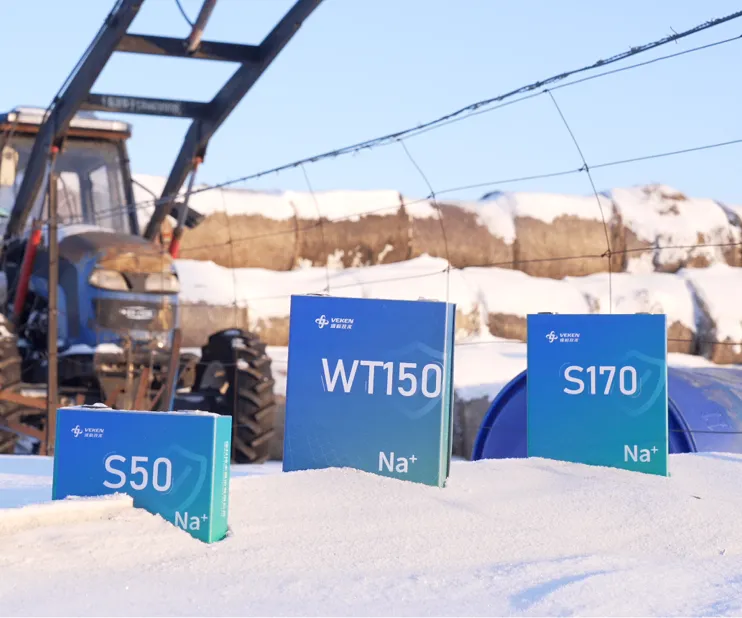
The winter validation included multiple sodium-ion battery power products, covering both commercial vehicles and passenger vehicles:
Tested Sodium Battery Applications
-
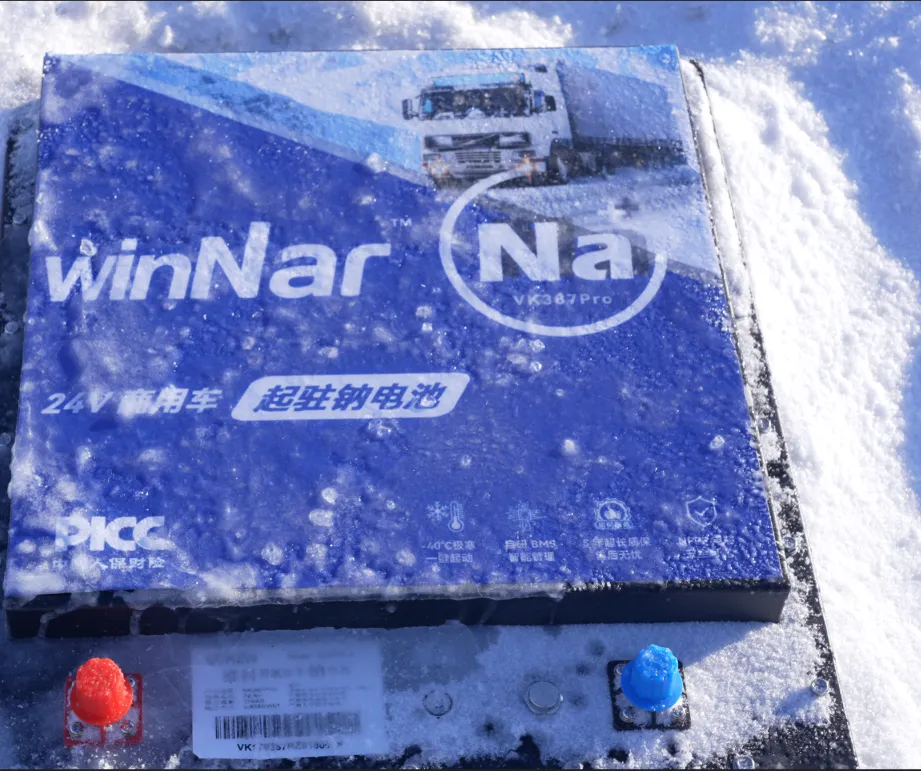
Commercial vehicle engine start & parking power systems
-
Commercial vehicle engine starting batteries
-
Passenger vehicle start-stop power batteries
All tested products were equipped with Veken’s self-developed Battery Management System (BMS), designed to maintain operational stability across a wide temperature range from –40°C to +70°C.
Test Structure: Four Real-World Validation Stages
The winter test followed a structured, scenario-based approach, divided into four main stages to reflect real user behavior.
1. Cold Start Performance Validation 🚗
-
Multiple cold start attempts after long cold soak
-
Different state-of-charge (SOC) levels
-
No external heating assistance
Result:
At –39°C ambient temperature, several sodium battery products successfully completed engine ignition, confirming stable high-current output in extreme cold.
2. Cabin Heating Power Supply Validation 🔥
-
Continuous power supply for diesel heaters
-
Extended operation during low-temperature parking
-
No auxiliary charging or heating
Result:
The sodium battery systems maintained stable discharge output to support cabin heating under sub-zero conditions.
3. Parking Air-Conditioning Discharge Test ❄️
-
Continuous low-temperature discharge
-
Simulated overnight parking scenarios
-
Repeated load cycles
Result:
Battery voltage and discharge behavior remained stable during prolonged low-temperature operation.
4. Long-Term Vehicle Follow-Up Testing 🛣️
-
Daily vehicle use simulation
-
Repeated start-stop cycles
-
Variable parking duration and SOC conditions
Result:
The batteries demonstrated consistent performance across repeated winter usage cycles, supporting long-term reliability assessment.
Why Sodium Batteries Perform Differently in Extreme Cold
One of the key technical factors in this test was the NFPP polyanionic material system used in the sodium battery cells.
Key Characteristics of NFPP-Based Sodium Batteries
-
Better low-temperature ion movement
-
More stable structure during charge and discharge
-
Reduced performance drop at low temperatures
Practical Meaning for B2B Users
Without relying on external heating systems, the tested sodium batteries were able to:
-
Deliver high current for cold engine starts
-
Support continuous auxiliary loads
-
Maintain repeatable performance in extreme cold
This makes sodium-ion batteries a practical option for cold-region vehicles, especially where low-temperature reliability is a priority.
On-Site Execution and Data Reliability 🔍
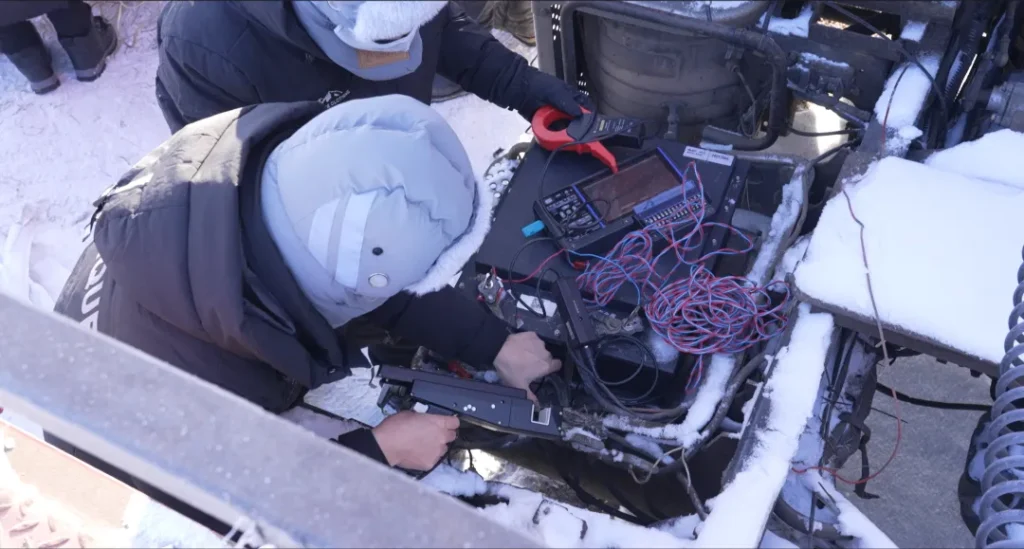
To ensure data accuracy, Veken deployed a cross-functional on-site team, including:
-
R&D engineers
-
Test and validation specialists
-
Field data recording staff
All test equipment was calibrated on site, and performance data was collected directly from real vehicle operation, not simulations.
This approach strengthens data credibility, which is essential for B2B procurement decisions involving vehicle power systems.
Real-World Use Cases for Extreme Cold Sodium Batteries
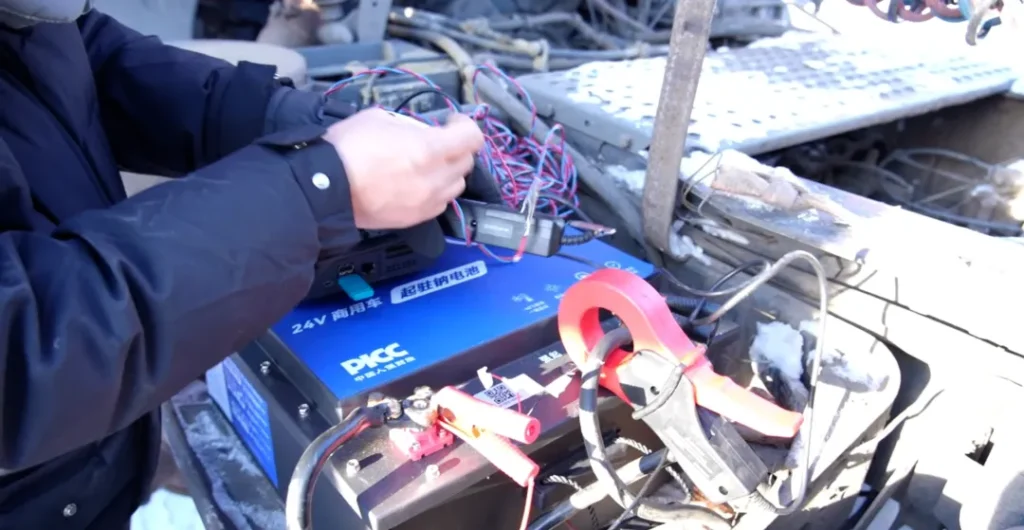
Based on the test scenarios, the validated sodium battery systems are relevant for:
-
🚛 Commercial vehicles operating in cold regions
-
❄️ Northern logistics fleets with overnight parking
-
🚐 Vehicles requiring stable auxiliary power in winter
-
🛠️ Fleet operators seeking alternatives to lead-acid batteries
These use cases are common in Northern China, Central Asia, Eastern Europe, and similar climates.
About Veken: Verifiable Background Information
Veken is part of Ningbo Veken Group, a diversified industrial group with manufacturing foundations in China, including its own textile factories and large-scale production capabilities.
Key factual points:
-
Established industrial manufacturing base
-
Experience in large-volume order fulfillment
-
Focus on battery systems and industrial products
🔗 Battery product overview:
https://vekenindustry.com/battery/
🔗 Company contact page:
https://vekenindustry.com/contact-us/
What This Winter Test Demonstrates for B2B Decision-Makers
This Hailar winter validation provides clear, real-world evidence of sodium battery behavior under –40°C extreme cold conditions.
Key Takeaways
-
Sodium batteries can support reliable cold starts at –39°C
-
Stable discharge is possible without external heating
-
Real vehicle testing improves data trustworthiness
-
Applicable to commercial and passenger vehicle power systems
For B2B buyers evaluating low-temperature vehicle battery solutions, field-tested data like this is critical for risk assessment and system selection.
Data-Driven Validation, Not Laboratory Assumptions
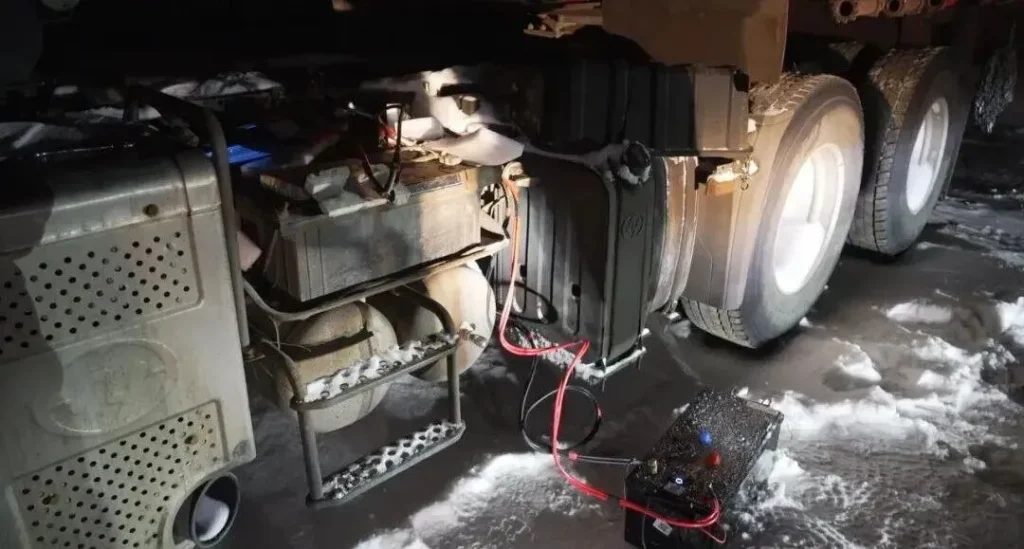
Extreme cold performance cannot be proven in theory alone.
By completing multi-scenario winter testing in Hailar, Veken has provided fact-based validation of sodium-ion battery systems under real winter operating conditions.
For industries operating in cold climates, this test offers practical reference data, not assumptions.❄️🔋